A reversion of an IL2RG mutation in combined immunodeficiency providing competitive advantage to the majority of CD8+ T cells
- PMID: 23403317
- PMCID: PMC3696605
- DOI: 10.3324/haematol.2012.077511
A reversion of an IL2RG mutation in combined immunodeficiency providing competitive advantage to the majority of CD8+ T cells
Abstract
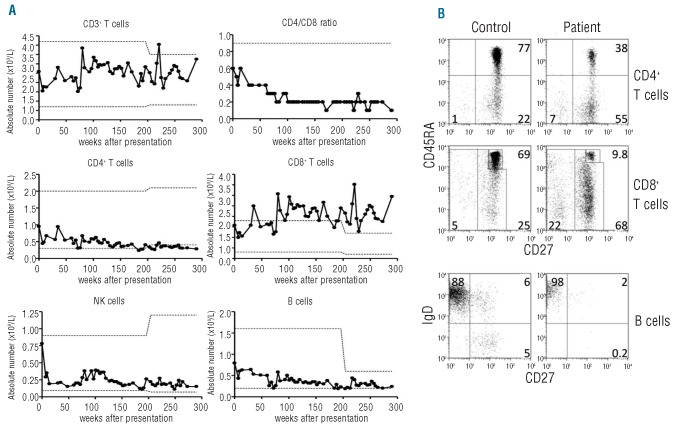
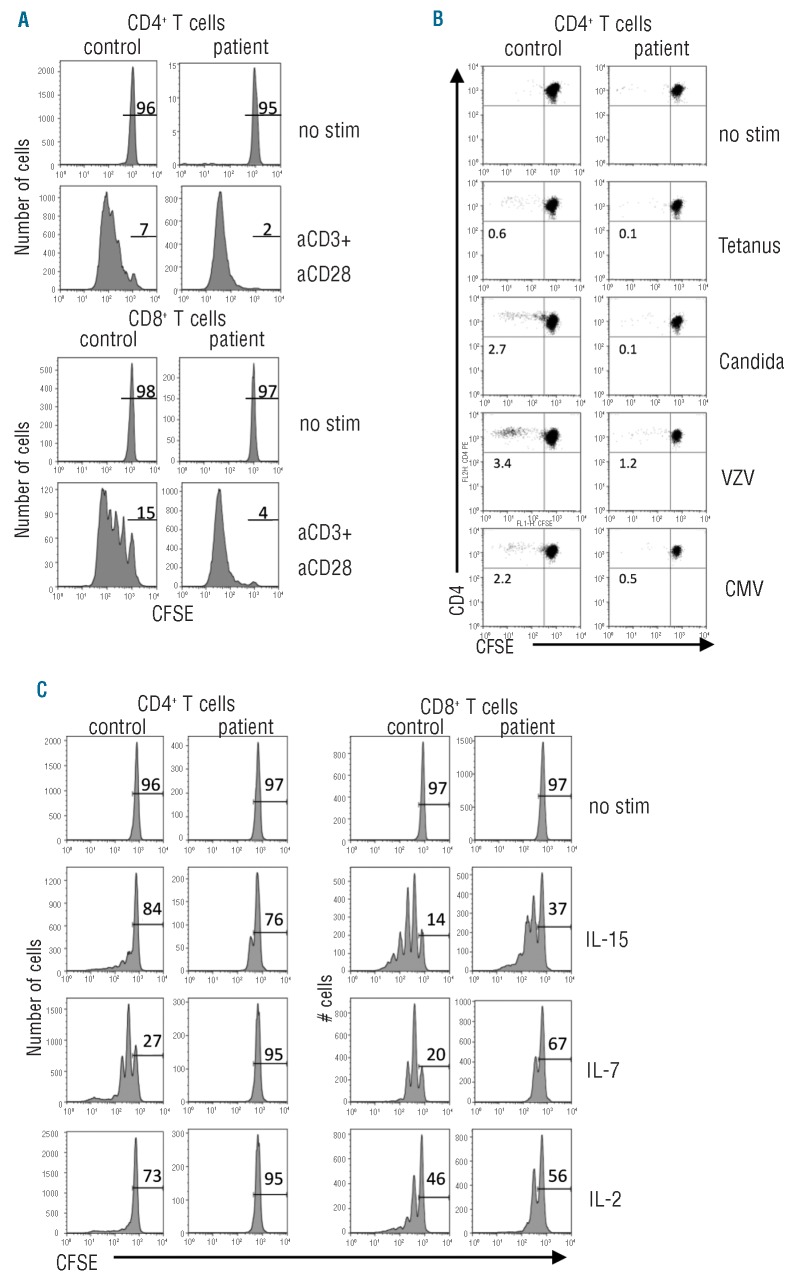
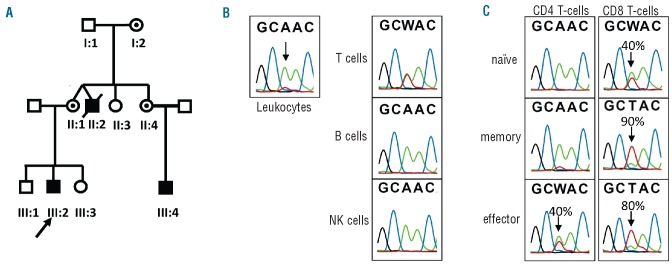
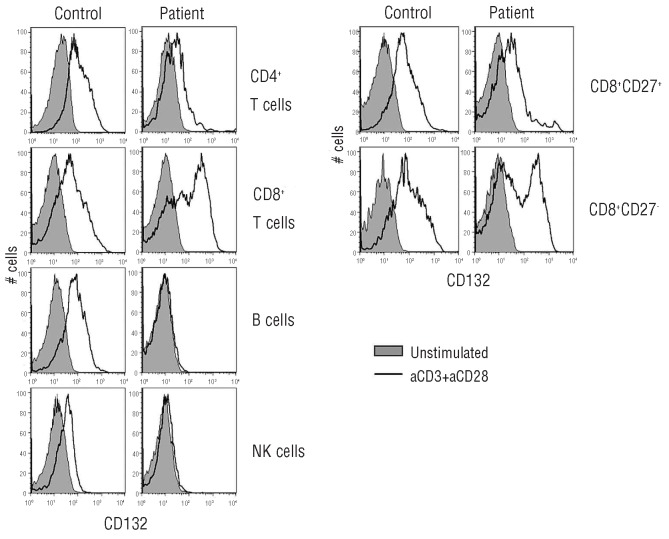
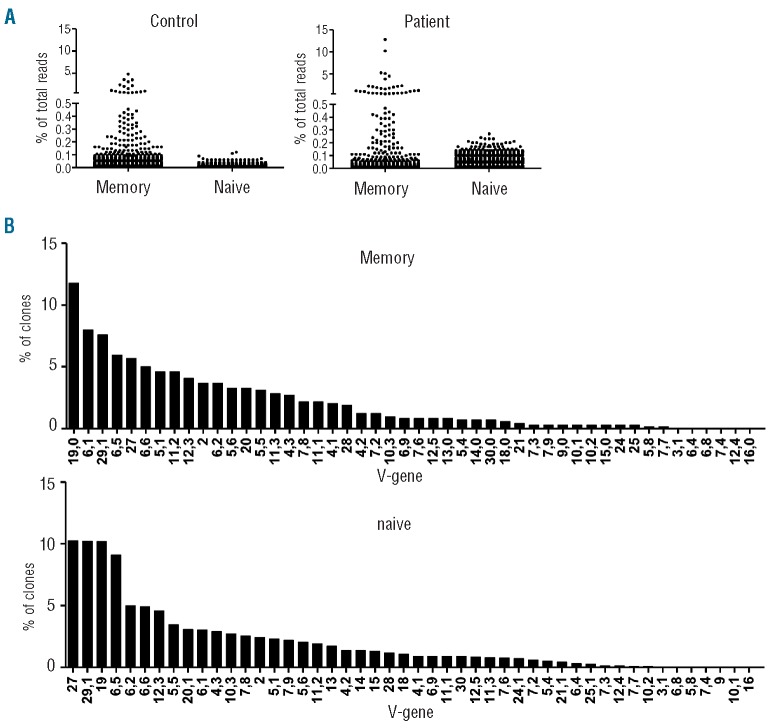
Mutations in the common gamma chain (γc, CD132, encoded by the IL2RG gene) can lead to B(+)T(-)NK(-) X-linked severe combined immunodeficiency, as a consequence of unresponsiveness to γc-cytokines such as interleukins-2, -7 and -15. Hypomorphic mutations in CD132 may cause combined immunodeficiencies with a variety of clinical presentations. We analyzed peripheral blood mononuclear cells of a 6-year-old boy with normal lymphocyte counts, who suffered from recurrent pneumonia and disseminated mollusca contagiosa. Since proliferative responses of T cells and NK cells to γc -cytokines were severely impaired, we performed IL2RG gene analysis, showing a heterozygous mutation in the presence of a single X-chromosome. Interestingly, an IL2RG reversion to normal predominated in both naïve and antigen-primed CD8(+) T cells and increased over time. Only the revertant CD8(+) T cells showed normal expression of CD132 and the various CD8(+) T cell populations had a different T-cell receptor repertoire. Finally, a fraction of γδ(+) T cells and differentiated CD4(+)CD27(-) effector-memory T cells carried the reversion, whereas NK or B cells were repeatedly negative. In conclusion, in a patient with a novel IL2RG mutation, gene-reverted CD8(+) T cells accumulated over time. Our data indicate that selective outgrowth of particular T-cell subsets may occur following reversion at the level of committed T progenitor cells.
Figures
References
-
- Youssoufian H, Pyeritz RE. Mechanisms and consequences of somatic mosaicism in humans. Nat Rev Genet. 2002;3(10):748–58 - PubMed
Publication types
MeSH terms
Substances
LinkOut - more resources
Full Text Sources
Other Literature Sources
Research Materials