Nanodiscs as a new tool to examine lipid-protein interactions
- PMID: 23404286
- PMCID: PMC4201044
- DOI: 10.1007/978-1-62703-275-9_18
Nanodiscs as a new tool to examine lipid-protein interactions
Abstract
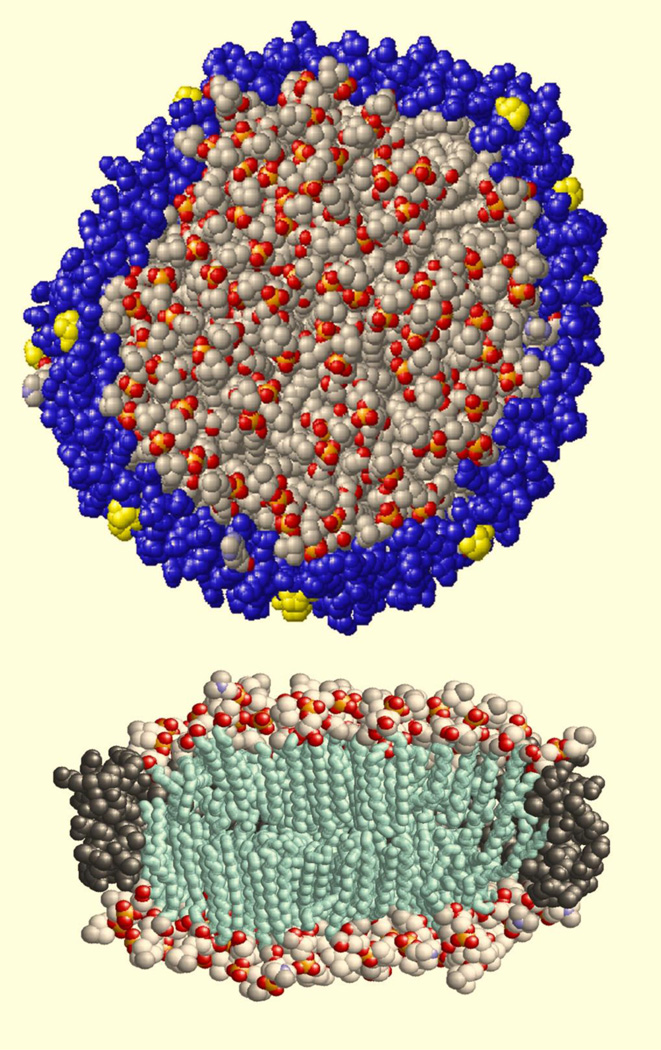
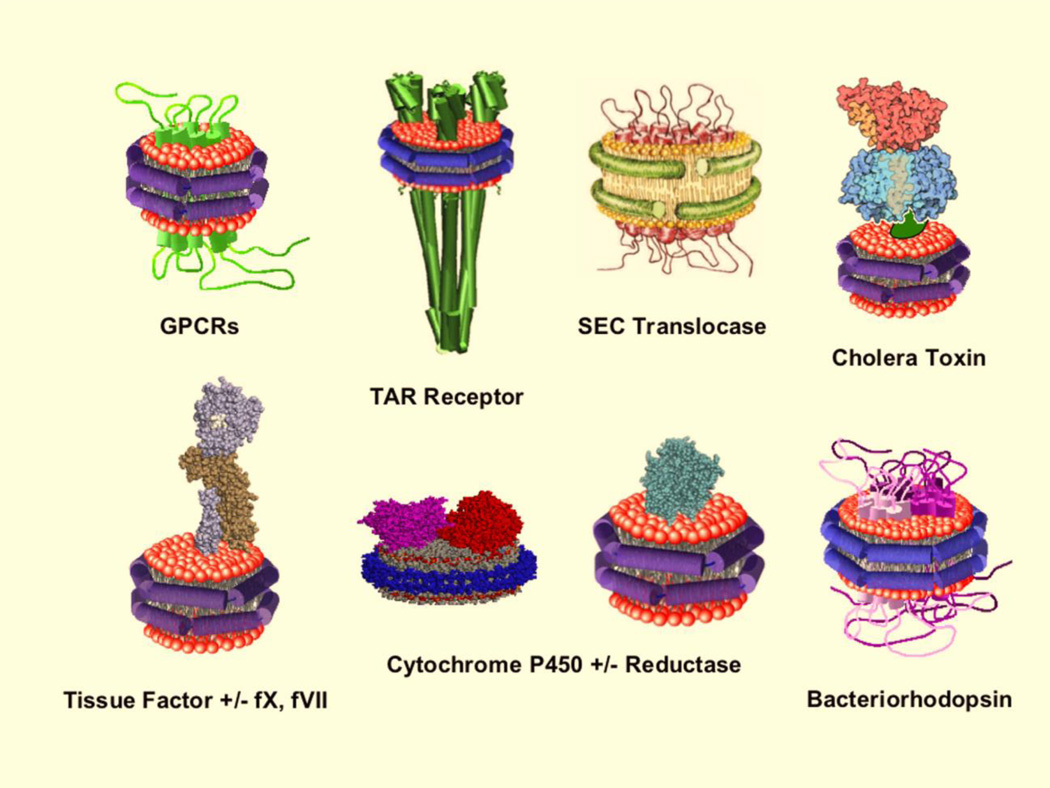
Nanodiscs are self-assembled discoidal fragments of lipid bilayers 8-16 nm in diameter, stabilized in solution by two amphipathic helical scaffold proteins. As stable and highly soluble membrane mimetics with controlled lipid composition and ability to add affinity tags to the scaffold protein, nanodiscs represent an attractive model system for solubilization, isolation, purification, and biophysical and biochemical studies of membrane proteins. In this chapter we overview various approaches to structural and functional studies of different classes of integral membrane proteins such as ion channels, transporters, GPCR and other receptors, membrane enzymes, and blood coagulation cascade proteins which have been incorporated into nanodiscs. We outline the advantages provided by homogeneity, ability to control oligomerization state of the target protein and lipid composition of the bilayer. Special attention is paid to the opportunities afforded by nanodisc system for the detailed studies of the role of different lipid properties and protein-lipid interactions in the functional behavior of membrane proteins.
Figures
References
-
- Jonas A, Kezdy KE, Wald JH. Defined apolipoprotein A-I conformations in reconstituted high density lipoprotein discs. J Biol Chem. 1989;264:4818–4824. - PubMed
-
- Wald JH, Krul ES, Jonas A. Structure of apolipoprotein A-I in three homogeneous, reconstituted high density lipoprotein particles. J Biol Chem. 1990;265:20037–20043. - PubMed
-
- Bayburt TH, Carlson JW, Sligar SG. Single molecule height measurements on a membrane protein in nanometer-scale phospholipid bilayer disks. Langmuir. 2000;16:5993–5997.
Publication types
MeSH terms
Substances
Grants and funding
LinkOut - more resources
Full Text Sources
Other Literature Sources
Research Materials