


High-resolution computed tomography findings for patients with drug-induced pulmonary toxicity, with special reference to hypersensitivity pneumonitis-like patterns in gemcitabine-induced cases
- PMID: 23404815
- PMCID: PMC3639533
- DOI: 10.1634/theoncologist.2012-0248
High-resolution computed tomography findings for patients with drug-induced pulmonary toxicity, with special reference to hypersensitivity pneumonitis-like patterns in gemcitabine-induced cases
Abstract
Background: Gemcitabine (GEM) is widely used as a chemotherapeutic agent. However, pulmonary toxicity has been rarely observed with GEM use. This article aims to determine the incidence and causes of drug-induced pulmonary toxicity, and to classify the high-resolution computed tomography (HRCT) findings for antitumor therapy-associated pulmonary toxicity based on characteristic patterns and pathological considerations, with a special focus on GEM-associated pulmonary toxicity (GAPT).
Methods: Medical records of all patients with drug-induced pulmonary toxicity seen at Kyorin University hospital between April 2006 and December 2011 were retrospectively reviewed. The study examined correlations between HRCT and the assessed pathological or clinical findings, with a specific focus on antitumor drugs.
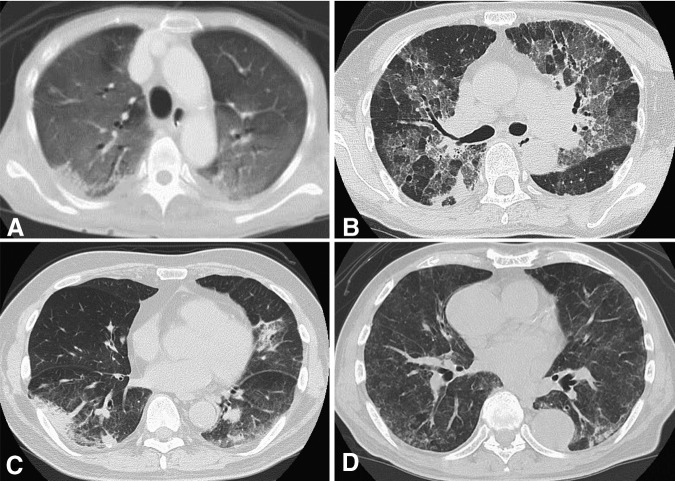
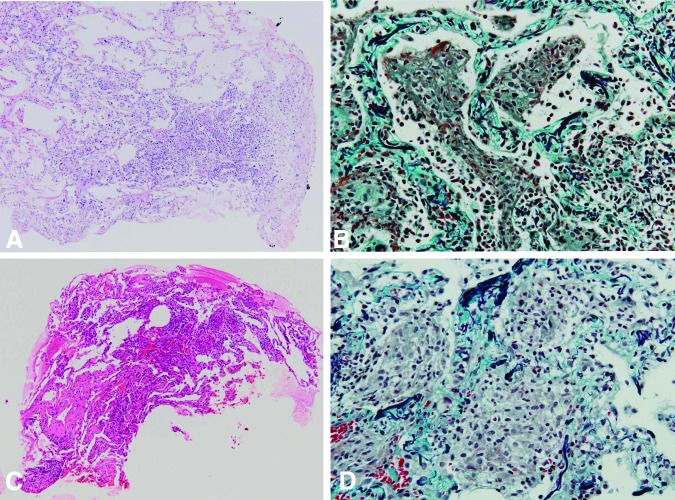
Results: We identified 66 patients with drug-induced pulmonary toxicity. Among the antitumor drugs, GEM was the primary offending agent (n = 8) for pulmonary toxicity followed by docetaxel and gefitinib. HRCT patterns for the eight GAPT patients included the non-specific interstitial pneumonia (NSIP; n = 5) and the hypersensitivity pneumonitis (HP)-like pattern (n = 3). In contrast, four patients in the study were found to have the HP-like pattern, with three cases associated with GEM and one case associated with imatinib mesylate. The transbronchial lung biopsy or video-assisted thoracic surgery specimens for these patients showed granuloma or organizing tissue with a random distribution that was independent of the respiratory bronchiole. These results appeared to correspond to the HRCT-determined centrilobular nodules.
Conclusion: GEM was the leading cause of drug-induced pulmonary toxicity in the patients examined in this study. This toxicity appears as NSIP or an HP-like pattern during HRCT examinations. This HP-like pattern may be useful for diagnosing GEM-induced pulmonary toxicity, as well as demonstrating granuloma or organizing tissue during lung pathology examinations.
Conflict of interest statement
Disclosures of potential conflicts of interest may be found at the end of this article.
Figures
Similar articles
-
The new useful high-resolution computed tomography finding for diagnosing fibrotic hypersensitivity pneumonitis: "hexagonal pattern": a single-center retrospective study.BMC Pulm Med. 2022 Mar 4;22(1):76. doi: 10.1186/s12890-022-01869-4. BMC Pulm Med. 2022. PMID: 35246090 Free PMC article.
-
Clinical diagnosis of patients subjected to surgical lung biopsy with a probable usual interstitial pneumonia pattern on high-resolution computed tomography.BMC Pulm Med. 2020 Nov 16;20(1):299. doi: 10.1186/s12890-020-01339-9. BMC Pulm Med. 2020. PMID: 33198708 Free PMC article.
-
Subacute and chronic hypersensitivity pneumonitis: histopathological patterns and survival.Respir Med. 2009 Apr;103(4):508-15. doi: 10.1016/j.rmed.2008.12.016. Respir Med. 2009. PMID: 19179061
-
Hypersensitivity pneumonitis: spectrum of high-resolution CT and pathologic findings.AJR Am J Roentgenol. 2007 Feb;188(2):334-44. doi: 10.2214/AJR.05.1826. AJR Am J Roentgenol. 2007. PMID: 17242239 Review.
-
[A case of imatinib mesylate-induced pneumonitis based on the detection of epithelioid granulomas by video-assisted thoracoscopic surgery biopsy in a patient with chronic myeloid leukemia].Nihon Kokyuki Gakkai Zasshi. 2011 Jun;49(6):465-71. Nihon Kokyuki Gakkai Zasshi. 2011. PMID: 21735750 Review. Japanese.
Cited by
-
Whole genome sequencing to identify predictive markers for the risk of drug-induced interstitial lung disease.PLoS One. 2019 Oct 4;14(10):e0223371. doi: 10.1371/journal.pone.0223371. eCollection 2019. PLoS One. 2019. PMID: 31584970 Free PMC article.
-
Drug-related pneumonitis with radiographic hypersensitivity pneumonitis pattern: Three case series.Respir Med Case Rep. 2021 Aug 18;34:101498. doi: 10.1016/j.rmcr.2021.101498. eCollection 2021. Respir Med Case Rep. 2021. PMID: 34471597 Free PMC article.
-
European LeukemiaNet recommendations for the management and avoidance of adverse events of treatment in chronic myeloid leukaemia.Leukemia. 2016 Aug;30(8):1648-71. doi: 10.1038/leu.2016.104. Epub 2016 Apr 28. Leukemia. 2016. PMID: 27121688 Free PMC article. Review.
-
Pulmonary Fibrosis Related to Amiodarone-Is It a Standard Pathophysiological Pattern? A Case-Based Literature Review.Diagnostics (Basel). 2022 Dec 19;12(12):3217. doi: 10.3390/diagnostics12123217. Diagnostics (Basel). 2022. PMID: 36553223 Free PMC article. Review.
-
Eribulin-induced Interstitial Pneumonia: A Case Series and Retrospective Cohort Study.Intern Med. 2020 Feb 15;59(4):563-567. doi: 10.2169/internalmedicine.2779-19. Epub 2019 Oct 7. Intern Med. 2020. PMID: 31588076 Free PMC article.
References
-
- Saif MW. Pulmonary toxicity associated with gemcitabine. JOP. 2010;11:189–190. - PubMed
-
- Hansell DM, Bankier AA, MacMahon H, et al. Fleischner Society: Glossary of terms for thoracic imaging. Radiology. 2008;246:697–722. - PubMed
-
- Koide T, Saraya T, Nakamoto K, et al. [A case of imatinib mesylate-induced pneumonitis based on the detection of epithelioid granulomas by video-assisted thoracoscopic surgery biopsy in a patient with chronic myeloid leukemia] Nihon Kokyuki Gakkai Zasshi. 2011;49:465–471. - PubMed
-
- Barlesi F, Doddoli C, Gimenez C, et al. [Acute pulmonary toxicity due to gemcitabine: A role for asbestos exposure?] Rev Mal Respir. 2003;20:201–206. - PubMed
MeSH terms
Substances
LinkOut - more resources
Full Text Sources
Other Literature Sources
Research Materials
Miscellaneous
