


Pregnancy outcomes of anti-hypertensives for women with chronic hypertension: a population-based study
- PMID: 23405075
- PMCID: PMC3566173
- DOI: 10.1371/journal.pone.0053844
Pregnancy outcomes of anti-hypertensives for women with chronic hypertension: a population-based study
Abstract
Background: The impact of anti-hypertensive treatment on fetus was unclear, and hence, remains controversial. We set out in this study to estimate the prevalence of adverse pregnancy outcomes, including low birth weight, preterm delivery and small for gestational age amongst women with chronic hypertension, and to determine whether the use of anti-hypertensive drugs increases the risk of such adverse pregnancy outcomes.
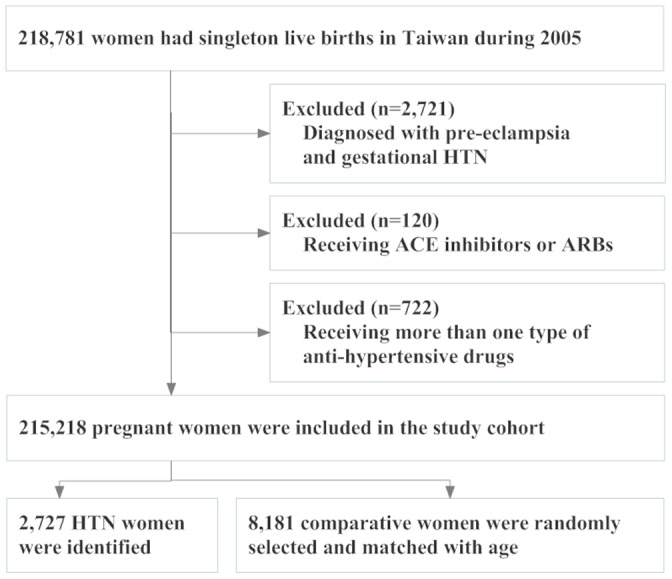
Methodology/principal findings: A total of 2,727 hypertension mothers and 8,181 matched controls were identified from the population-based cohort. These hypertension women were divided into seven sub-groups according to different types of prescribed anti-hypertensive drugs. Multivariable logistic regressions were conducted to estimate the risk of low birth weight, preterm birth and small for gestational age. Increased risk of low birth weight (OR = 2.29, 95% CI = 1.95-2.68), preterm birth (OR = 2.18, 95% CI = 1.89-2.52) and small for gestational age (OR = 1.62, 95% CI = 1.45-1.81) were all discernible within the hypertension group after adjusting for potential confounding factors. The increased ORs were found to differ with different types of anti-hypertensive drugs. Women who received vasodilators were associated with the highest risk of low birth weight (OR = 2.96, 95% CI = 2.06-4.26), preterm birth (OR = 2.92 95% CI = 2.06-4.15) and small for gestational age (OR = 2.12, 95% CI = 1.60-2.82).
Conclusions/significance: This finding is important for practitioners, because it indicates the need for caution while considering the administration of anti-hypertensive drugs to pregnant women. These observations require confirmation in further studies that can better adjust for the severity of the underlying HTN.
Conflict of interest statement
Figures
References
-
- Afifi Y, Churchill D (2003) Pharmacological treatment of hypertension in pregnancy. Curr Pharm Des 9: 1745–1753. - PubMed
-
- Podymow T, August P (2008) Update on the use of antihypertensive drugs in pregnancy. Hypertension 51: 960–969. - PubMed
-
- Magee LA, Duley L (2003) Oral beta-blockers for mild to moderate hypertension during pregnancy. Cochrane Database Syst Rev 3: CD002863. - PubMed
-
- Easterling TR, Carr DB, Brateng D, Diederichs C, Schmucker B (2001) Treatment of hypertension in pregnancy: effect of atenolol on maternal disease, preterm delivery and fetal growth. Obstet Gynecol 98: 427–433. - PubMed
MeSH terms
Substances
LinkOut - more resources
Full Text Sources
Other Literature Sources
Medical
