


Absolute pitch exhibits phenotypic and genetic overlap with synesthesia
- PMID: 23406871
- PMCID: PMC4707203
- DOI: 10.1093/hmg/ddt059
Absolute pitch exhibits phenotypic and genetic overlap with synesthesia
Abstract
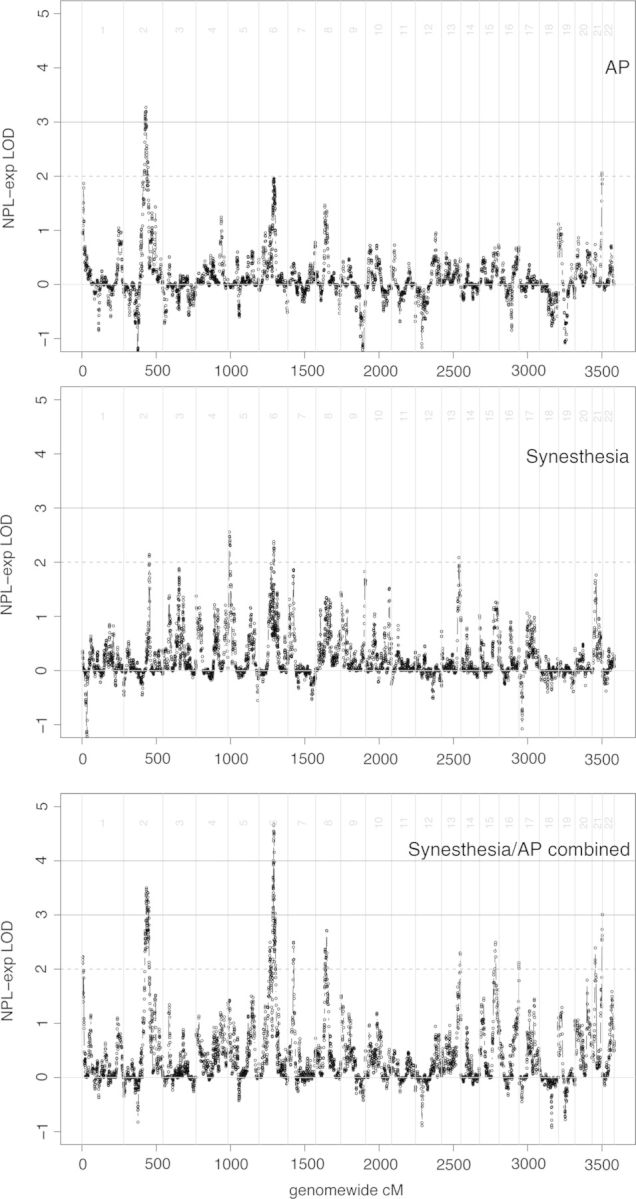
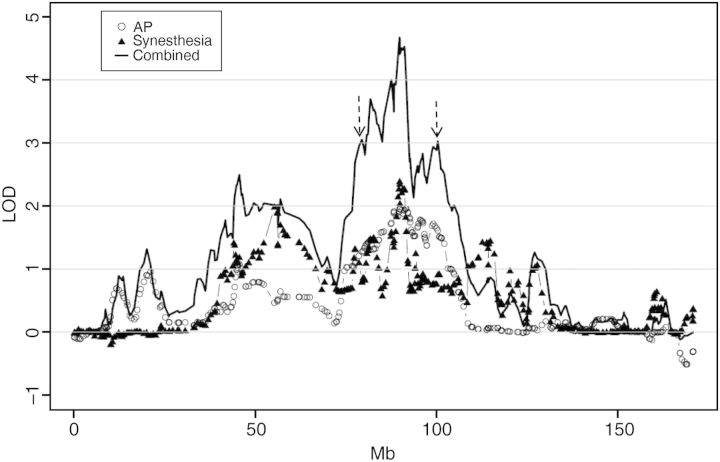
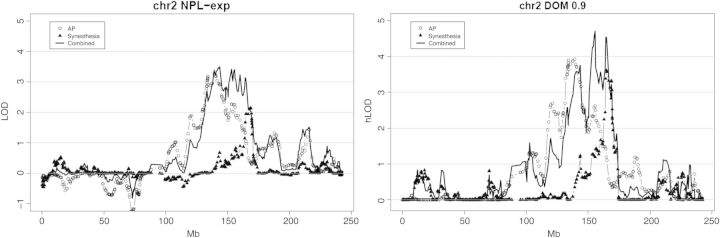
Absolute pitch (AP) and synesthesia are two uncommon cognitive traits that reflect increased neuronal connectivity and have been anecdotally reported to occur together in an individual. Here we systematically evaluate the occurrence of synesthesia in a population of 768 subjects with documented AP. Out of these 768 subjects, 151 (20.1%) reported synesthesia, most commonly with color. These self-reports of synesthesia were validated in a subset of 21 study subjects, using an established methodology. We further carried out combined linkage analysis of 53 multiplex families with AP and 36 multiplex families with synesthesia. We observed a peak NPL LOD = 4.68 on chromosome 6q, as well as evidence of linkage on chromosome 2, using a dominant model. These data establish the close phenotypic and genetic relationship between AP and synesthesia. The chromosome 6 linkage region contains 73 genes; several leading candidate genes involved in neurodevelopment were investigated by exon resequencing. However, further studies will be required to definitively establish the identity of the causative gene(s) in the region.
Figures
References
-
- Ward W.D., Burns E.M. In: The Psychology of Music. Deutsch D., editor. Orlando, FL: Academic Press, Inc.; 1982. pp. 431–451. Absolute pitch.
-
- Ross D.A., Olson I.R., Marks L.E., Gore J.C. A nonmusical paradigm for identifying absolute pitch possessors. J. Acoust. Soc. Am. 2004;116:1793–1799. - PubMed
-
- Gregersen P.K., Kowalsky E., Kohn N., Marvin E.W. Early childhood music education and predisposition to absolute pitch: teasing apart genes and environment. Am. J. Med. Genet. 2001;98:280–282. - PubMed
Publication types
MeSH terms
Grants and funding
LinkOut - more resources
Full Text Sources
Other Literature Sources
