


Organ preservation in T4a laryngeal cancer: is transoral laser microsurgery an option?
- PMID: 23408021
- PMCID: PMC3758515
- DOI: 10.1007/s00405-013-2382-7
Organ preservation in T4a laryngeal cancer: is transoral laser microsurgery an option?
Abstract
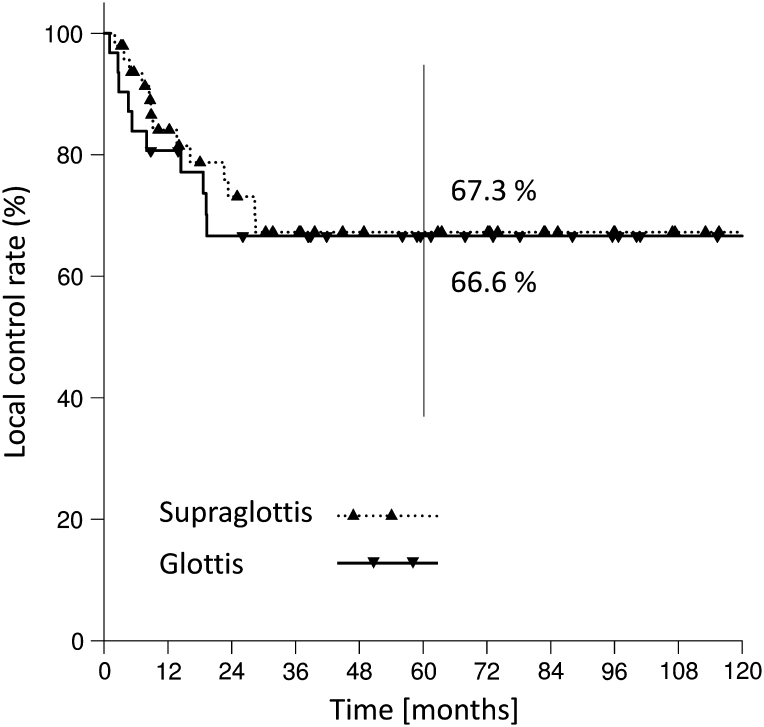
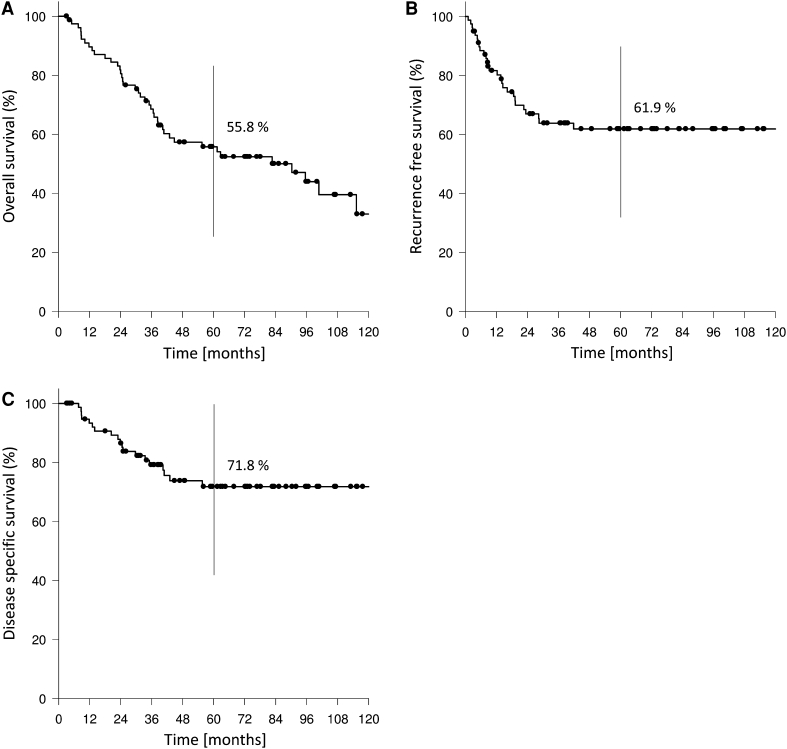
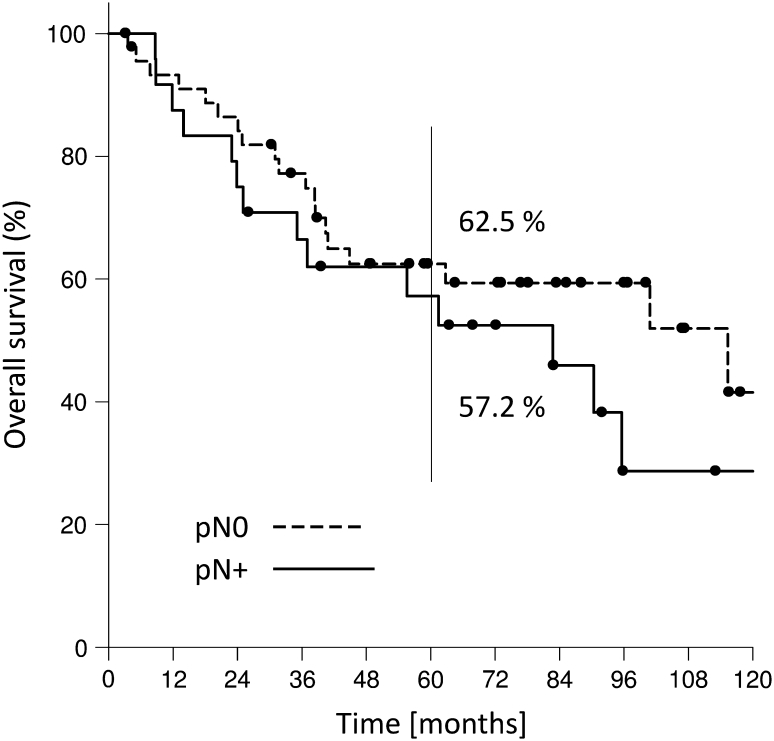
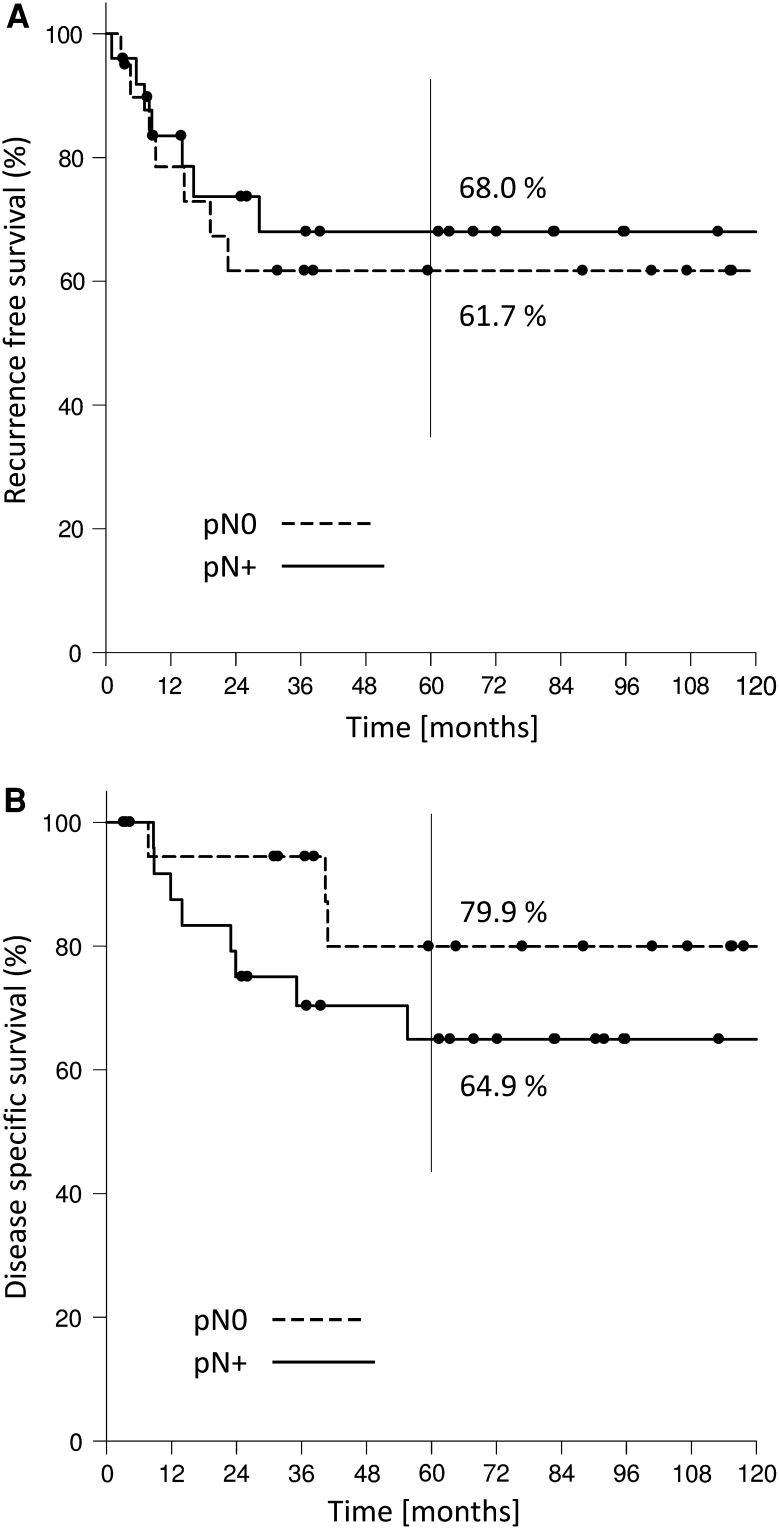
The main objective of this study is to assess the feasibility of transoral laser microsurgery (TLM) in the treatment of T4a laryngeal cancer and to report the oncological and functional outcomes. This is a retrospective case-series study, held in a single-institute, academic tertiary referral center. Seventy-nine patients with previously untreated T4a glottic (n = 31, 39 %) or supraglottic laryngeal carcinoma (n = 48, 61 %) were included in this study. Five patients (6 %) were treated exclusively by TLM, 16 (20 %) had TLM and unilateral neck dissection, 27 (35 %) had TLM and bilateral neck dissection. Adjuvant (chemo)radiotherapy was additionally administered in 26 (33 %) cases following TLM and neck dissection, and in 5 (6 %) cases after TLM without neck dissection. The main outcome measures included organ preservation, local control, functional outcome, overall, recurrence-free, and disease-specific survival. The median follow-up period was 49 months, 5 year organ preservation rate and local control rate were 80.0 and 67.2 %, 5 year overall, recurrence-free and disease-specific survival were 55.8, 61.9 and 71.8 %. The 5 year overall survival rates were 62.5 % in pN0 cases and 57.2 % in cases with pN-positive neck disease. With respect to survival, these results are comparable to total laryngectomy, while being superior to primary (chemo)radiotherapy. TLM results in a low morbidity, rapid recovery and good function and can be a valid option for organ preserving surgery of pT4a glottic and supraglottic cancer.
Figures
References
-
- Strong MS, Jako GJ. Laser surgery in the larynx. Early clinical experience with continuous CO2 laser. Ann Otol Rhinol Laryngol. 1972;81(6):791–798. - PubMed
Publication types
MeSH terms
LinkOut - more resources
Full Text Sources
Other Literature Sources
