


Apolipoprotein E4 genotype does not increase risk of HIV-associated neurocognitive disorders
- PMID: 23408335
- PMCID: PMC3668779
- DOI: 10.1007/s13365-013-0152-3
Apolipoprotein E4 genotype does not increase risk of HIV-associated neurocognitive disorders
Abstract
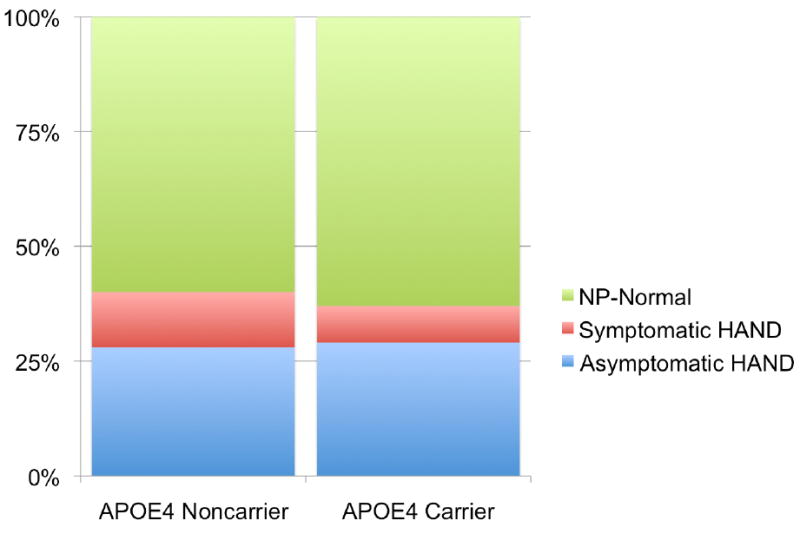
This is a cross-sectional, observational study to evaluate the hypothesis that HIV-seropositive (HIV+) apolipoprotein E4 (APOE4) carriers are at increased risk for HIV-associated neurocognitive disorders (HAND) compared to APOE4 noncarriers with HIV in the CNS HIV Antiretroviral Therapy Effects Research (CHARTER) Group sample. APOE genotype was determined in 466 CHARTER participants with varying disease stages and histories of antiretroviral treatment who did not have severe psychiatric or medical comorbid conditions that preclude diagnosis of HAND. HAND diagnoses were based on results of comprehensive neurobehavioral evaluation and use of current neuroAIDS diagnostic criteria. HAND status consists of two levels: neuropsychologically normal status (i.e., no HAND) and any HAND diagnosis (i.e., asymptomatic neurocognitive impairment, minor neurocognitive disorder, HIV-associated dementia). Logistic regression analyses revealed no association between APOE4 carrier status and HAND, and there were no interactions between APOE4 carrier status and ethnicity, age, substance use disorders, duration of infection, or nadir CD4. Results did not differ when analysis was restricted to symptomatic HAND, and no APOE4 gene dose-dependent relationship to HAND emerged. APOE4 status was not associated with concurrent HAND in this large, well-characterized sample. This does not preclude emergence of an association between APOE4 status and HAND as this population ages. Prospective, longitudinal studies are needed to examine APOE4 as a risk factor for neurocognitive decline, incident HAND at older ages, and potential associations with cerebrospinal fluid amyloid.
Figures
References
-
- Heaton RK, Marcotte TD, Mindt MR, et al. The impact of HIV-associated neuropsychological impairment on everyday functioning. J Int Neuropsychol Soc. 2004;10:317–331. - PubMed
-
- Becker JT, Lopez OL, Dew MA, Aizenstein HJ. Prevalence of cognitive disorders differs as a function of age in HIV virus infection. AIDS. 2004;18(Suppl 1):S11–18. - PubMed
Publication types
MeSH terms
Substances
Grants and funding
LinkOut - more resources
Full Text Sources
Other Literature Sources
Research Materials
Miscellaneous
