


Chemistry, metabolism, and toxicology of cannabis: clinical implications
- PMID: 23408483
- PMCID: PMC3570572
Chemistry, metabolism, and toxicology of cannabis: clinical implications
Abstract
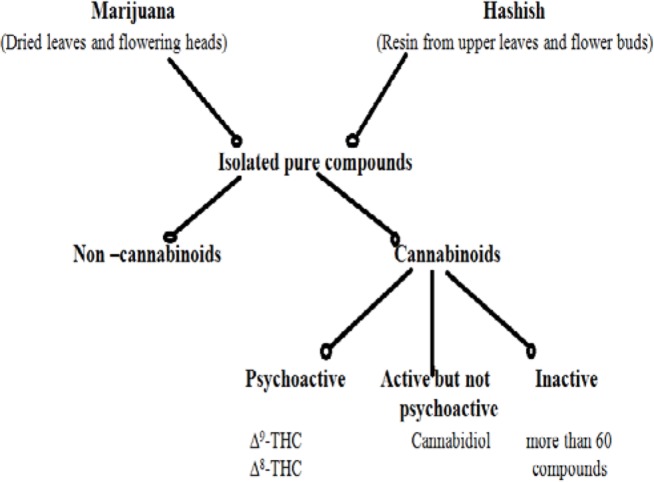
Cannabis is one of the most widely abused substances throughout the world. The primary psychoactive constituent of cannabis, delta 9-tetrahydrocannabinol (▵(9_)THC), produces a myriad of pharmacological effects in animals and humans. Although it is used as a recreational drug, it can potentially lead to dependence and behavioral disturbances and its heavy use may increase the risk for psychotic disorders.Many studies that endeavor to understand the mechanism of action of cannabis concentrate on pharmacokinetics and pharmacodynamics of cannabinoids in humans. However, there is limited research on the chronic adverse effects and retention of cannabinoids in human subjects.Cannabis can be detected in body fluids following exposure through active/passive inhalation and exposure through breastfeeding. Cannabis detection is directly dependent on accurate analytical procedures for detection of metabolites and verification of recent use.In this review, an attempt has been made to summarize the properties of cannabis and its derivatives, and to discuss the implications of its use with emphasis on bioavailability, limit of detection, carry over period and passive inhalation, important factors for detection and diagnosis.
Keywords: Cannabinoids; Cannabis; Mental disorders; Tetrahydrocannabinol.
Figures
References
-
- Brecher EM. The Consumers Union Report - Licit and Illicit Drugs. Little, Brown & Co; 1972.
-
- Balabanova S, Parsche F, Pirsig W. First identification of drugs in Egyptian mummies. Naturwissenschaften. 1992;79:358. - PubMed
-
- Grotenhermen F. The toxicology of cannabis and cannabis prohibition. Chem Bio divers. 2007;4:1744–1769. - PubMed
-
- Raharjo TJ, Verpoorte R. Methods for the analysis of cannabinoids in biological materials: a review. Phytochem Anal. 2004;15:79–94. - PubMed
-
- Hazekamp A, Grotenhermen F. Review on Clinical Studies with Cannabis and Cannabinoids 2005-2009. Cannabinoids. 2010;5:1–21.
LinkOut - more resources
Full Text Sources
Other Literature Sources