Plasmodium falciparum malaria elicits inflammatory responses that dysregulate placental amino acid transport
- PMID: 23408887
- PMCID: PMC3567154
- DOI: 10.1371/journal.ppat.1003153
Plasmodium falciparum malaria elicits inflammatory responses that dysregulate placental amino acid transport
Abstract
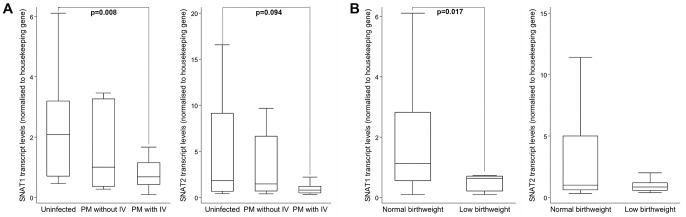
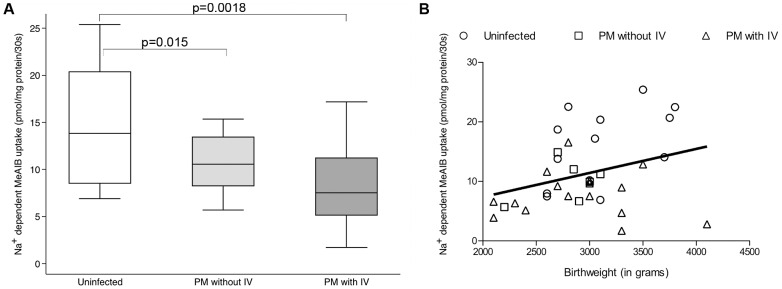
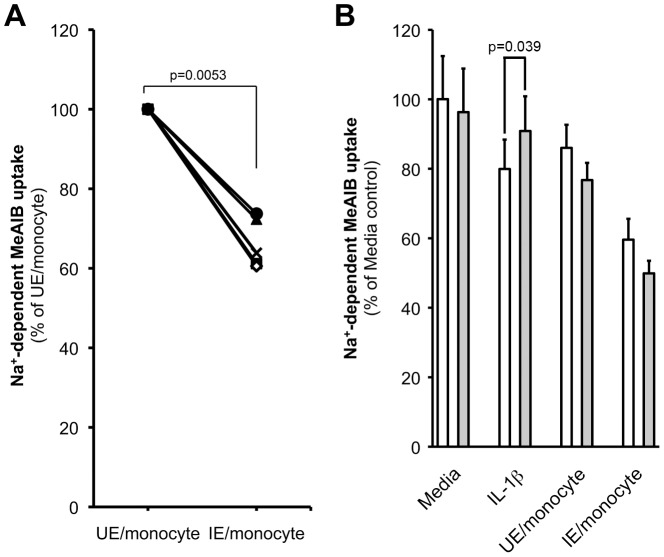
Placental malaria (PM) can lead to poor neonatal outcomes, including low birthweight due to fetal growth restriction (FGR), especially when associated with local inflammation (intervillositis or IV). The pathogenesis of PM-associated FGR is largely unknown, but in idiopathic FGR, impaired transplacental amino acid transport, especially through the system A group of amino acid transporters, has been implicated. We hypothesized that PM-associated FGR could result from impairment of transplacental amino acid transport triggered by IV. In a cohort of Malawian women and their infants, the expression and activity of system A (measured by Na⁺-dependent ¹⁴C-MeAIB uptake) were reduced in PM, especially when associated with IV, compared to uninfected placentas. In an in vitro model of PM with IV, placental cells exposed to monocyte/infected erythrocytes conditioned medium showed decreased system A activity. Amino acid concentrations analyzed by reversed phase ultra performance liquid chromatography in paired maternal and cord plasmas revealed specific alterations of amino acid transport by PM, especially with IV. Overall, our data suggest that the fetoplacental unit responds to PM by altering its placental amino acid transport to maintain adequate fetal growth. However, IV more profoundly compromises placental amino acid transport function, leading to FGR. Our study offers the first pathogenetic explanation for FGR in PM.
Conflict of interest statement
The authors have declared that no competing interests exist.
Figures
References
-
- Steketee RW, Nahlen BL, Parise ME, Menendez C (2001) The burden of malaria in pregnancy in malaria-endemic areas. Am J Trop Med Hyg 64: 28–35. - PubMed
-
- Desai M, ter Kuile FO, Nosten F, McGready R, Asamoa K, et al. (2007) Epidemiology and burden of malaria in pregnancy. Lancet Infect Dis 7: 93–104. - PubMed
-
- Abrams ET, Brown H, Chensue SW, Turner GD, Tadesse E, et al. (2003) Host Response to Malaria During Pregnancy: Placental Monocyte Recruitment Is Associated with Elevated beta Chemokine Expression. J Immunol 170: 2759–2764. - PubMed
-
- Rogerson SJ, Hviid L, Duffy PE, Leke RF, Taylor DW (2007) Malaria in pregnancy: pathogenesis and immunity. Lancet Infect Dis 7: 105–117. - PubMed
-
- Rogerson SJ, Pollina E, Getachew A, Tadesse E, Lema VM, et al. (2003) Placental monocyte infiltrates in response to Plasmodium falciparum infection and their association with adverse pregnancy outcomes. Am J Trop Med Hyg 68: 115–119. - PubMed
Publication types
MeSH terms
Substances
LinkOut - more resources
Full Text Sources
Other Literature Sources
Miscellaneous