. 2013;8(2):e56120.
doi: 10.1371/journal.pone.0056120. Epub 2013 Feb 8.

Identification of ATP1A3 mutations by exome sequencing as the cause of alternating hemiplegia of childhood in Japanese patients

Affiliations

Identification of ATP1A3 mutations by exome sequencing as the cause of alternating hemiplegia of childhood in Japanese patients

Atsushi Ishii et al. PLoS One. 2013.

Abstract

Background: Alternating hemiplegia of childhood (AHC) is a rare disorder characterized by transient repeated attacks of paresis and cognitive impairment. Recent studies from the U.S. and Europe have described ATP1A3 mutations in AHC. However, the genotype-phenotype relationship remains unclear. The purpose of this study was to identify the genetic abnormality in a Japanese cohort of AHC using exome analysis.

Principal findings: A total of 712,558 genetic single nucleotide variations in 8 patients with sporadic AHC were found. After a series of exclusions, mutations of three genes were regarded as candidate causes of AHC. Each patient harbored a heterozygous missense mutation of ATP1A3, which included G755C, E815K, C927Y and D801N. All mutations were at highly conserved amino acid residues and deduced to affect ATPase activity of the corresponding ATP pump, the product of ATP1A3. They were de novo mutations and not identified in 96 healthy volunteers. Using Sanger sequencing, E815K was found in two other sporadic cases of AHC. In this study, E815K was found in 5 of 10 patients (50%), a prevalence higher than that reported in two recent studies [19 of 82 (23%) and 7 of 24 (29%)]. Furthermore, the clinical data of the affected individuals indicated that E815K resulted in a severer phenotype compared with other ATP1A3 mutations.

Interpretation: Heterozygous de novo mutations of ATP1A3 were identified in all Japanese patients with AHC examined in this study, confirming that ATP1A3 mutation is the cause of AHC.


Conflict of interest statement

Competing Interests: The authors have declared that no competing interests exist.

Figures

Figure 1
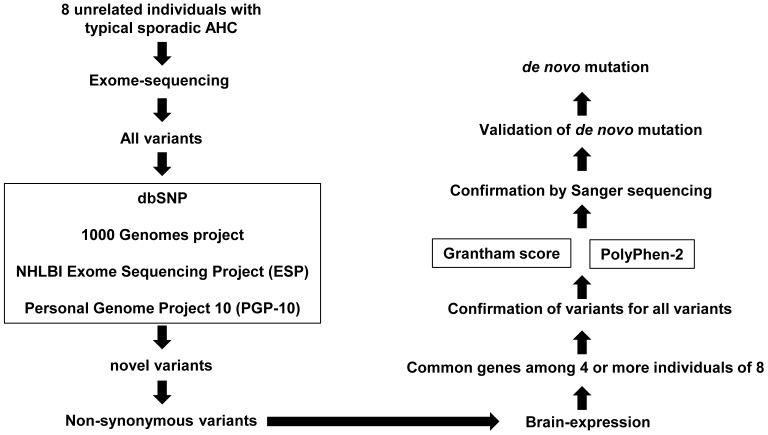
Figure 1. Pipeline for detection of novel de novo mutations.
The pipeline was used to identify pathogenic mutations of alternating hemiplegia of childhood (AHC). All genetic variants detected by exome sequencing are sequentially filtered through the pipeline. First, variations are screened according to databases of registered single nucleotide polymorphisms (SNP) and only non-registered SNP undergo the next selection as “Novel variants”. In the next step, non-synonymous novel variants of genes expressed in the central nervous system are selected. When variations of the same gene are found in the patient, the impact of such variation is evaluated in silico using Grantham score and PolyPhen-2. Mutations identified at this stage are reconfirmed by Sanger sequence. De novo mutation is validated by analyzing samples from parents. Mutations considered pathogenic are sought in other patients with AHC if necessary.
Figure 2
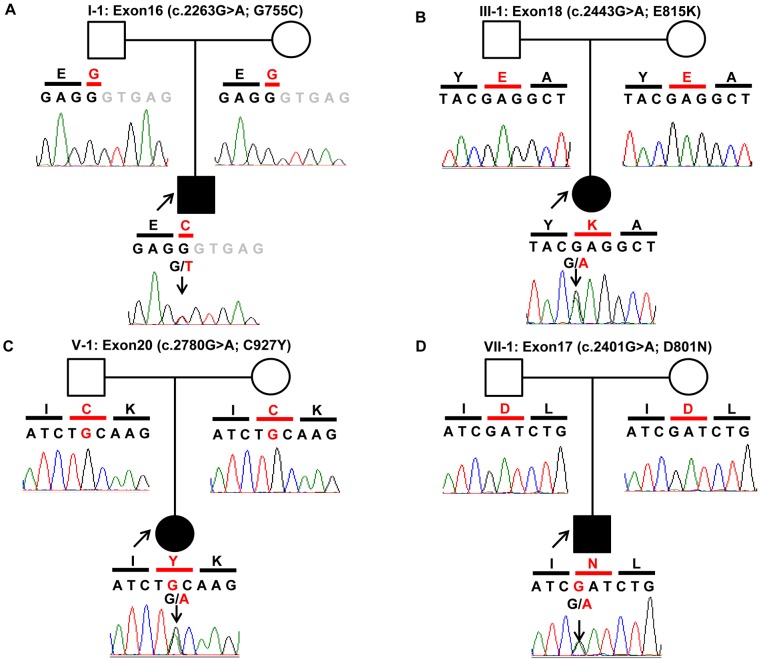
Figure 2. Chromatograms of four de novo mutations identified in ATP1A3.
Data were obtained by Sanger sequencing during the confirmation process. In trio of each pedigree, black shadow represents the proband. In the chromatograms, Black letters show exonic nucleotide sequences, gray letters show intronic nucleotide sequences. Amino acids are shown in a single letter notation. Nucleotides and amino acids in red indicate mutations. (A) G755C was identified only in Patient I-1. (B) E815K was identified in Patients II-1, III-1, IV-1, IX-1 and X-1. (C) C927Y was identified in Patient V-1 only. (D) D801N was identified in Patients VI-1, VII-1 and VIII-1. None of the mutations was detected in the father or mother except for Patient IX-1, whose parents refused to undergo genetic analysis.
Figure 3
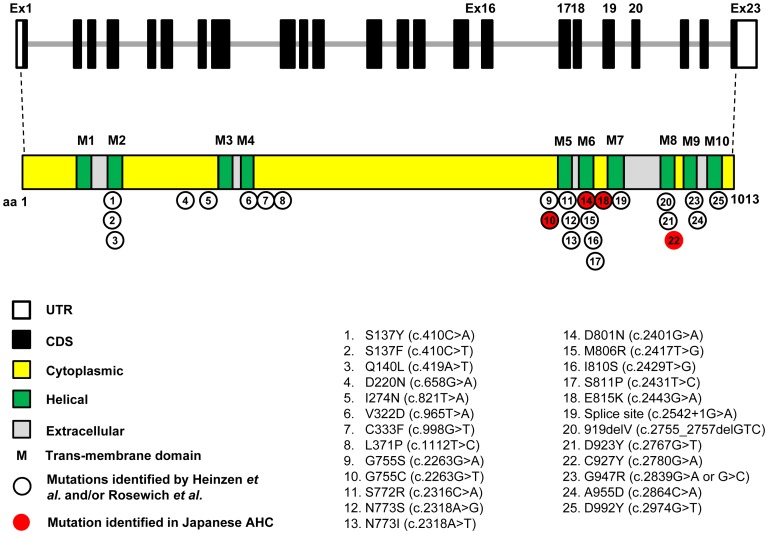
Figure 3. ATP1A3 mutations and their protein domain structures.
Black lined circle: Mutations reported recently , . Red colored circle: Mutations identified in the present study in a Japanese cohort with AHC. The ATP1A3 gene consists of 23 exons that encode several domains in the ATP1A3 protein molecule, including 6 cytoplasmic, 10 helical and 5 extracellular domains. G755C and E815K were located in the cytoplasmic domains. Notably, E815K was resident of the transmembrane domain rather than the cytoplasmic domain. D801N and C927Y were located in the helical domains. C927Y was identified in this study only and hence considered novel.
Figure 4
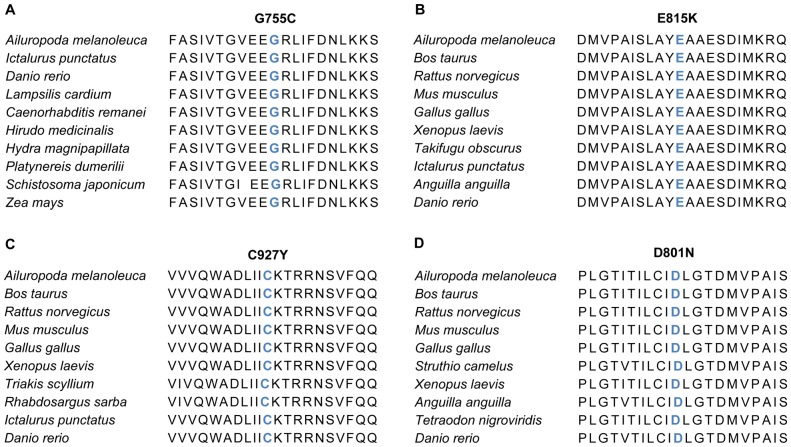
Figure 4. Homologous comparison of altering-protein.
Blue letters: altering-protein by mutation, red letters: differential protein with human. (A) G755C changed by novel SNVs (c.2263G>T) of ATP1A3 in Patient I-1. (B) E815K changed by novel SNVs (c.2443 G>A) of ATP1A3 in Patients II-1, III-1, IV-1, IX-1 and X-1. (C) C927Y changed by novel SNVs (c.2780 G>A) of ATP1A3 in Patient V-1. (D) D801N changed by novel SNVs (c.2401 G>A) of ATP1A3 in Patient VI-1, VII-1 and VIII-1.

References

    1. Bourgeois M, Aicardi J, Goutieres F (1993) Alternating hemiplegia of childhood. J Pediatr 122: 673–679. - PubMed
    1. Sweney MT, Silver K, Gerard-Blanluet M, Pedespan JM, Renault F, et al. (2009) Alternating hemiplegia of childhood: early characteristics and evolution of a neurodevelopmental syndrome. Pediatrics 123: e534–541. - PubMed
    1. Bassi MT, Bresolin N, Tonelli A, Nazos K, Crippa F, et al. (2004) A novel mutation in the ATP1A2 gene causes alternating hemiplegia of childhood. J Med Genet 41: 621–628. - PMC - PubMed
    1. Neville BG, Ninan M (2007) The treatment and management of alternating hemiplegia of childhood. Dev Med Child Neurol 49: 777–780. - PubMed
    1. Ducros A, Denier C, Joutel A, Vahedi K, Michel A, et al. (1999) Recurrence of the T666M calcium channel CACNA1A gene mutation in familial hemiplegic migraine with progressive cerebellar ataxia. Am J Hum Genet 64: 89–98. - PMC - PubMed

Publication types

Substances

Supplementary concepts

LinkOut - more resources