


C9orf72 repeat expansions are a rare genetic cause of parkinsonism
- PMID: 23413259
- PMCID: PMC3984141
- DOI: 10.1093/brain/aws357
C9orf72 repeat expansions are a rare genetic cause of parkinsonism
Abstract
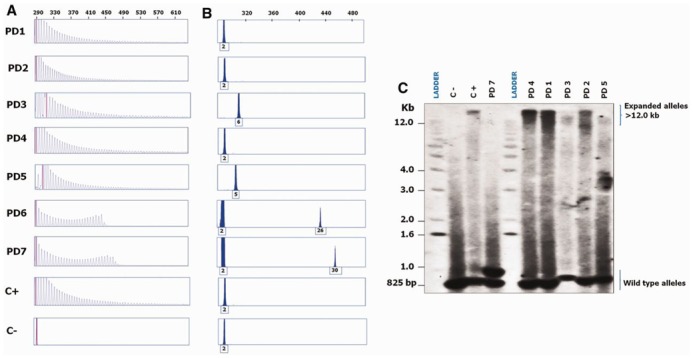
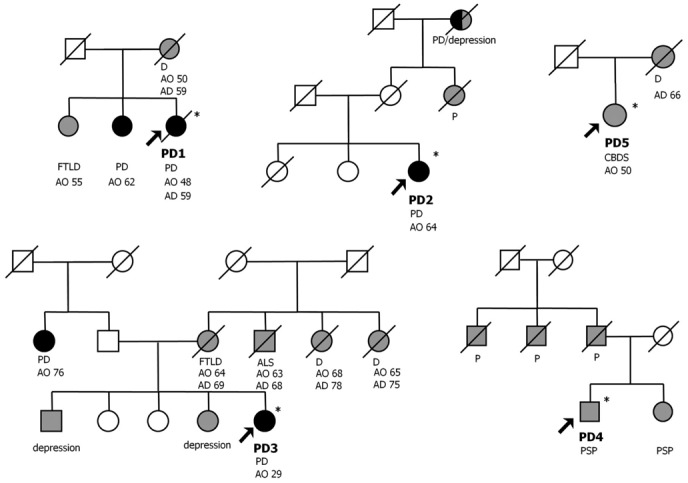
The recently identified C9orf72 gene accounts for a large proportion of amyotrophic lateral sclerosis and frontotemporal lobar degenerations. As several forms of these disorders are associated with parkinsonism, we hypothesized that some patients with Parkinson's disease or other forms of parkinsonism might carry pathogenic C9orf72 expansions. Therefore, we looked for C9orf72 repeat expansions in 1446 unrelated parkinsonian patients consisting of 1225 patients clinically diagnosed with Parkinson's disease, 123 with progressive supranuclear palsy, 21 with corticobasal degeneration syndrome, 43 with Lewy body dementia and 25 with multiple system atrophy-parkinsonism. Of the 1446 parkinsonian patients, five carried C9orf72 expansions: three patients with typical Parkinson's disease, one with corticobasal degeneration syndrome and another with progressive supranuclear palsy. This study shows that (i) although rare, C9orf72 repeat expansions may be associated with clinically typical Parkinson's disease and also with other parkinsonism; (ii) in several patients, parkinsonism was levodopa-responsive and remained pure, without associated dementia, for >10 years and (iii) interestingly, all C9orf72 repeat expansion carriers had positive family histories of parkinsonism, degenerative dementias or amyotrophic lateral sclerosis. This study also provides the tools for identifying parkinsonian patients with C9orf72 expansions, with important consequences for genetic counselling.
Figures
References
-
- Barton B, Grabli D, Bernard B, Czernecki V, Goldman JG, Stebbins G, et al. Clinical validation of movement disorder society-recommended diagnostic criteria for Parkinson’s disease with dementia. Mov Disord. 2012;27:248–53. - PubMed
-
- Boeve BF, Lang AE, Litvan I. Corticobasal degeneration and its relationship to progressive supranuclear palsy and frontotemporal dementia. Ann Neurol. 2003;54 (Suppl 5):S15–9. - PubMed
-
- de Lau LM, Breteler MM. Epidemiology of Parkinson’s disease. Lancet Neurol. 2006;5:525–35. - PubMed
Publication types
MeSH terms
Substances
LinkOut - more resources
Full Text Sources
Other Literature Sources
Medical
Research Materials
