


Short bowel syndrome in the NICU
- PMID: 23415263
- PMCID: PMC3886240
- DOI: 10.1016/j.clp.2012.12.003
Short bowel syndrome in the NICU
Abstract
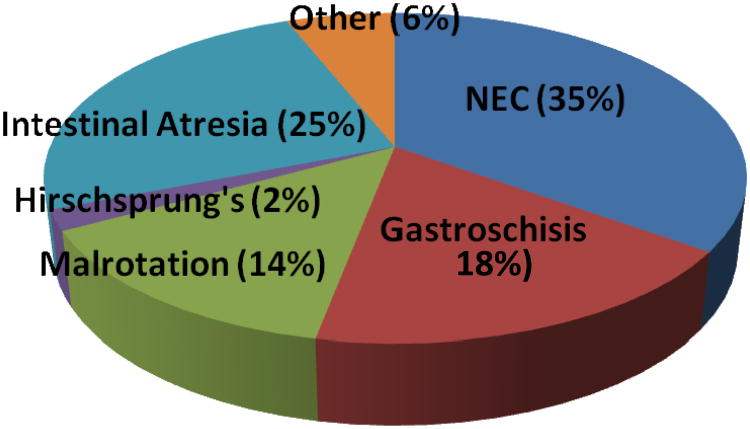
Short bowel syndrome (SBS) is the most common cause of intestinal failure in infants. In neonates and young infants, necrotizing enterocolitis, gastroschisis, intestinal atresia, and intestinal malrotation/volvulus are the leading causes of SBS. Following an acute postsurgical phase, the residual gastrointestinal tract adapts with reorganization of the crypt-villus histoarchitecture and functional changes in nutrient absorption and motility. A cohesive, multidisciplinary approach can allow most neonates with SBS to transition to full enteral feeds and achieve normal growth and development. In this article, the clinical features, management, complications, and prognostic factors in SBS are reviewed.
Copyright © 2013 Elsevier Inc. All rights reserved.
Conflict of interest statement
Figures
References
-
- Andorsky DJ, Lund DP, Lillehei CW, Jaksic T, Dicanzio J, Richardson DS, Collier SB, Lo C, Duggan C. Nutritional and other postoperative management of neonates with short bowel syndrome correlates with clinical outcomes. The Journal of pediatrics. 2001;139:27–33. - PubMed
-
- Berg CL, Steffick DE, Edwards EB, Heimbach JK, Magee JC, Washburn WK, Mazariegos GV. Liver and intestine transplantation in the United States 1998-2007. American journal of transplantation : official journal of the American Society of Transplantation and the American Society of Transplant Surgeons. 2009;9:907–931. - PubMed
-
- Bianchi A. Intestinal loop lengthening--a technique for increasing small intestinal length. Journal of pediatric surgery. 1980;15:145–151. - PubMed
-
- Bongaerts G, Tolboom J, Naber T, Bakkeren J, Severijnen R, Willems H. D-lactic acidemia and aciduria in pediatric and adult patients with short bowel syndrome. Clinical chemistry. 1995;41:107–110. - PubMed
Publication types
MeSH terms
Grants and funding
LinkOut - more resources
Full Text Sources
Other Literature Sources
Medical
