


Neural representations of events arise from temporal community structure
- PMID: 23416451
- PMCID: PMC3749823
- DOI: 10.1038/nn.3331
Neural representations of events arise from temporal community structure
Abstract
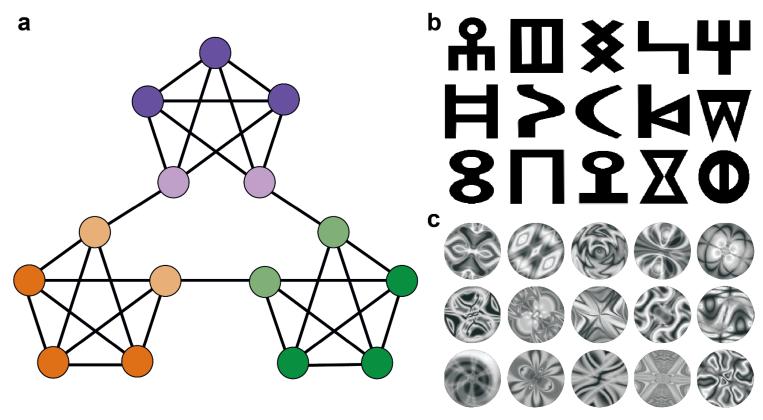
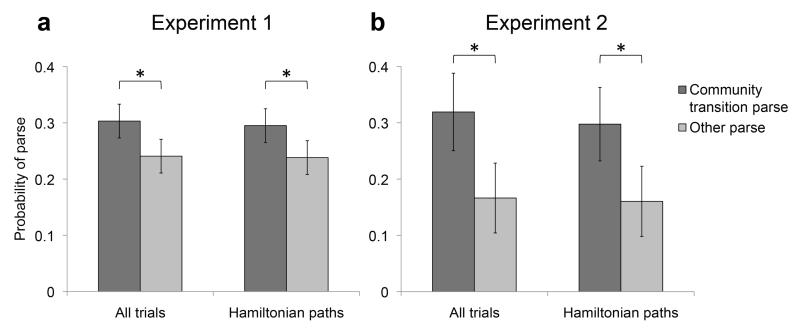
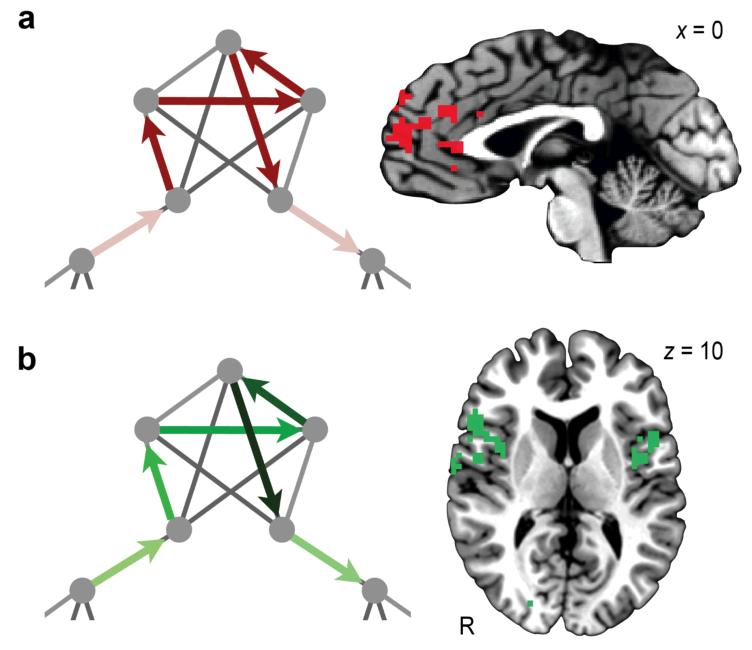
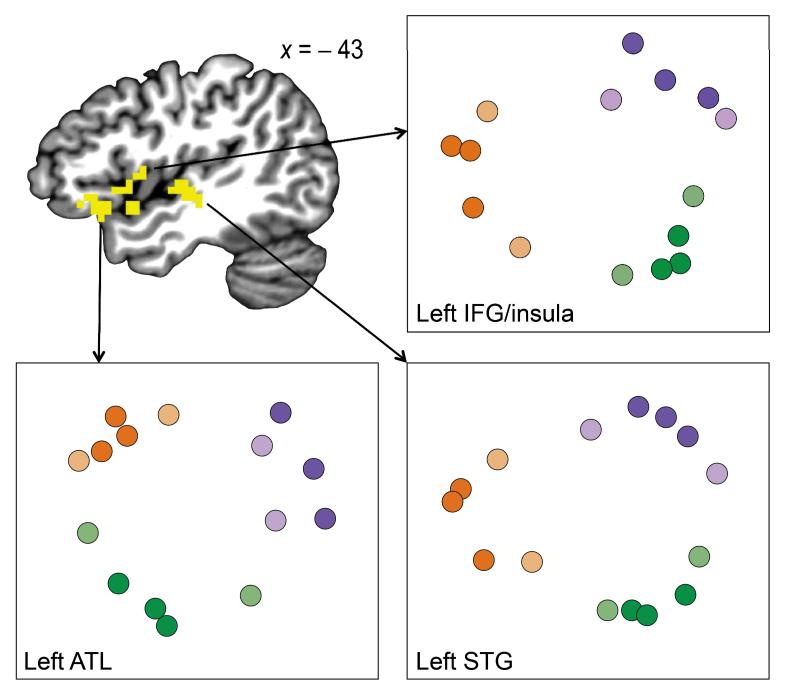
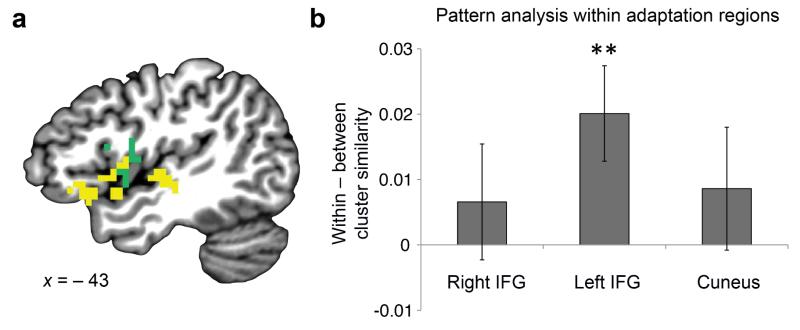
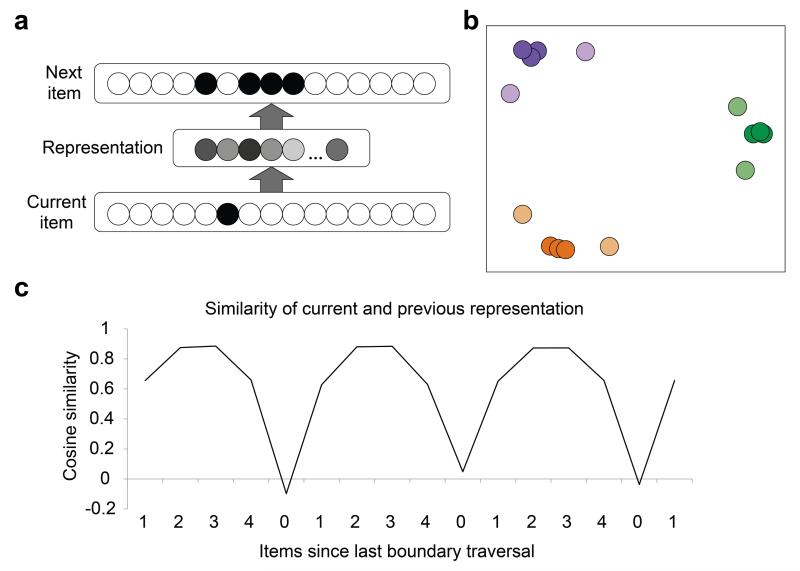
Our experience of the world seems to divide naturally into discrete, temporally extended events, yet the mechanisms underlying the learning and identification of events are poorly understood. Research on event perception has focused on transient elevations in predictive uncertainty or surprise as the primary signal driving event segmentation. We present human behavioral and functional magnetic resonance imaging (fMRI) evidence in favor of a different account, in which event representations coalesce around clusters or 'communities' of mutually predicting stimuli. Through parsing behavior, fMRI adaptation and multivoxel pattern analysis, we demonstrate the emergence of event representations in a domain containing such community structure, but in which transition probabilities (the basis of uncertainty and surprise) are uniform. We present a computational account of how the relevant representations might arise, proposing a direct connection between event learning and the learning of semantic categories.
Figures
References
-
- Speer NK, Swallow KM, Zacks JM. Activation of human motion processing areas during event perception. Cogn. Affect. Behav. Neurosci. 2003;3:335–345. - PubMed
-
- Newtson D. Attribution and the unit of perception of ongoing behavior. J. Pers. Soc. Psychol. 1973;28:28–38.
-
- Reynolds JR, Zacks JM, Braver TS. A computational model of event segmentation from perceptual prediction. Cogn. Sci. 2007;31:613–643. - PubMed
-
- Baldwin D, Andersson A, Saffran J, Meyer M. Segmenting dynamic human action via statistical structure. Cognition. 2008;106:1382–1407. - PubMed
Publication types
MeSH terms
Grants and funding
LinkOut - more resources
Full Text Sources
Other Literature Sources
Medical
