Review
. 2013 Mar 1;190(5):1911-8.
doi: 10.4049/jimmunol.1203162.

Molecular basis of DNA recognition in the immune system

Affiliations
Review

Molecular basis of DNA recognition in the immune system

Maninjay K Atianand et al. J Immunol. .

Abstract

Recognition of microbial nucleic acids is one strategy by which mammalian hosts respond to infectious agents. Intracellular DNA that is introduced into cells during infection elicits potent inflammatory responses by triggering the induction of antiviral type I IFNs and the maturation and secretion of inflammatory cytokines, such as TNF-α, IL-1β, and IL-18. In addition, if nucleases, such as DNase II or DNase III (Trex1), fail to clear self-DNA, accumulated DNA gains access to intracellular compartments where it drives inflammatory responses leading to autoimmune disease. In this review, we discuss a rapidly evolving view of how cytosolic DNA-sensing machineries coordinate antimicrobial immunity and, if unchecked, lead to autoimmune disease.


Figures
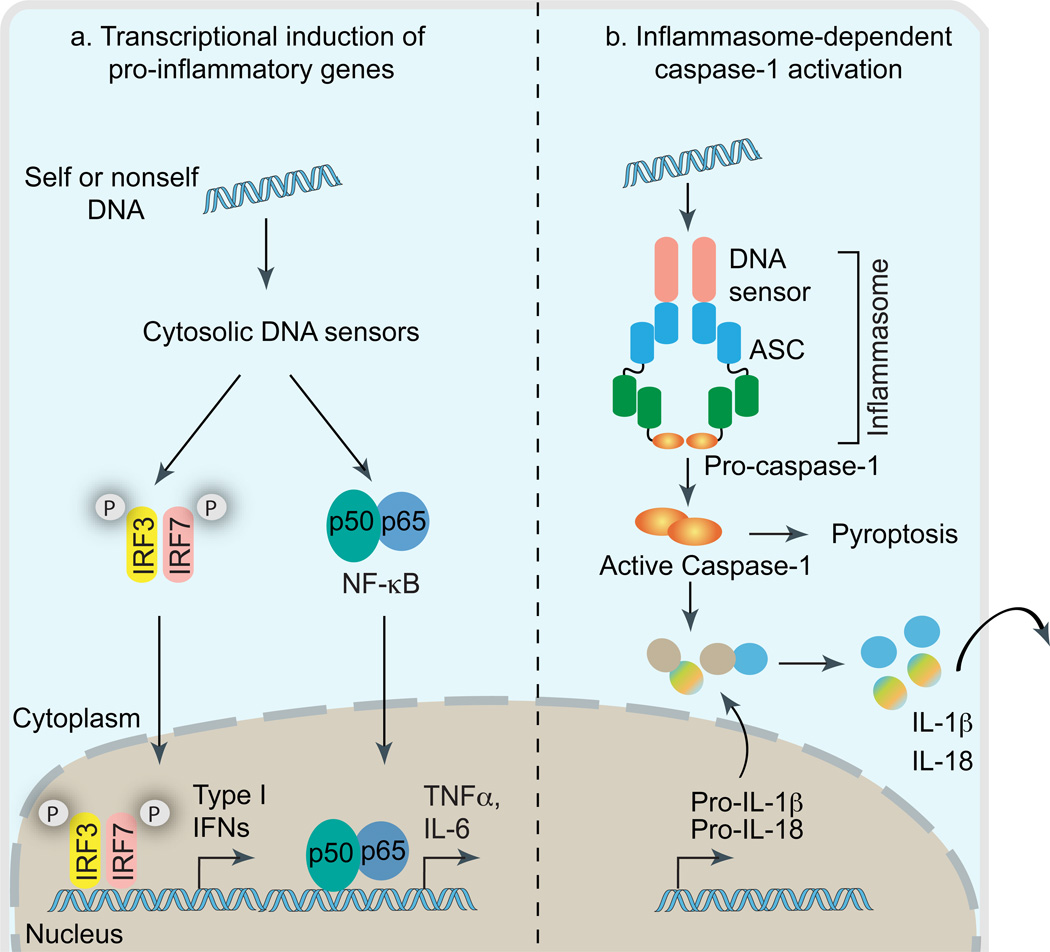
Figure 1
Figure 1. DNA in cytosol triggers transcription of inflammatory genes and inflammasome-dependent proteolytic activation of caspase-1
Cytosolic DNA leads to the engagement of two conceptually distinct signaling pathways involved in host immune responses (a) Activation of IRF3, IRF7 and NF-κB leads to the transcriptional induction of type I interferon genes or proinflammatory genes such as IL-6 and TNFα. (b) Cytosolic DNA driven inflammasome assembly via homotypic PYD:PYD and CARD:CARD interactions leading to caspase-1 activation and subsequent proteolytic cleavage of pro-IL-1β and pro-IL-18 into biologically active, mature forms IL-1β and IL-18. Besides cytokine processing, caspase-1 also mediates cell-death under certain biological contexts.
Figure 2
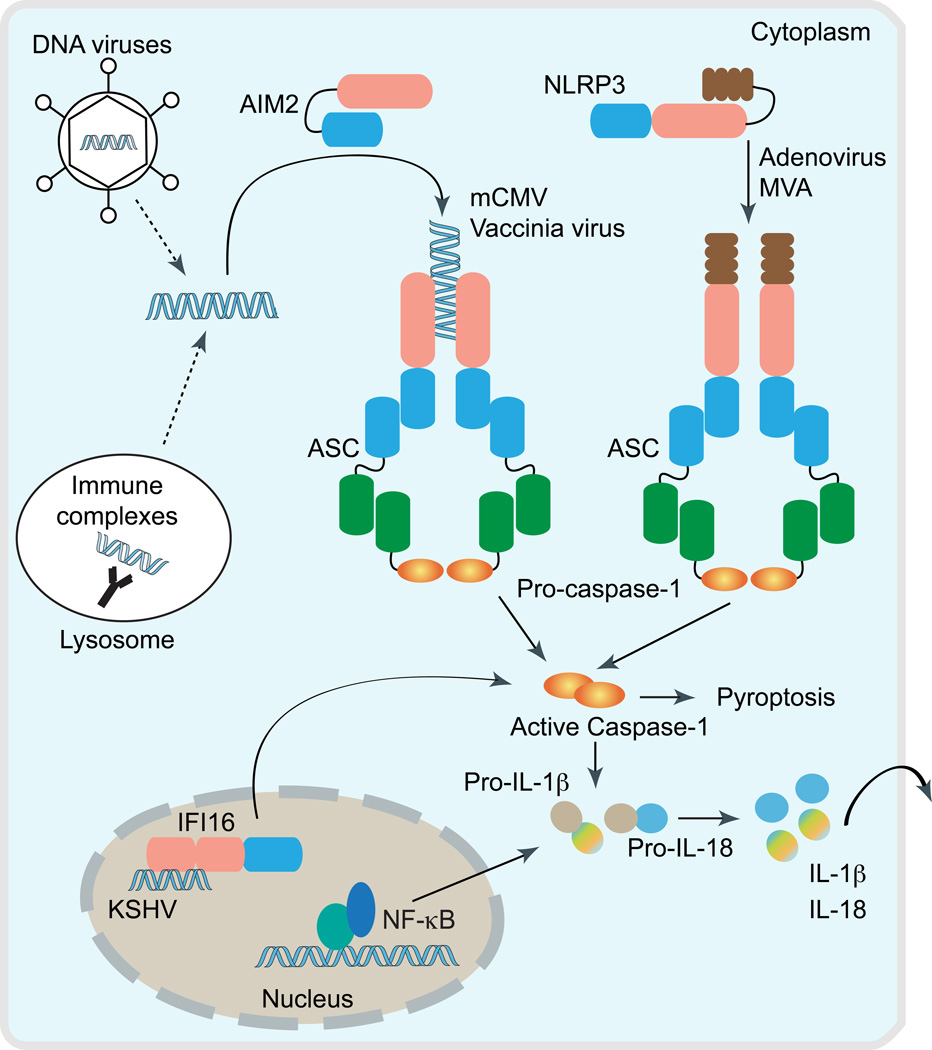
Figure 2. Cytosolic DNA triggers inflammasome activation
Intracellular DNA following microbial infection or phagocytosis of immune complexes can potentially trigger the assembly of either NLR (e.g. NLRP3) or PYHIN inflammasomes (AIM2 and IFI16). Upon activation, these cytosolic DNA sensors recruit the inflammasome adaptor ASC to activate caspase-1, which leads to the processing of pro-IL-1β and pro-IL-18 into their biologically active forms. Notably, AIM2 and IFI16 bind directly to DNA via its C-terminal HIN200 domain, and therefore act as the true receptors for cytosolic DNA. However, the precise mechanism triggering Nlrp3 inflammasome assembly, and whether microbial DNA is the ligand for Nlrp3 is still unclear. Interestingly, IFI16 inflammasome is thought to assemble inside the nucleus in response to KSHV infection in endothelial cells.
Figure 3
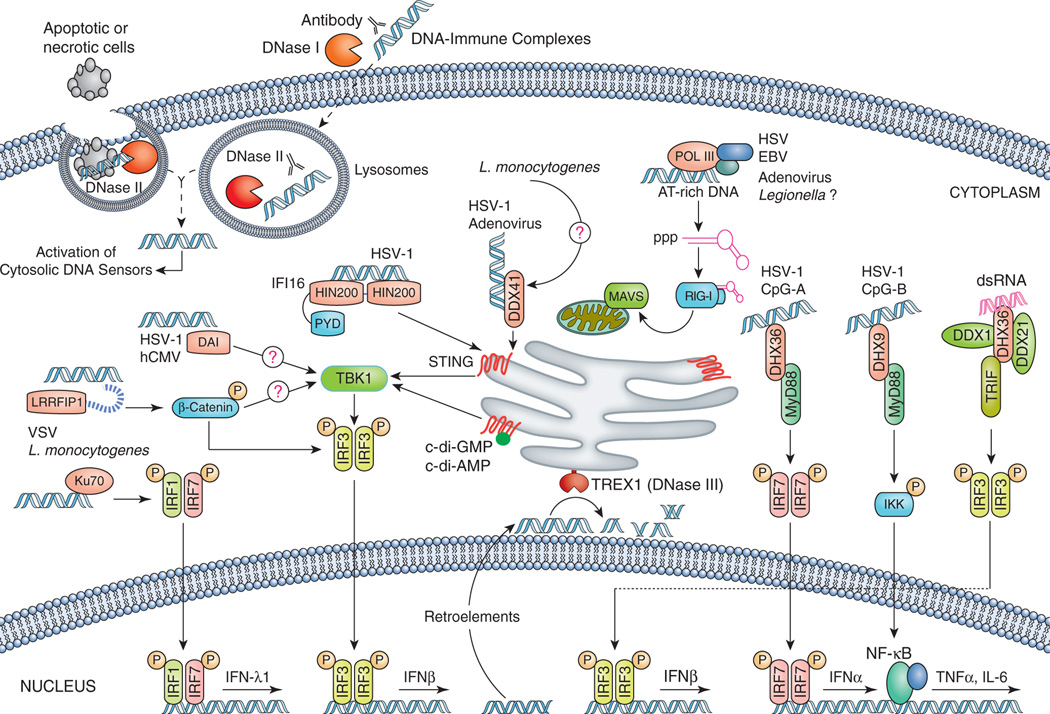
Figure 3. Cytosolic DNA sensors activate the transcription of type I IFN and other inflammatory genes
Cytosolic DNA of microbial or self-origin is a potent trigger of type I IFN production via STING-TBK1-IRF3 axis, as well as other proinflammatory genes (e.g. TNFα and IL-6) by engaging NF-κB signaling. Distinct cytosolic DNA sensors along with their select activating conditions are shown, which are discussed in detail in text. The DNA-induced signaling pathway converges on the adaptor STING and the kinase TBK1, which phosphorylates IRF3 to mediate downstream signaling events leading to transcriptional induction of inflammatory genes. Beyond cytosolic DNA, bacterial small molecules, c-di-AMP and c-di-GMP acts as a potent stimulator of type I IFN a response by engaging STING either as a direct sensor or co-activator (discussed in text). Host cells employ distinct nucleases to eliminate both self and non-self DNA from extracellular space (DNase I), phago-lysosomes (DNase II) and cytosol (DNase III; Trex1) to avoid deleterious effects of excess DNA-induced immune responses.

References

    1. Medzhitov R. Recognition of microorganisms and activation of the immune response. Nature. 2007;449:819–826. - PubMed
    1. Pasare C, Medzhitov R. Toll-like receptors: linking innate and adaptive immunity. Microbes and infection / Institut Pasteur. 2004;6:1382–1387. - PubMed
    1. Alexopoulou L, Holt AC, Medzhitov R, Flavell RA. Recognition of double-stranded RNA and activation of NF-kappaB by Toll-like receptor 3. Nature. 2001;413:732–738. - PubMed
    1. Lund JM, Alexopoulou L, Sato A, Karow M, Adams NC, Gale NW, Iwasaki A, Flavell RA. Recognition of single-stranded RNA viruses by Toll-like receptor 7. Proceedings of the National Academy of Sciences of the United States of America. 2004;101:5598–5603. - PMC - PubMed
    1. Heil F, Hemmi H, Hochrein H, Ampenberger F, Kirschning C, Akira S, Lipford G, Wagner H, Bauer S. Species-specific recognition of single-stranded RNA via toll-like receptor 7 and 8. Science. 2004;303:1526–1529. - PubMed

Publication types

MeSH terms