


A review on JC virus infection in kidney transplant recipients
- PMID: 23424601
- PMCID: PMC3569895
- DOI: 10.1155/2013/926391
A review on JC virus infection in kidney transplant recipients
Abstract
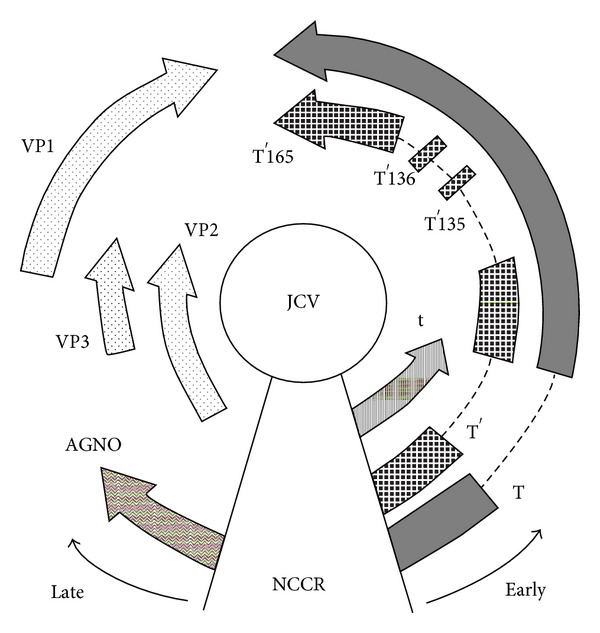
The polyomavirus (PyV), JC virus (JCV), is a small nonenveloped DNA virus that asymptomatically infects about 80% of healthy adults and establishes latency in the kidney tissue. In case of immunodeficient hosts, JCV can lytically infect the oligodendrocytes, causing a fatal demyelinating disease, known as progressive multifocal leukoencephalopathy (PML). Although the reactivation of another human PyV, BK virus (BKV), is relatively common and its association with the polyomavirus associated nephropathy (PyVAN) following renal transplantation is proven, JCV replication and its impact on graft function and survival are less well studied. Here we describe the biology of JCV and its pathological features and we review the literature regarding the JCV infection analyzed in the setting of transplantations.
Figures
References
-
- Imperiale MJ. The human polyomaviruses: an overview. In: Khalili K, Stoner GL, editors. Human Polyomaviruses: Molecular and Clinical Perspective. chapter 5. New York, NY, USA: John Wiley & Sons; 2001. pp. 53–71.
-
- Padgett BL, Walker DL, ZuRhein GM, Eckroade RJ, Dessel BH. Cultivation of papova-like virus from human brain with progressive multifocal leucoencephalopathy. Lancet. 1971;1(7712):1257–1260. - PubMed
-
- Ahsan N, Shah KV. Polyomaviruses: an overview. Graft. 2002;5:9–18.
-
- Ahsan N, Shah KV. Polyomaviruses and human diseases. Advances in Experimental Medicine and Biology. 2006;577:1–18. - PubMed
-
- Khalili K, White MK. Human demyelinating disease and the polyomavirus JCV. Multiple Sclerosis. 2006;12(2):133–142. - PubMed
Publication types
MeSH terms
LinkOut - more resources
Full Text Sources
Other Literature Sources
Medical
