. 2013:3:1275.
doi: 10.1038/srep01275.

Dysregulation of autophagy in chronic lymphocytic leukemia with the small-molecule Sirtuin inhibitor Tenovin-6

Affiliations

Dysregulation of autophagy in chronic lymphocytic leukemia with the small-molecule Sirtuin inhibitor Tenovin-6

Stephanie F MacCallum et al. Sci Rep. 2013.

Abstract

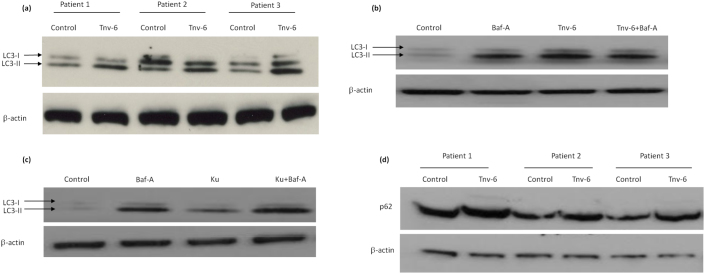
Tenovin-6 (Tnv-6) is a bioactive small molecule with anti-neoplastic activity. Inhibition of the Sirtuin class of protein deacetylases with activation of p53 function is associated with the pro-apoptotic effects of Tnv-6 in many tumors. Here, we demonstrate that in chronic lymphocytic leukemia (CLL) cells, Tnv-6 causes non-genotoxic cytotoxicity, without adversely affecting human clonogenic hematopoietic progenitors in vitro, or murine hematopoiesis. Mechanistically, exposure of CLL cells to Tnv-6 did not induce cellular apoptosis or p53-pathway activity. Transcriptomic profiling identified a gene program influenced by Tnv-6 that included autophagy-lysosomal pathway genes. The dysregulation of autophagy was confirmed by changes in cellular ultrastructure and increases in the autophagy-regulatory proteins LC3 (LC3-II) and p62/Sequestosome. Adding bafilomycin-A1, an autophagy inhibitor to Tnv-6 containing cultures did not cause synergistic accumulation of LC3-II, suggesting inhibition of late-stage autophagy by Tnv-6. Thus, in CLL, the cytotoxic effects of Tnv-6 result from dysregulation of protective autophagy pathways.


Figures
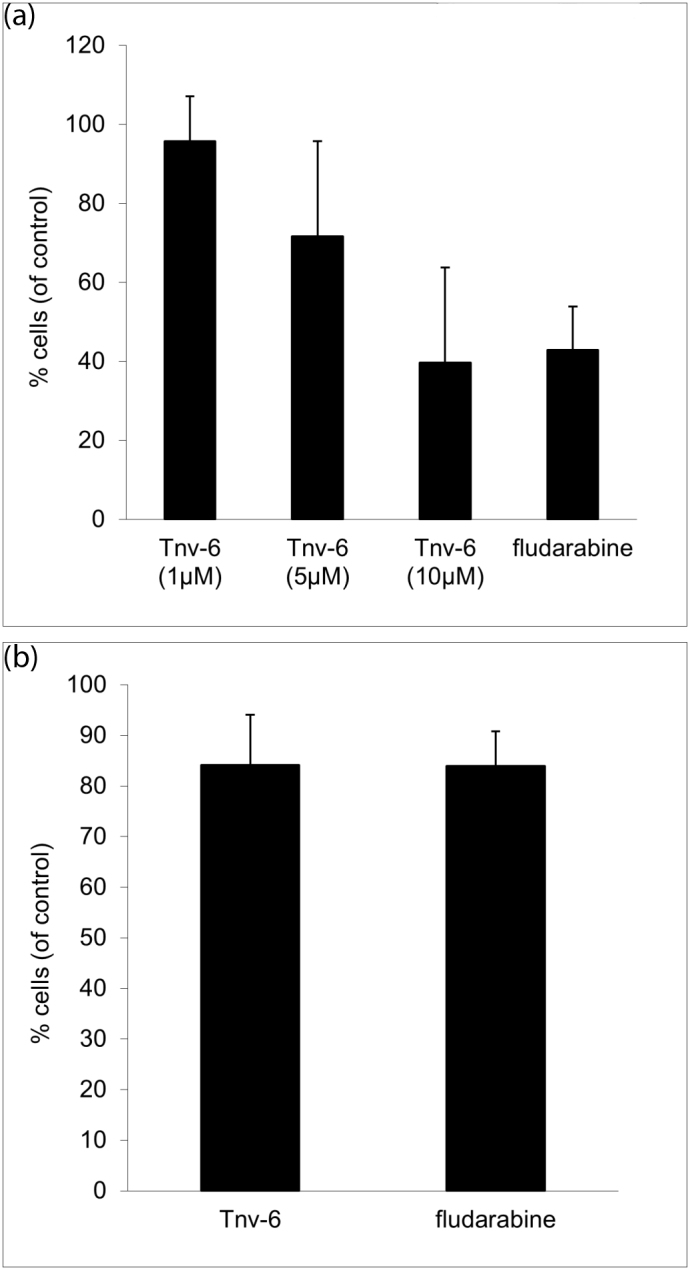
Figure 1
Figure 1. Dose-dependent cytotoxicity of Tnv-6.
Compared to 5 μM or 1 μM, greater cytotoxicity to CLL cells was evident with 10 μM of Tnv-6 at 24 hours (n = 10, p = 0.005, Student's t-test on paired samples), and at equivalent levels to 3 μM fludarabine (a). Cytotoxicity with 10 μM Tnv-6 at 8 hours (relative to controls, p = 0.007,) was also similar to fludarabine-containing cultures (p = non-significant) (b).
Figure 2
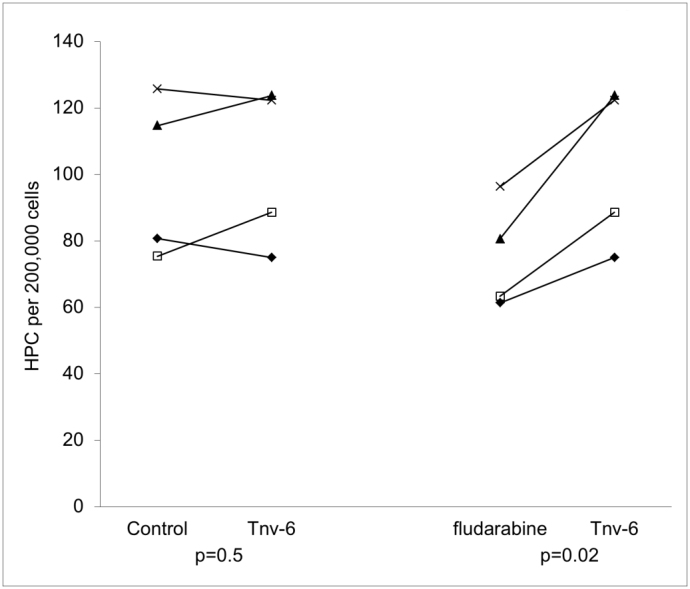
Figure 2. Human hematopoietic progenitor cell development (HPC) with Tnv-6.
Numbers of HPC recovered after 8 hours of culture of normal peripheral blood mononuclear cells with control medium (Control), Tnv-6 (10 μM) or fludarabine (3 μM). The recovery of HPC from Controls and cultures incubated with Tnv-6 was equivalent (p = 0.5), but higher than in fludarabine-containing cultures (p < 0.05, Student's t-test on paired samples), suggesting that the anti-leukemic dose of Tnv-6 is non-toxic to human HPC in vitro.
Figure 3
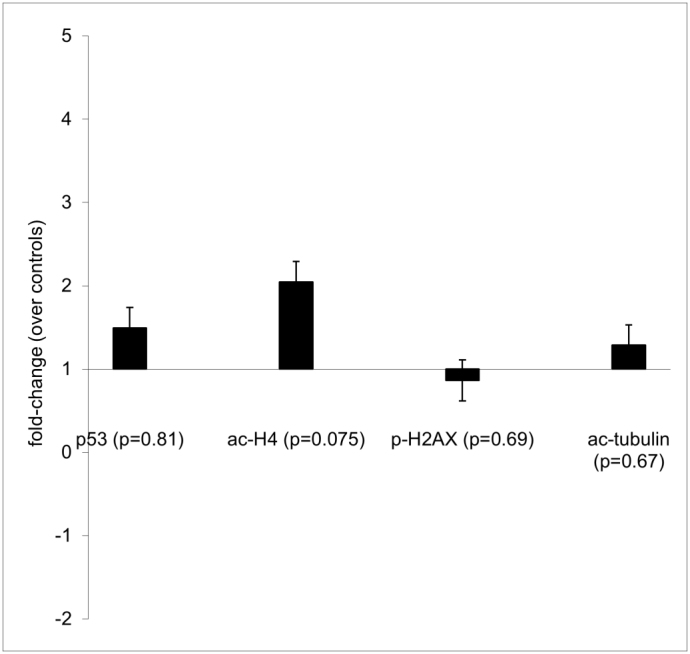
Figure 3. Expression levels of select Sirtuin substrates following treatment with Tnv-6.
Levels of p53, acetylated histone H4 (ac-H4), and acetylated tubulin (acet-tubulin) from 8 hour cultures of CLL cells with Tnv-6 were quantified using densitometry, standardized to respective β-actin values and expressed as the fold-change over untreated (control) cultures. In addition, phosphorylated H2AX (p-H2AX) levels were also quantified. Although heterogeneity of p53 and acet-H4 expression existed between patients, no significant difference in levels of any of the proteins was evident in Tnv-6-treated cells (Student's t-test on paired samples).
Figure 4
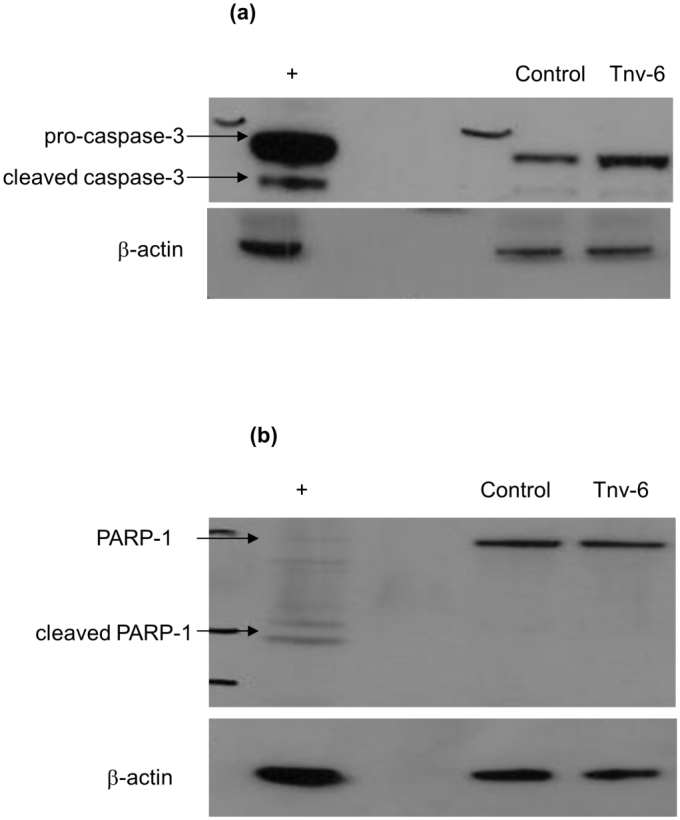
Figure 4. Pro-apoptotic protein marker expression following Tnv-6 treatment.
Representative Western blot gel images reveal the absence of cleaved caspase-3 (a) and PARP-1 (b) in CLL cells cultured with Tnv-6 (Tnv-6), similar to untreated cultures (Control). In contrast, cleaved forms of both proteins were detected in CLL cells cultured with fludarabine (+).
Figure 5
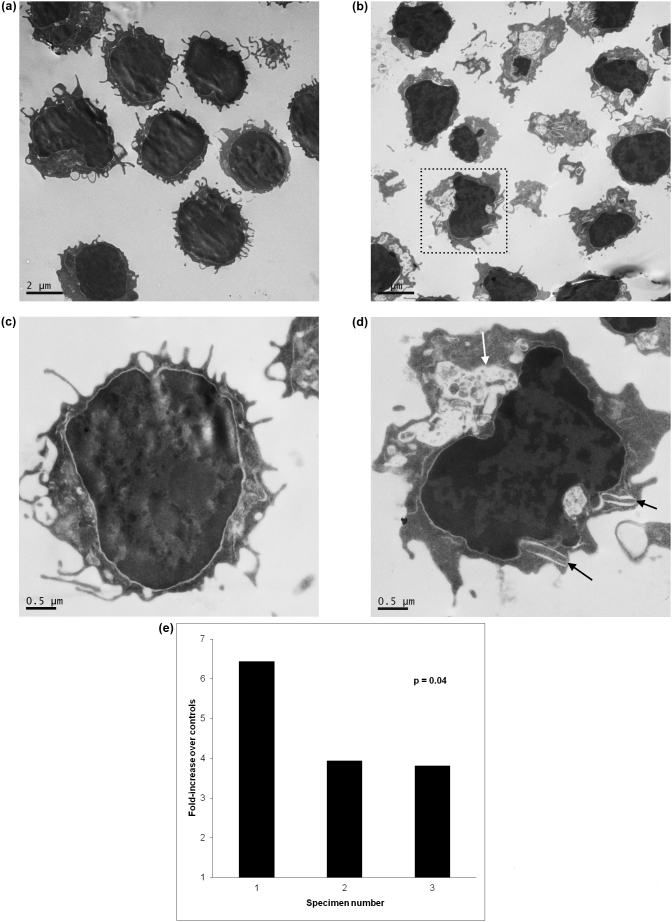
Figure 5. Ultrastructural changes following culture with Tnv-6.
Representative TEM images of cells from one (out of 3) CLL specimen after culture without (a) or in the presence of Tnv-6 (b) demonstrate differences in cellular ultrastructure and integrity after Tnv-6 treatment. To visualize subcellular differences in greater detail, images at higher magnification are shown of a cell each from control cultures (c) and Tnv-6 containing cultures (d). The latter cell, highlighted within an interrupted line box in (b) contains double-membrane bound cytoplasmic vacuoles (black arrows) suggestive of early autophagosomes. In addition, larger vacuoles containing morphologically intact material and partially degraded organelles (white arrow) suggestive of late autophagosomes are also seen. Numbers of autophagosomes per cell in 100 cell-sections per culture (n = 3) were 5-fold higher (p = 0.04) in Tnv-6-treated cultures than in corresponding controls (e).
Figure 6
Figure 6. Autophagy protein expression profiles following Tnv-6 treatment.
Compared to untreated (Control) cultures, Tnv-6-containing CLL cell cultures had increased lipidated LC3 (LC3-II, indicated by the lower band and arrow) (a). While a similar change in LC3-II was present in cells treated with bafilomycin-A (Baf-A), a synergistic increase in LC3-II was absent when Tnv-6 was combined with bafilomycin-A1 (b), in contrast to cultures with Ku-0063794 and bafilomycin-A1 (c). These data indicating a role for Tnv-6 as an autophagy-inhibitor are supported by the increase in cargo adaptor p62/Sequestosome following Tnv-6 treatment (d).

References

    1. Rosenwald A. et al. Fludarabine treatment of patients with chronic lymphocytic leukemia induces a p53-dependent gene expression response. Blood. 104, 1428–1434 (2004). - PubMed
    1. Moussay E. et al. Determination of genes and microRNAs involved in the resistance to fludarabine in vivo in chronic lymphocytic leukemia. Mol Cancer. 9, 115 (2010). - PMC - PubMed
    1. Ferracin M. et al. MicroRNAs involvement in fludarabine refractory chronic lymphocytic leukemia. Mol Cancer. 9, 123 (2010). - PMC - PubMed
    1. Pettitt A. R. et al. p53 dysfunction in B-cell chronic lymphocytic leukemia: inactivation of ATM as an alternative to TP53 mutation. Blood. 98, 814–822 (2001). - PubMed
    1. Zenz T. et al. TP53 inactivation is associated with poor prognosis in chronic lymphocytic leukemia: results from a detailed genetic characterization with long-term follow-up. Blood. 112, 3322–3329 (2008). - PubMed

Publication types

MeSH terms