


Growth in Long-Chain 3-Hydroxyacyl-CoA Dehydrogenase Deficiency
- PMID: 23430524
- PMCID: PMC3565647
- DOI: 10.1007/8904_2012_164
Growth in Long-Chain 3-Hydroxyacyl-CoA Dehydrogenase Deficiency
Abstract
Long-chain 3-hydroxyacyl-CoA dehydrogenase (LCHAD) deficiency is an inborn error of fatty acid metabolism that affects the degradation of long chain fatty acids and causes insufficient energy production and accumulation of toxic intermediates. The treatment consists of a diet low in fat, with supplementation of medium-chain triglycerides that bypass the metabolic block. In addition, frequent feeds and extra carbohydrates are given during febrile illnesses to reduce lipolysis. Hence, this diet differs from the general dietary recommendations for growing children. Furthermore, the Swedish dietary instructions for fat intake in LCHAD deficiency are given in grams, which differ from most guidelines that recommend fat intake as percentage shares of total caloric intake.
Aims: To assess growth in patients with LCHAD deficiency, in relation to dietary treatment and to evaluate if overweight/obesity is more common than in the normal population.
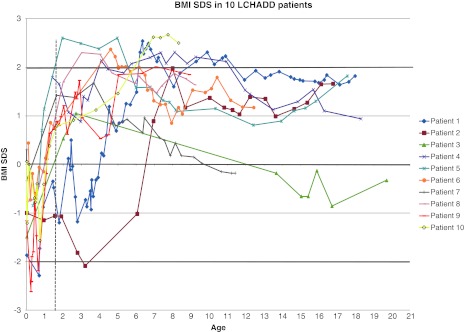
Results: The growth velocity showed acceleration after diagnosis and the start of treatment, followed by a period of stable or decelerated growth. The majority of the patients developed overweight to a greater extent than children without LCHAD deficiency. Several patients also went through a phase of obesity. Data on final height (FH) showed that three out of five patients had grown according to their genetic potential.
Conclusions: Regular and frequent follow-up and careful monitoring of weight are essential to avoid the development of overweight and obesity. The Swedish dietary instructions defining fat intake in total grams per day may be an alternative approach to achieve a moderate total caloric intake.
Figures

References
-
- Brand-Miller J , McMillan-Price J , Steinbeck K , Caterson I (2009) Dietary glycemic index: health implications. J Am Coll Nutr 28 Suppl:446S–449S - PubMed
LinkOut - more resources
Full Text Sources
Miscellaneous
