


Homozygosity for Non-H1069Q Missense Mutations in ATP7B Gene and Early Severe Liver Disease: Report of Two Families and a Meta-analysis
- PMID: 23430908
- PMCID: PMC3509905
- DOI: 10.1007/8904_2011_91
Homozygosity for Non-H1069Q Missense Mutations in ATP7B Gene and Early Severe Liver Disease: Report of Two Families and a Meta-analysis
Abstract
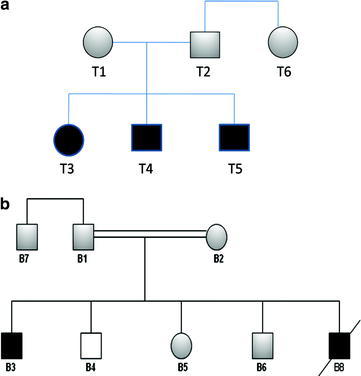
Most patients with Wilson's disease (WD) are compound heterozygote, which complicates establishing genotype-phenotype correlations. We identified five patients who presented with early and/or severe hepatic disease who are homozygous for W939C missense mutation on exon 12 of ATP7B. We therefore conducted a meta-analysis to determine the phenotype of patients homozygous for missense or nonsense mutations in all ATP7B exons.The meta-analysis showed that 69% and 31% of patients are homozygous for H1069Q and non-H1069Q mutations, respectively. Compared to patients with H1069Q, those with non-H1069Q mutations were significantly more likely to have a hepatic phenotype, severe liver disease, a mixed phenotype, and less likely to have a neurologic phenotype. Compared to patients with nonsense mutations, those with non-H1069Q ones were equally likely to present with a hepatic phenotype and to have severe liver disease. Mean age at symptom onset in the non-H1069Q versus the H1069Q group was 15.5 versus 20.5years (p<0.001).Our data suggest that mutation W939C and other non-H1069Q missense mutations are associated with early disease onset, a hepatic phenotype, and a high risk of hepatic failure in homozygous patients. Early identification of such patients by genetic screening is important for timely initiation of treatment and prevention of complications.
Figures
References
LinkOut - more resources
Full Text Sources
