


Newborn screening for inborn errors of metabolism in mainland china: 30 years of experience
- PMID: 23430943
- PMCID: PMC3565663
- DOI: 10.1007/8904_2011_119
Newborn screening for inborn errors of metabolism in mainland china: 30 years of experience
Abstract
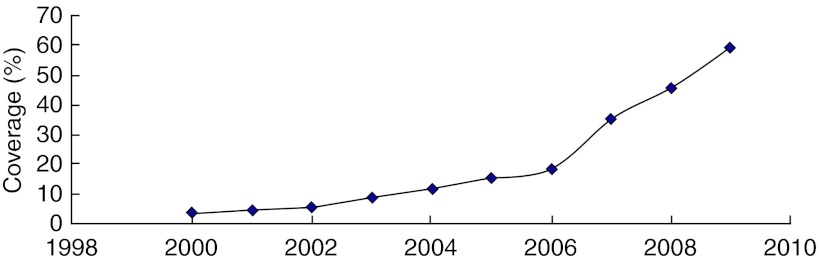
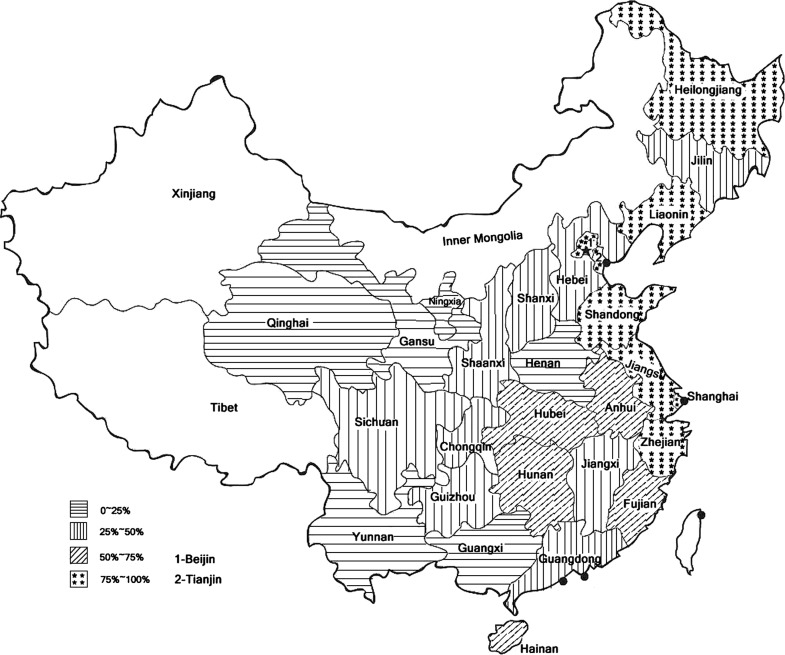
The history of the Newborn Screening Program in Mainland China begins in 1981, when a pilot plan was developed that demonstrated the feasibility of its implementation. It has so far focused on the detection of congenital hypothyroidism (CH) and phenylketonuria (PKU) to prevent or reduce mental and physical developmental retardation in children. Throughout this period, a total of 35,795,550 dried blood samples (DBS) of newborns (NB) have been analyzed for PKU, and 35,715,988 for CH. During this period, 3,082 cases with PKU have been diagnosed, resulting in an incidence of 1 case per 11,614 (95% confidence interval 11,218-12,039) live births. In relation to CH, 17,556 cases have been confirmed, arriving at an incidence of 1 case per 2,034(95% confidence interval 2,005-2,065) live births. The biggest challenge for universal newborn screening is still to increase coverage to mid-western area. In Mainland China, MS/MS newborn screening started in 2004. In a pilot study, 371,942 neonates were screened, and 98 cases were detected with one of the metabolic disorders, and the collective estimated prevalence amounted to 1 in 3795 (95% confidence interval 3,168-4,732) live births, with a sensitivity of 98.99%, a specificity of 99.83%, and a positive predictive value of 13.57%. The most important is to get the government's policy and financial support for expanded screening.
Figures
References
LinkOut - more resources
Full Text Sources
