


Consumption of coffee associated with reduced risk of liver cancer: a meta-analysis
- PMID: 23433483
- PMCID: PMC3598465
- DOI: 10.1186/1471-230X-13-34
Consumption of coffee associated with reduced risk of liver cancer: a meta-analysis
Abstract
Background: Epidemiologic studies have reported inconsistent results regarding coffee consumption and the risk of liver cancer. We performed a meta-analysis of published case-control and cohort studies to investigate the association between coffee consumption and liver cancer.
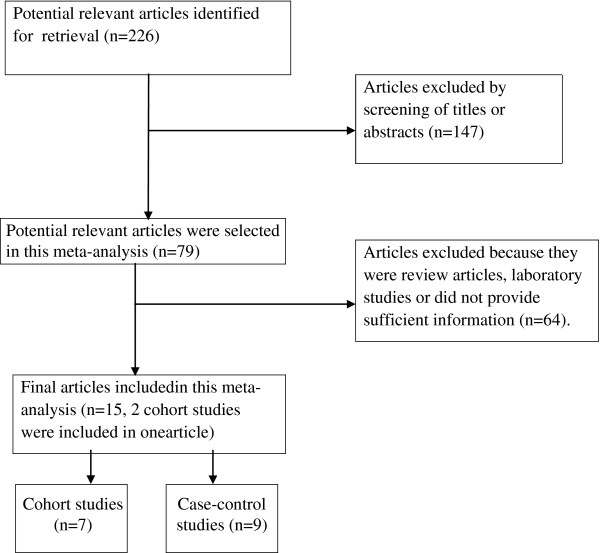
Methods: We searched Medline, EMBASE, ISI Web of Science and the Cochrane library for studies published up to May 2012. We performed a meta-analysis of nine case-control studies and seven cohort studies.
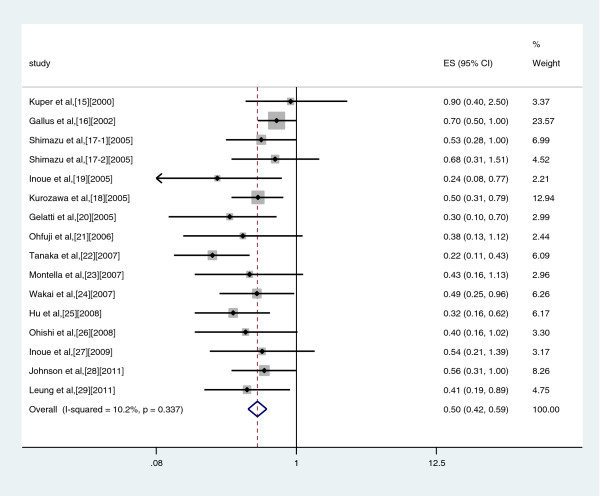
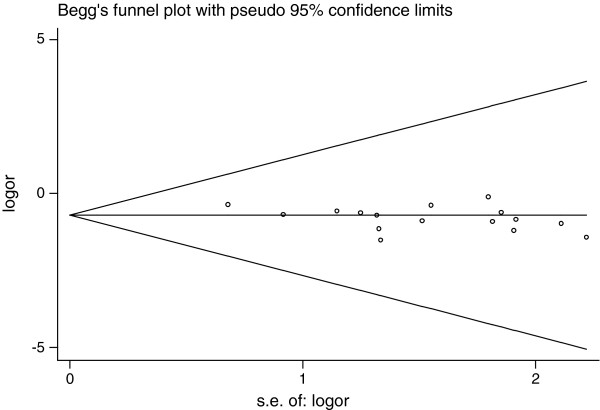
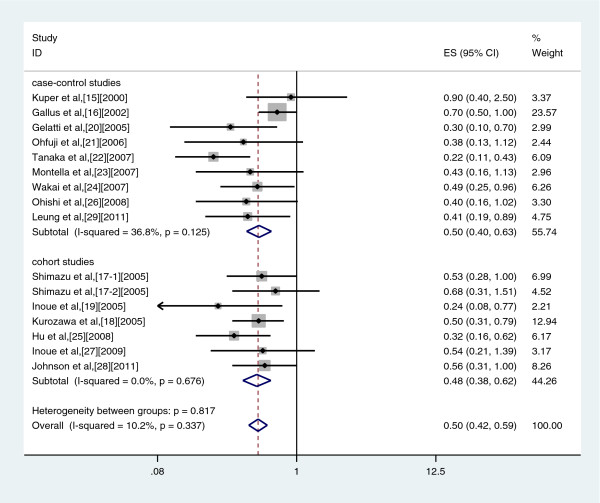
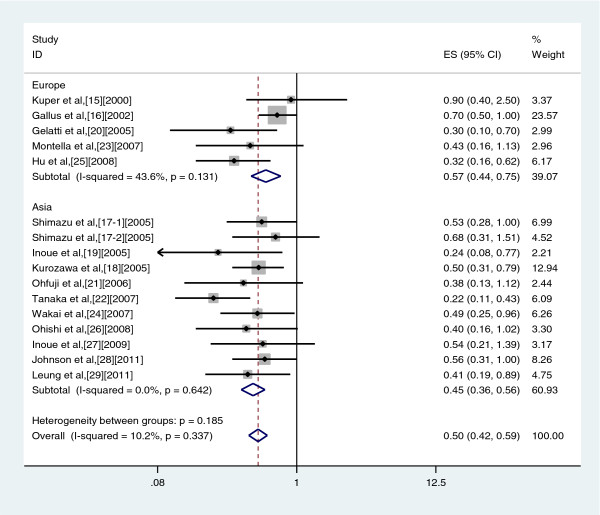
Results: The summary odds ratio (OR) for high vs no/almost never drinkers was 0.50 (95% confidence interval (CI): 0.42-0.59), with no significant heterogeneity across studies (Q = 16.71; P = 0.337; I2 = 10.2%). The ORs were 0.50 (95% CI: 0.40-0.63) for case-control studies and 0.48 (95% CI: 0.38-0.62) for cohort studies. The OR was 0.38 (95% CI: 0.25-0.56) in males and 0.60 (95% CI: 0.33-1.10) in females. The OR was 0.45 (95% CI: 0.36-0.56) in Asian studies and 0.57 (95% CI: 0.44-0.75) in European studies. The OR was 0.39 (95% CI: 0.28-0.54) with no adjustment for a history of liver disease and 0.54 (95% CI: 0.46-0.66) after adjustment for a history of liver disease.
Conclusions: The results of this meta-analysis suggested an inverse association between coffee consumption and liver cancer. Because of the small number of studies, further prospective studies are needed.
Figures
References
-
- Ferlay J, Bray F, Pisani P. GLOBOCAN 2002: Cancer Incidence, Mortality, and Prevalence Worldwide, IARC CancerBase No. 5. version 2.0. Lyon, France: International Agency for Cancer Research. 2004.
-
- Stewart BW, Kleihues P. World cancer report. Lyon: IARC Press: Stewart BW, Kleihues P; 2003.
-
- Srivatanakul P, Spriplung H, Deerasamee S. Epidemiology of liver cancer: an overview. Asian Pacific J Cancer Prev. 2004;5:118–125. - PubMed
Publication types
MeSH terms
Substances
LinkOut - more resources
Full Text Sources
Other Literature Sources
Medical
