


Diagnostic accuracy and use of nonmydriatic ocular fundus photography by emergency physicians: phase II of the FOTO-ED study
- PMID: 23433654
- PMCID: PMC3722897
- DOI: 10.1016/j.annemergmed.2013.01.010
Diagnostic accuracy and use of nonmydriatic ocular fundus photography by emergency physicians: phase II of the FOTO-ED study
Abstract
Study objective: During the first phase of the Fundus Photography vs Ophthalmoscopy Trial Outcomes in the Emergency Department study, 13% (44/350; 95% confidence interval [CI] 9% to 17%) of patients had an ocular fundus finding, such as papilledema, relevant to their emergency department (ED) management found by nonmydriatic ocular fundus photography reviewed by neuro-ophthalmologists. All of these findings were missed by emergency physicians, who examined only 14% of enrolled patients by direct ophthalmoscopy. In the present study, we evaluate the sensitivity of nonmydriatic ocular fundus photography, an alternative to direct ophthalmoscopy, for relevant findings when photographs are made available for use by emergency physicians during routine clinical care.
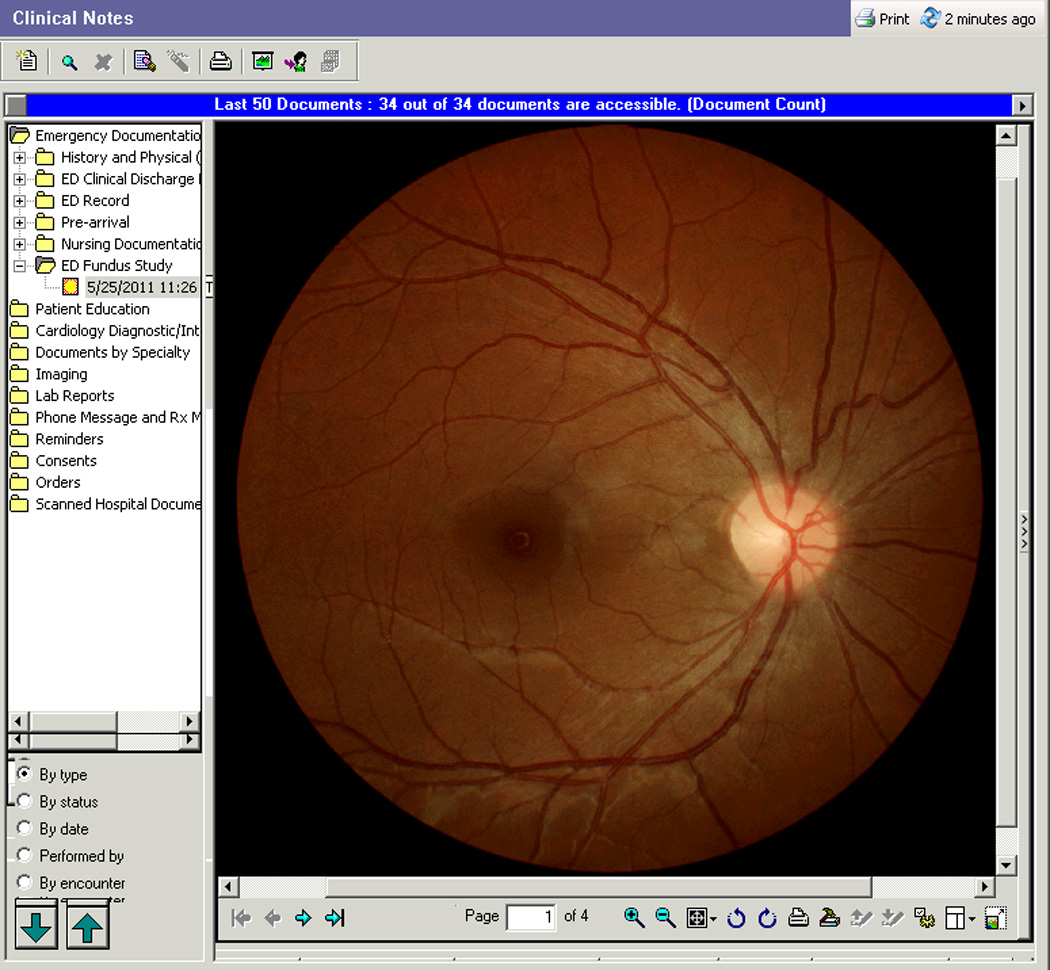
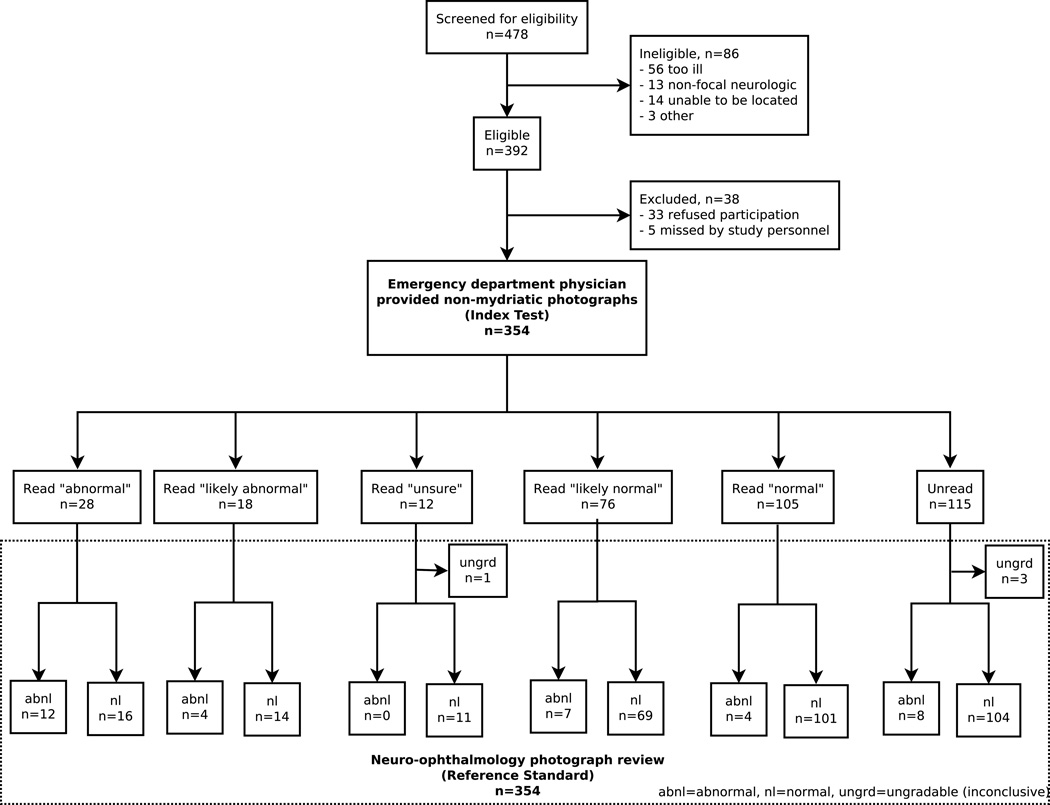
Methods: Three hundred fifty-four patients presenting to our ED with headache, focal neurologic deficit, visual change, or diastolic blood pressure greater than or equal to 120 mm Hg had nonmydriatic fundus photography obtained (Kowa nonmydriatic α-D). Photographs were placed on the electronic medical record for emergency physician review. Identification of relevant findings on photographs by emergency physicians was compared with a reference standard of neuro-ophthalmologist review.
Results: Emergency physicians reviewed photographs of 239 patients (68%). Thirty-five patients (10%; 95% CI 7% to 13%) had relevant findings identified by neuro-ophthalmologist review (6 disc edema, 6 grade III/IV hypertensive retinopathy, 7 isolated hemorrhages, 15 optic disc pallor, and 1 retinal vascular occlusion). Emergency physicians identified 16 of 35 relevant findings (sensitivity 46%; 95% CI 29% to 63%) and also identified 289 of 319 normal findings (specificity 91%; 95% CI 87% to 94%). Emergency physicians reported that photographs were helpful for 125 patients (35%).
Conclusion: Emergency physicians used nonmydriatic fundus photographs more frequently than they performed direct ophthalmoscopy, and their detection of relevant abnormalities improved. Ocular fundus photography often assisted ED care even when results were normal. Nonmydriatic ocular fundus photography offers a promising alternative to direct ophthalmoscopy.
Copyright © 2013 American College of Emergency Physicians. Published by Mosby, Inc. All rights reserved.
Conflict of interest statement
Disclosure
None of the authors have any conflict of interest.
Figures
References
-
- Jones S, Edwards RT. Diabetic retinopathy screening: a systematic review of the economic evidence. Diabet Med. 2010;27:249–256. - PubMed
Publication types
MeSH terms
Substances
Grants and funding
LinkOut - more resources
Full Text Sources
Other Literature Sources
Medical
