


Circadian clock-regulated physiological outputs: dynamic responses in nature
- PMID: 23435352
- PMCID: PMC3742325
- DOI: 10.1016/j.semcdb.2013.02.006
Circadian clock-regulated physiological outputs: dynamic responses in nature
Abstract
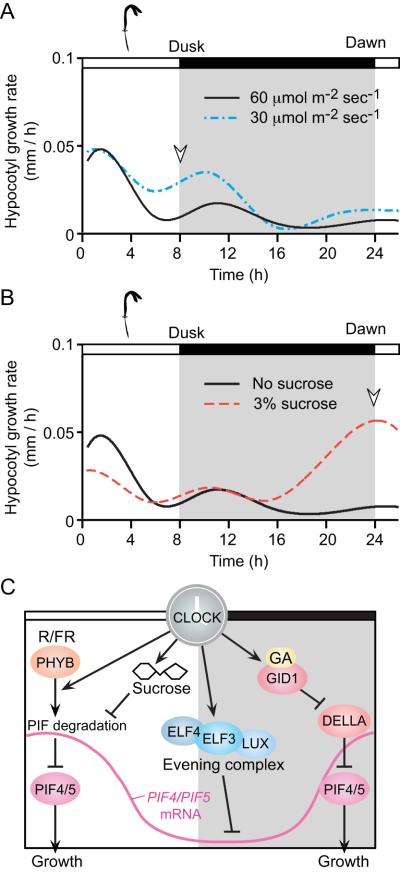
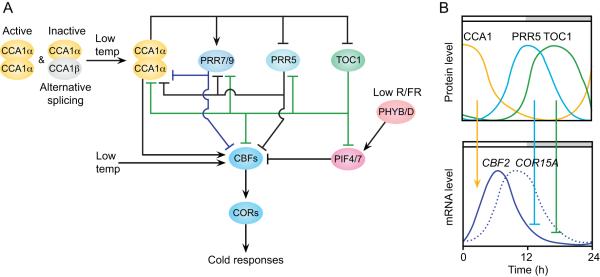
The plant circadian clock is involved in the regulation of numerous processes. It serves as a timekeeper to ensure that the onset of key developmental events coincides with the appropriate conditions. Although internal oscillating clock mechanisms likely evolved in response to the earth's predictable day and night cycles, organisms must integrate a range of external and internal cues to adjust development and physiology. Here we introduce three different clock outputs to illustrate the complexity of clock control. Clock-regulated diurnal growth is altered by environmental stimuli. The complexity of the photoperiodic flowering pathway highlights numerous nodes through which plants may integrate information to modulate the timing of flowering. Comparative analyses among ecotypes that differ in flowering response reveal additional environmental cues and molecular processes that have developed to influence flowering. We also explore the process of cold acclimation, where circadian inputs, light quality, and stress responses converge to improve freezing tolerance in anticipation of colder temperatures.
Copyright © 2013 Elsevier Ltd. All rights reserved.
Figures
References
Publication types
MeSH terms
Substances
Grants and funding
LinkOut - more resources
Full Text Sources
Other Literature Sources
