. 2013;8(2):e57548.
doi: 10.1371/journal.pone.0057548. Epub 2013 Feb 21.

Dissemination and transmission of the E1-226V variant of chikungunya virus in Aedes albopictus are controlled at the midgut barrier level

Affiliations

Dissemination and transmission of the E1-226V variant of chikungunya virus in Aedes albopictus are controlled at the midgut barrier level

Camilo Arias-Goeta et al. PLoS One. 2013.

Abstract

Emergence of arboviruses could result from their ability to exploit new environments, for example a new host. This ability is facilitated by the high mutation rate occurring during viral genome replication. The last emergence of chikungunya in the Indian Ocean region corroborates this statement since a single viral mutation at the position 226 on the E1 glycoprotein (E1-A226V) was associated with enhanced transmission by the mosquito Aedes albopictus in regions where the major mosquito vector, Aedes aegypti, is absent.We used direct competition assays in vivo to dissect out the mechanisms underlying the selection of E1-226V by Ae. albopictus. When the original variant E1-226A and the newly emerged E1-226V were provided in the same blood-meal at equal titers to both species of mosquitoes, we found that the proportion of both variants was drastically different in the two mosquito species. Following ingestion of the infectious blood-meal, the E1-226V variant was preferentially selected in Ae. albopictus, whereas the E1-226A variant was sometimes favored in Ae. aegypti. Interestingly, when the two variants were introduced into the mosquitoes by intrathoracic inoculations, E1-226V was no longer favored for dissemination and transmission in Ae. albopictus, showing that the midgut barrier plays a key role in E1-226V selection.This study sheds light on the role of the midgut barrier in the selection of novel arbovirus emerging variants. We also bring new insight into how the pre-existing variant E1-226V was selected among other viral variants including E1-226A. Indeed the E1-226V variant present at low levels in natural viral populations could rapidly emerge after being selected in Ae. albopictus at the midgut barrier level.


Conflict of interest statement

Competing Interests: The authors have declared that no competing interests exist.

Figures

Figure 1
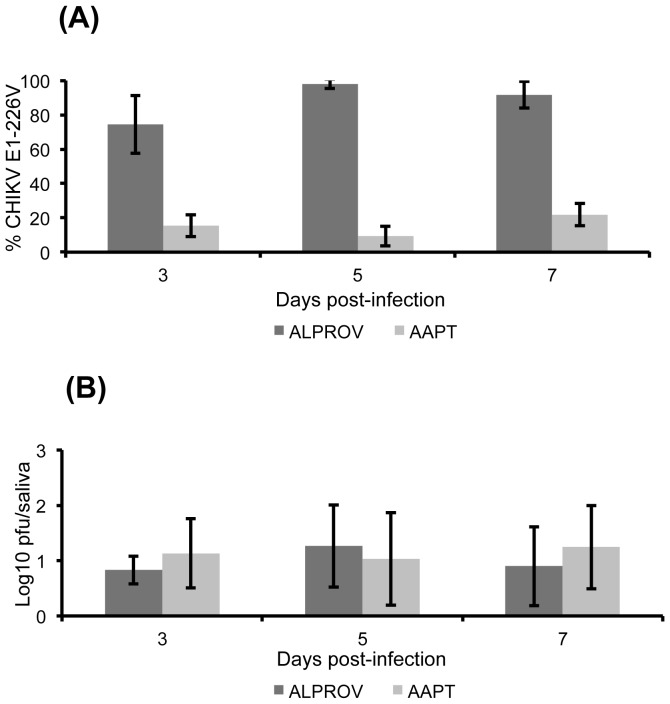
Figure 1. Effect of the E1-A226V substitution on CHIKV transmission in Ae. aegypti (AAPT) and Ae. albopictus (ALPROV).
Ae. aegypti (light-grey) and Ae. albopictus (dark-grey) were orally infected with E1-226A and E1-226V provided at the same titer, 106.5 pfu/mL. At days 3, 5 and 7 post-infection, mosquitoes were prepared for salivation. Collected saliva was used to inoculate monolayers of Vero cells. After 3 days at 37°C, clones were identified by sequencing. The proportion of E1-226V compared to E1-226A (A) and the number of infectious particles (B) were determined. Error bars show the confidence intervals (95%) for % CHIKV E1-226V and the standard deviations for Log10 pfu/midgut.
Figure 2
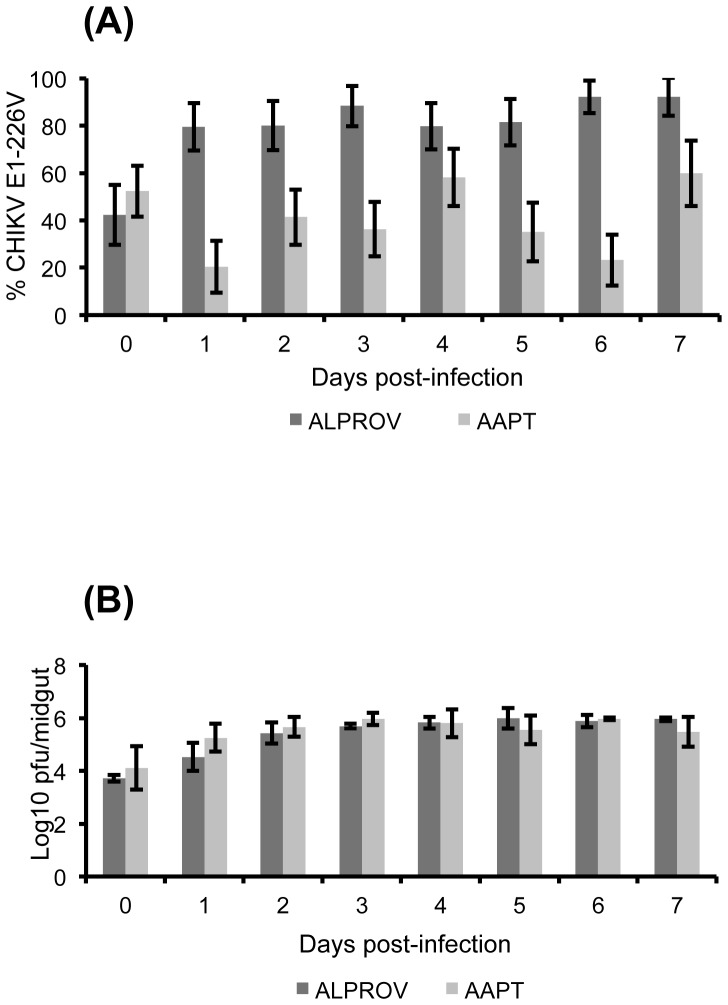
Figure 2. Effect of E1-A226V substitution on CHIKV infection in Ae. aegypti (AAPT) and Ae. albopictus (ALPROV).
Ae. aegypti (light-grey) and Ae. albopictus (dark-grey) were orally infected with a blood-meal containing both E1-226A and E1-226V provided at the same titer, 106.5 pfu/mL. Every day, 5 mosquitoes were sacrificed to isolate the midgut. The proportion of E1-226V compared to E1-226A (A) and the number of infectious particles (B) were determined. Error bars show the confidence intervals (95%) for % CHIKV E1-226V and the standard deviations for Log10 pfu/midgut.
Figure 3
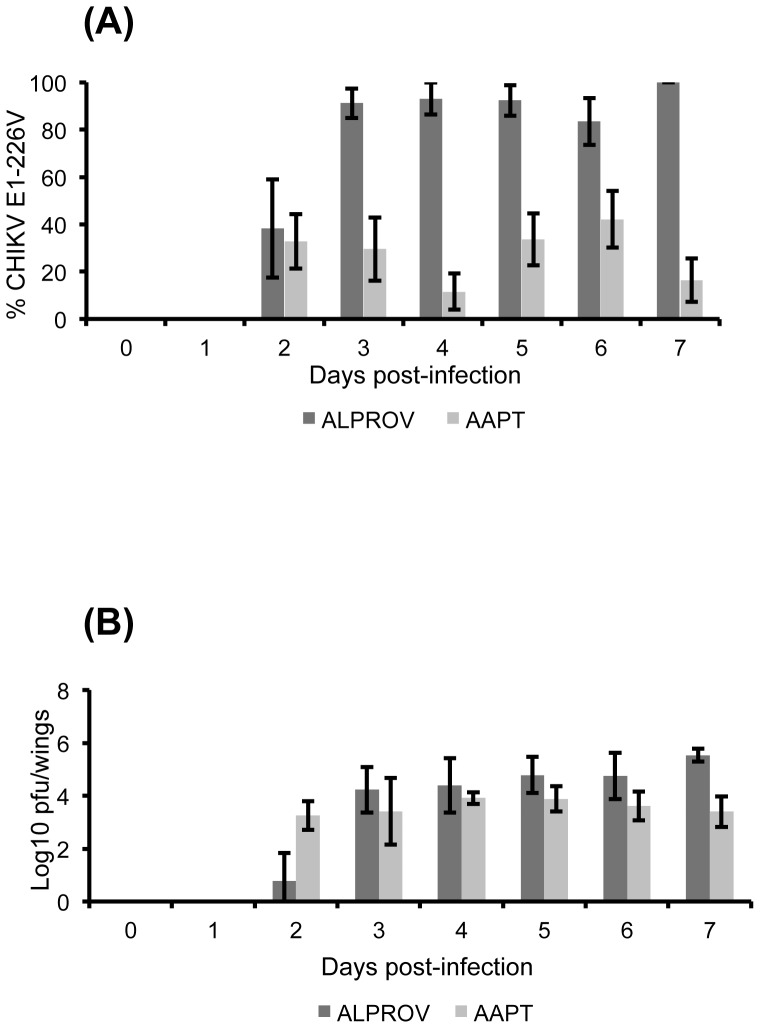
Figure 3. Effect of E1-A226V substitution on CHIKV dissemination to wings of Ae. aegypti (AAPT) and Ae. albopictus (ALPROV).
Ae. aegypti (light-grey) and Ae. albopictus (dark-grey) were orally infected with a blood-meal containing both E1-226A and E1-226V provided at the same titer, 106.5 pfu/mL. Every day, 5 mosquitoes were sacrificed to isolate the wings. The proportion of E1-226V compared to E1-226A (A) and the number of infectious particles (B) were determined. Error bars show the confidence intervals (95%) for % CHIKV E1-226V and the standard deviations for Log10 pfu/midgut.
Figure 4
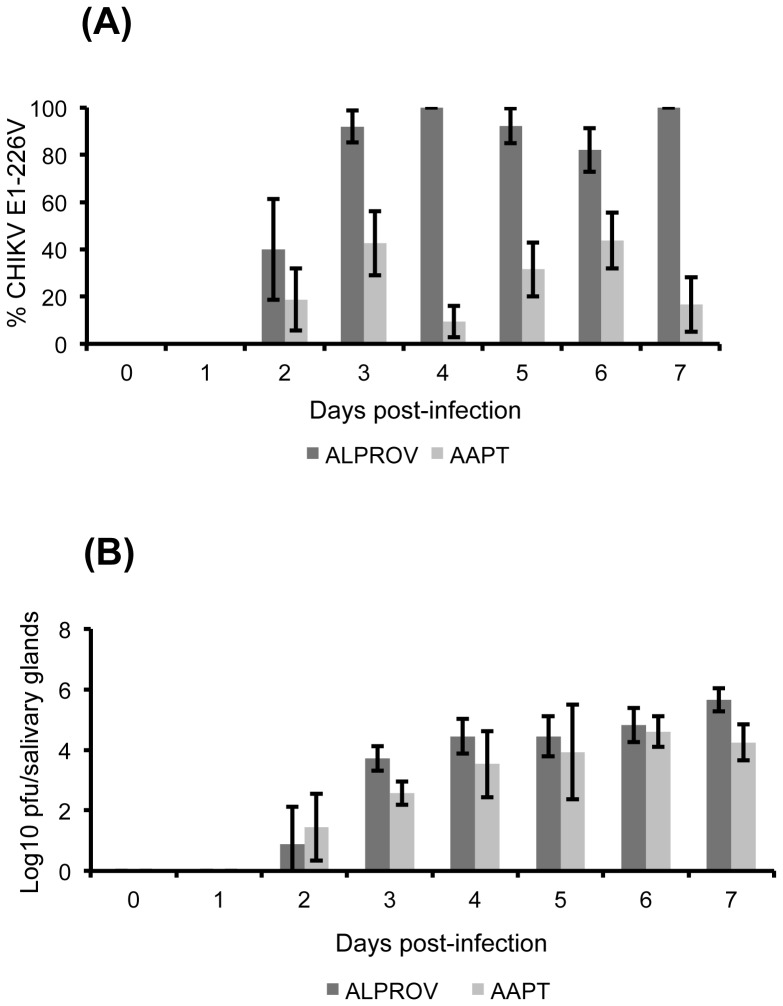
Figure 4. Effect of E1-A226V substitution on CHIKV dissemination to salivary glands of Ae. aegypti (AAPT) and Ae. albopictus (ALPROV). Ae. aegypti (light-grey) and Ae. albopictus (dark-grey) were orally infected with a blood-meal containing both E1-226A and E1-226V provided at the same titer, 106.5 pfu/mL.
Every day, 5 mosquitoes were sacrificed to isolate salivary glands. The proportion of E1-226V compared to E1-226A (A) and the number of infectious particles (B) were determined. Error bars show the confidence intervals (95%) for % CHIKV E1-226V and the standard deviations for Log10 pfu/midgut.
Figure 5
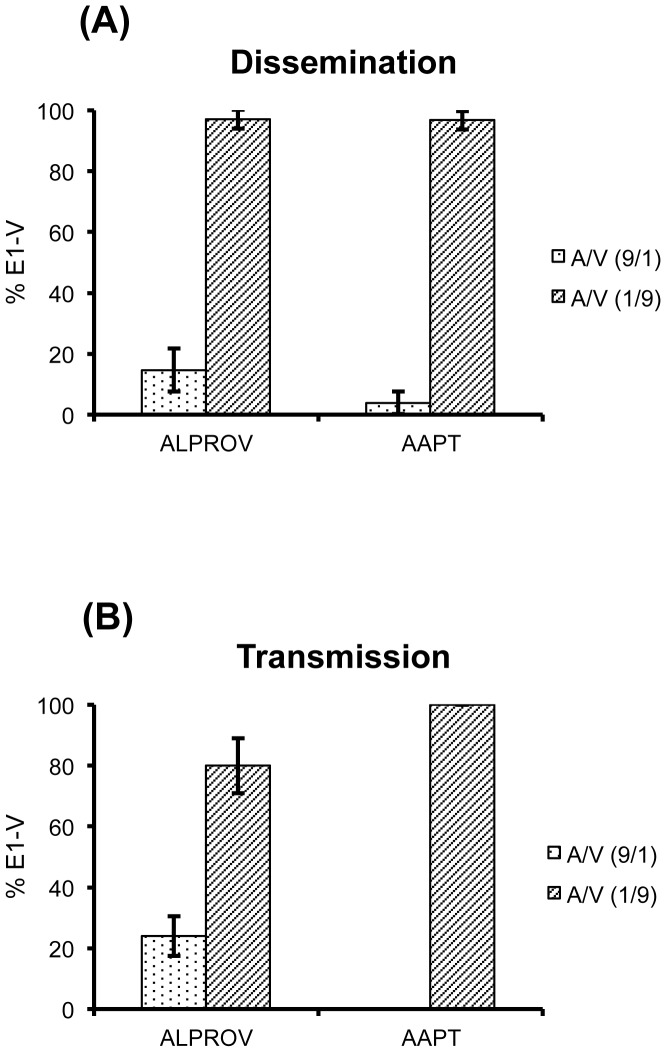
Figure 5. Unbalanced proportions of E1-226V and E1-226A provided in blood-meals to Ae. aegypti (AAPT) and Ae. albopictus (ALPROV). Ae. aegypti and Ae. albopictus were given an infectious blood-meal containing unbalanced proportions of two clones E1-A and E1-V isolated from the strains E1-226A and E1-226V, respectively.
Two mixes were tested: one containing 1∶9 (E1-A:E1-V) and one containing a mix of 9∶1 (E1-A:E1-V). At day 7 post-infection, dissemination (A) and transmission (B) were examined by estimating the proportion of E1-V in wings and saliva, respectively, of five individual females. Error bars show the confidence intervals (95%).
Figure 6
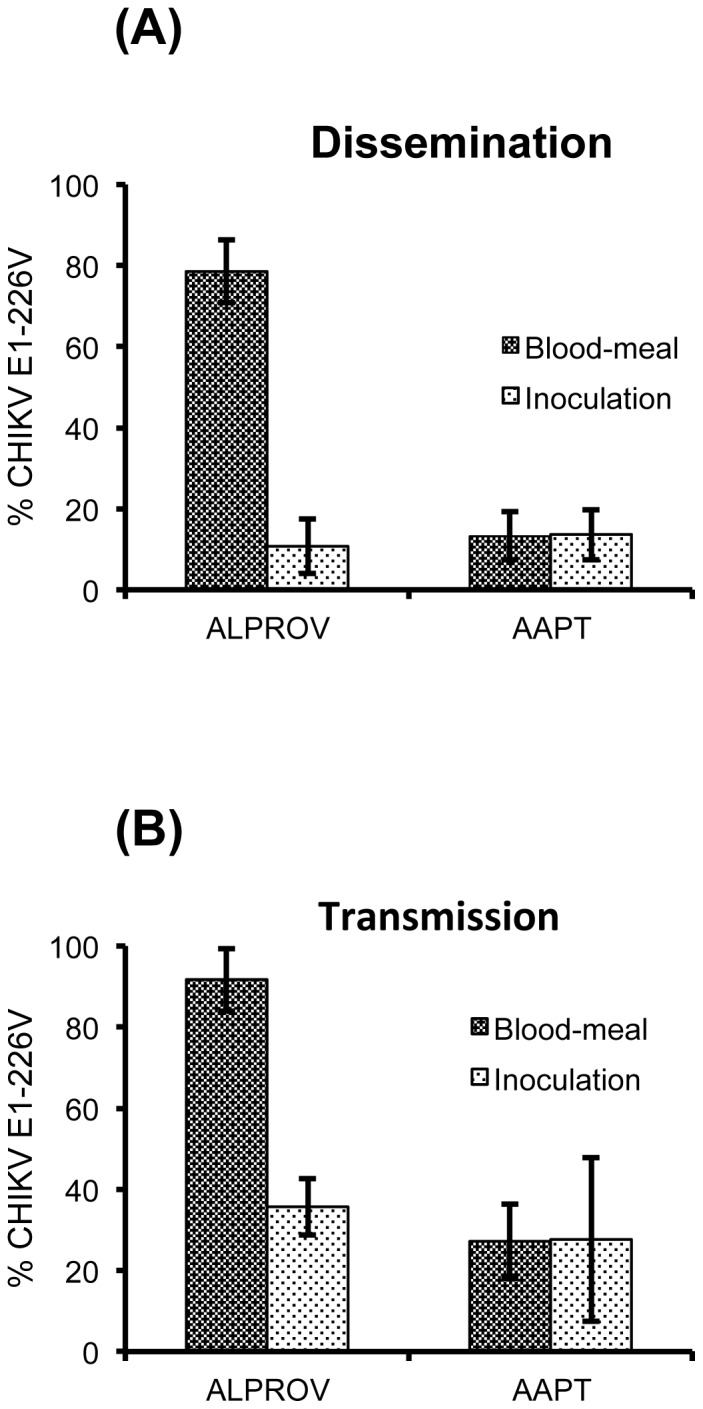
Figure 6. Effects of intrathoracic injection compared to blood-meal ingestion on CHIKV dissemination and transmission in Ae. aegypti (AAPT) and Ae. albopictus (ALPROV).
Ae. aegypti and Ae. albopictus were orally infected or inoculated with E1-226A and E1-226V provided at the same titer, 106.5 pfu/mL. At day 7 post-infection, dissemination (A) and transmission (B) were examined by estimating the proportion of E1-226V in wings and saliva. Error bars show the confidence intervals (95%).

References

    1. Powers AM, Logue CH (2007) Changing patterns of chikungunya virus: re-emergence of a zoonotic arbovirus. J Gen Virol 88: 2363–2377. - PubMed
    1. Diallo M, Thonnon J, Traore-Lamizana M, Fontenille D (1999) Vectors of Chikungunya virus in Senegal: current data and transmission cycles. Am J Trop Med Hyg 60: 281–286. - PubMed
    1. Jupp PG, McIntosh BM (1990) Aedes furcifer and other mosquitoes as vectors of chikungunya virus at Mica, northeastern Transvaal, South Africa. J Am Mosq Control Assoc 6: 415–420. - PubMed
    1. Chevillon C, Briant L, Renaud F, Devaux C (2008) The Chikungunya threat: an ecological and evolutionary perspective. Trends Microbiol 16: 80–88. - PubMed
    1. Bagny L, Delatte H, Quilici S, Fontenille D (2009) Progressive decrease in Aedes aegypti distribution in Reunion Island since the 1900s. J Med Entomol 46: 1541–1545. - PubMed

Publication types

MeSH terms