


Effects of anesthetic isoflurane and desflurane on human cerebrospinal fluid Aβ and τ level
- PMID: 23438677
- PMCID: PMC3938174
- DOI: 10.1097/ALN.0b013e31828ce55d
Effects of anesthetic isoflurane and desflurane on human cerebrospinal fluid Aβ and τ level
Abstract
Background: Accumulation of β-amyloid protein (Aβ) and tau protein is the main feature of Alzheimer disease neuropathogenesis. Anesthetic isoflurane, but not desflurane, may increase Aβ levels in vitro and in animals. Therefore, we set out to determine the effects of isoflurane and desflurane on cerebrospinal fluid (CSF) levels of Aβ and tau in humans.
Methods: The participants were assigned into spinal anesthesia (N=35), spinal plus desflurane anesthesia (N=33), or spinal plus isoflurane anesthesia (N=38) group by randomization using computer-generated lists. Pre- and postoperative human CSF samples were obtained through an inserted spinal catheter. The levels of Aβ (Aβ40 and Aβ42) and total tau in the CSF were determined.
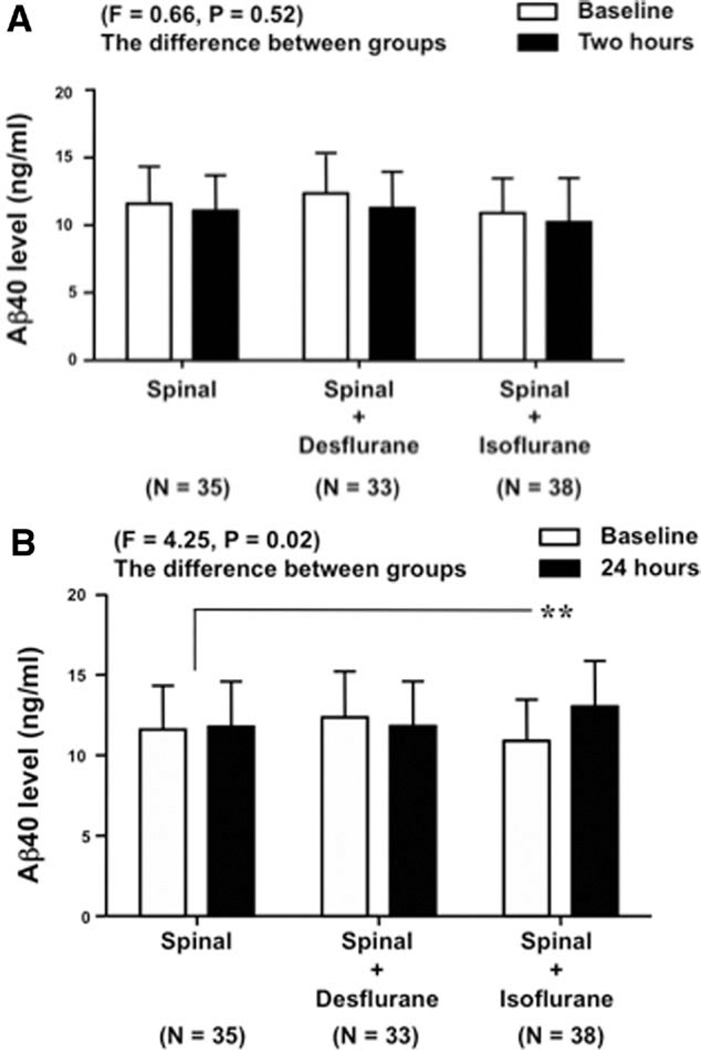
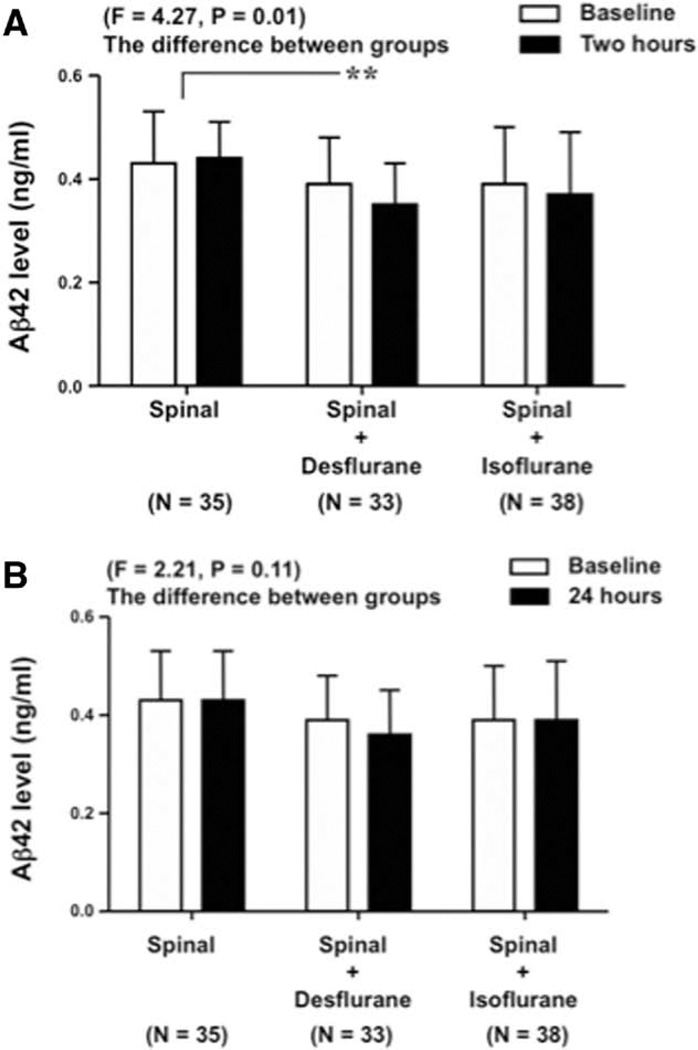
Results: Here, we show that isoflurane, but not desflurane, was associated with an increase in human CSF Aβ40 levels (from 10.90 to 12.41 ng/ml) 24 h after the surgery under anesthesia compared to spinal anesthesia (from 11.59 to 11.08 ng/ml), P=0.022. Desflurane, but not isoflurane, was associated with a decrease in Aβ42 levels 2 h after the surgery under anesthesia (from 0.39 to 0.35 ng/ml) compared to spinal anesthesia (from 0.43 to 0.44 ng/ml), P=0.006. Isoflurane and desflurane did not significantly affect the tau levels in human CSF.
Conclusions: These studies have established a system to study the effects of anesthetics on human biomarkers associated with Alzheimer disease and cognitive dysfunction. These findings have suggested that isoflurane and desflurane may have different effects on human CSF Aβ levels.
Figures
References
-
- Bohnen NI, Warner MA, Kokmen E, Beard CM, Kurland LT. Alzheimer’s disease and cumulative exposure to anesthesia: A case-control study. J Am Geriatr Soc. 1994;42:198–201. - PubMed
-
- Bohnen N, Warner MA, Kokmen E, Kurland LT. Early and midlife exposure to anesthesia and age of onset of Alzheimer’s disease. Int J Neurosci. 1994;77:181–185. - PubMed
-
- Lee TA, Wolozin B, Weiss KB, Bednar MM. Assessment of the emergence of Alzheimer’s disease following coronary artery bypass graft surgery or percutaneous transluminal coronary angioplasty. J Alzheimers Dis. 2005;7:319–324. - PubMed
-
- Bufill E, Bartés A, Moral A, Casadevall T, Codinachs M, Zapater E, Carles Rovira J, Roura P, Oliva R, Blesa R. [Genetic and environmental factors that may influence in the senile form of Alzheimer’s disease: Nested case control studies] Neurologia. 2009;24:108–112. - PubMed
-
- Knopman DS, Petersen RC, Cha RH, Edland SD, Rocca WA. Coronary artery bypass grafting is not a risk factor for dementia or Alzheimer disease. Neurology. 2005;65:986–990. - PubMed
Publication types
MeSH terms
Substances
Grants and funding
LinkOut - more resources
Full Text Sources
Other Literature Sources
