


The liver diseases of lipodystrophy: the long-term effect of leptin treatment
- PMID: 23439261
- PMCID: PMC3924897
- DOI: 10.1016/j.jhep.2013.02.007
The liver diseases of lipodystrophy: the long-term effect of leptin treatment
Abstract
Background & aims: Lipodystrophies are hypoleptinemic conditions characterized by fat loss, severe insulin resistance, hypertriglyceridemia, and ectopic fat accumulation. Non-alcoholic fatty liver disease (NAFLD) and steatohepatitis (NASH) are also features of this condition. We studied the spectrum of liver disease in lipodystrophy and the effects of leptin replacement.
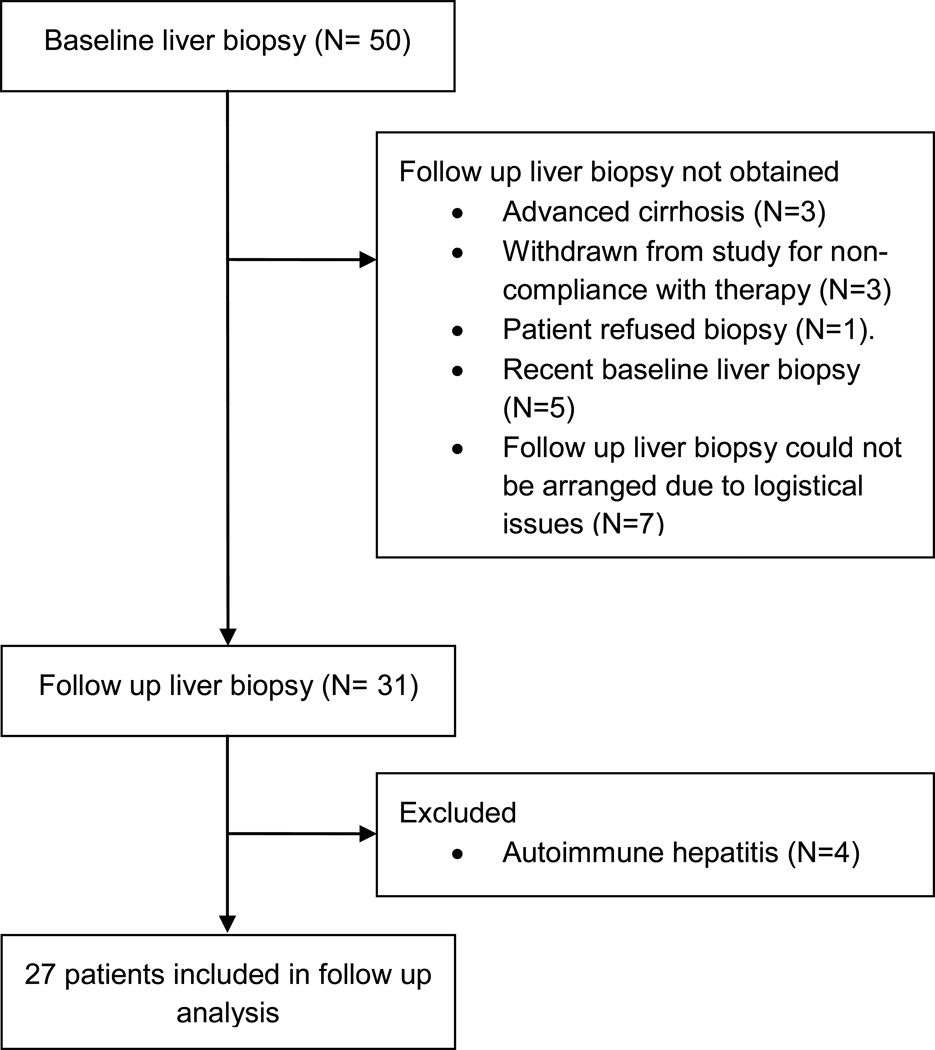
Methods: This was an open-label, prospective study of leptin therapy in patients with inherited and acquired lipodystrophy at the National Institutes of Health. Liver biopsies were performed at baseline (N=50) and after leptin replacement (N=27). NASH activity was assessed using the NASH Clinical Research Network (CRN) scoring system. Fasting blood glucose, triglyceride, hemoglobin A1c and liver enzymes were measured at baseline and at the time of the final liver biopsy.
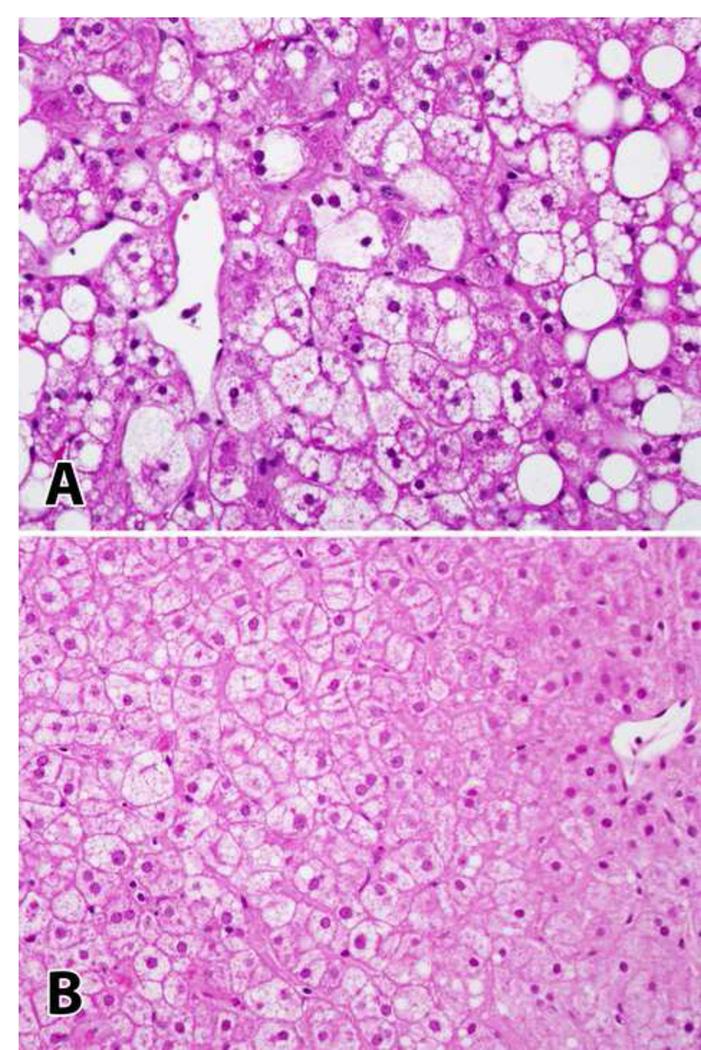
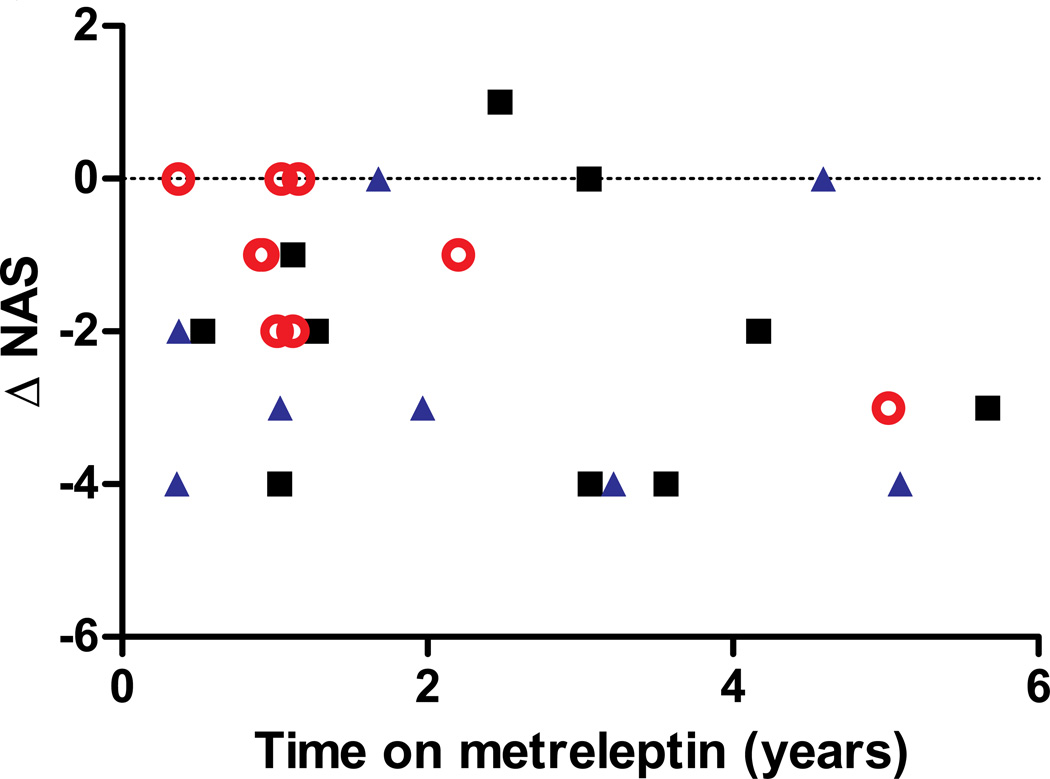
Results: In leptin-treated patients, 86% met criteria for NASH at baseline, while only 33% had NASH after leptin replacement for 25.8 ± 3.7 months (mean ± SE, p=0.0003). There were significant improvements in steatosis grade (reduction of mean score from 1.8 to 0.9) and ballooning injury scores (from 1.2 to 0.4), with a 44.2% reduction in mean NAFLD activity score (p<0.0001). Patients who already had fibrosis remained stable on leptin replacement. We observed significant improvement in metabolic profile, ALT and AST. In addition to NASH, four patients with acquired generalized lipodystrophy (AGL) had autoimmune hepatitis.
Conclusions: The fundamental liver disease of lipodystrophy is NASH, although autoimmune hepatitis was observed in some patients with AGL. Leptin appears to be a highly effective therapy for NASH in hypoleptinemic lipodystrophic patients.
Trial registration: ClinicalTrials.gov NCT00677313.
Published by Elsevier B.V.
Conflict of interest statement
Figures
Comment in
-
Leptin in the treatment of lipodystrophy-associated nonalcoholic fatty liver disease: are we there already?Expert Rev Gastroenterol Hepatol. 2013 Aug;7(6):513-5. doi: 10.1586/17474124.2013.814903. Expert Rev Gastroenterol Hepatol. 2013. PMID: 23985000
References
-
- Marchesini G, Brizi M, Bianchi G, Tomassetti S, Bugianesi E, Lenzi M, et al. Nonalcoholic fatty liver disease: a feature of the metabolic syndrome. Diabetes. 2001;50:1844–1850. - PubMed
-
- Marchesini G, Bugianesi E, Forlani G, Cerrelli F, Lenzi M, Manini R, et al. Nonalcoholic fatty liver, steatohepatitis, and the metabolic syndrome. Hepatology. 2003;37:917–923. - PubMed
-
- Haque WA, Shimomura I, Matsuzawa Y, Garg A. Serum adiponectin and leptin levels in patients with lipodystrophies. The Journal of clinical endocrinology and metabolism. 2002;87:2395. - PubMed
-
- Javor ED, Ghany MG, Cochran EK, Oral EA, DePaoli AM, Premkumar A, et al. Leptin reverses nonalcoholic steatohepatitis in patients with severe lipodystrophy. Hepatology. 2005;41:753–760. - PubMed
Publication types
MeSH terms
Substances
Associated data
Grants and funding
LinkOut - more resources
Full Text Sources
Other Literature Sources
Medical
Miscellaneous
