. 2011;3(3):161-73.

The rough guide to systematic reviews and meta-analyses

Affiliations

The rough guide to systematic reviews and meta-analyses

G Biondi-Zoccai et al. HSR Proc Intensive Care Cardiovasc Anesth. 2011.

Abstract

The hierarchy of evidence based medicine postulates that systematic reviews of homogenous randomized trials represent one of the uppermost levels of clinical evidence. Indeed, the current overwhelming role of systematic reviews, meta-analyses and meta-regression analyses in evidence based heath care calls for a thorough knowledge of the pros and cons of these study designs, even for the busy clinician. Despite this sore need, few succinct but thorough resources are available to guide users or would-be authors of systematic reviews. This article provides a rough guide to reading and, summarily, designing and conducting systematic reviews and meta-analyses.

Keywords: meta-analysis; meta-regression; systematic review.


Conflict of interest statement

Conflict of interest None declared.

Figures

Table 1
Table 1
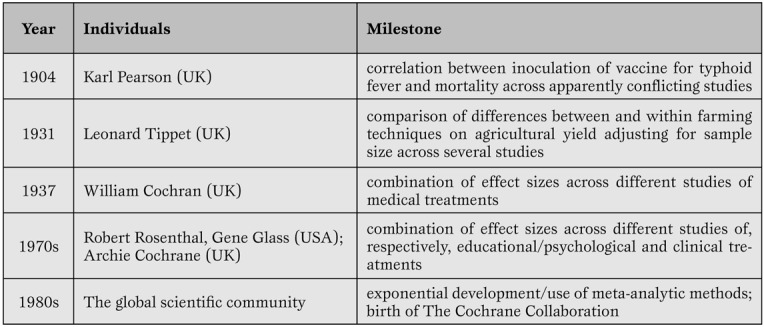
Key milestones in systematic review and meta-analysis development.
Figure 1
Figure 1
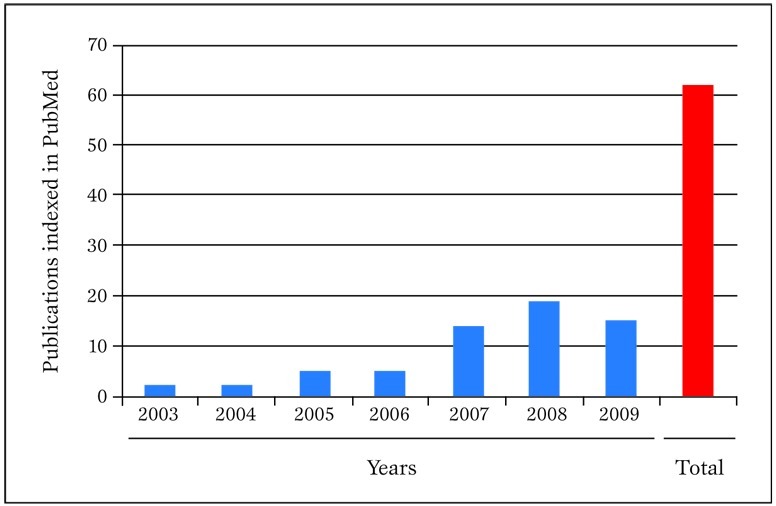
Publications in PubMed authored in the last few years by our research group concerning meta-analytic topics. Pubmed was searched on 30 March 2010 with the following strategy: "(biondi-zoccai OR Zoccai) AND (meta-analys* OR metaanalys* OR metaregress* OR "meta-regression")".
Table 2
Table 2
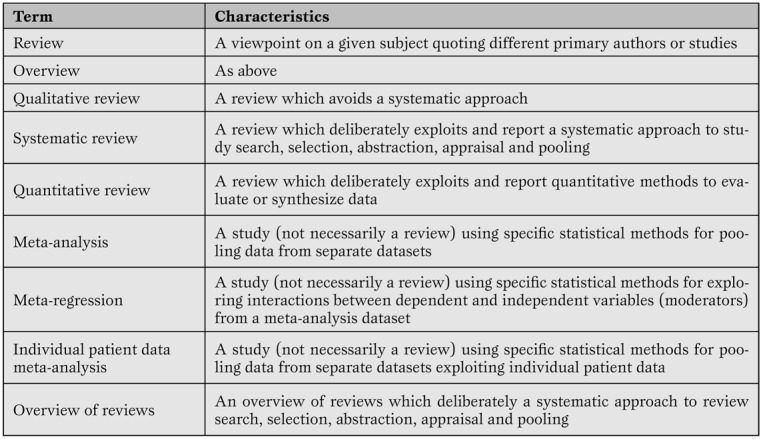
Minimal glossary pertinent to systematic reviews and meta-analyses.
Figure 2
Figure 2
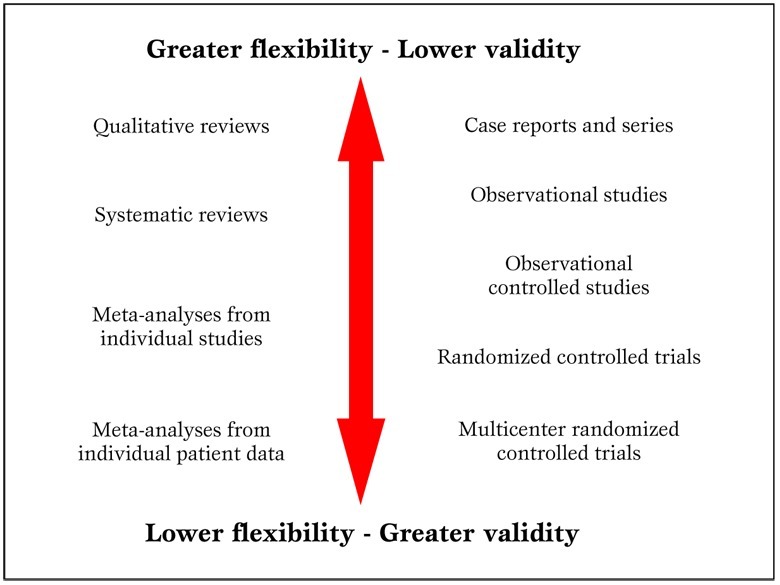
Parallel hierarchy of scientific studies in clinical research. Modified from Biondi-Zoccai et al. (2).
Table 3
Table 3
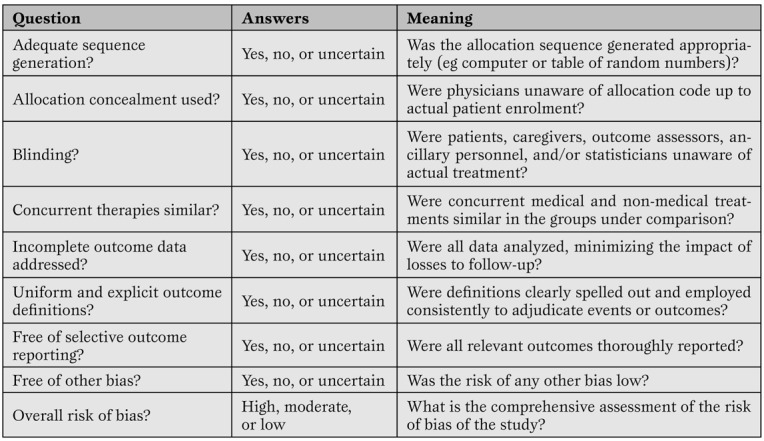
A modified version of The Cochrane Collaboration risk of bias assessment tool for the appraisal of primary studies.(16)*
Table 4
Table 4
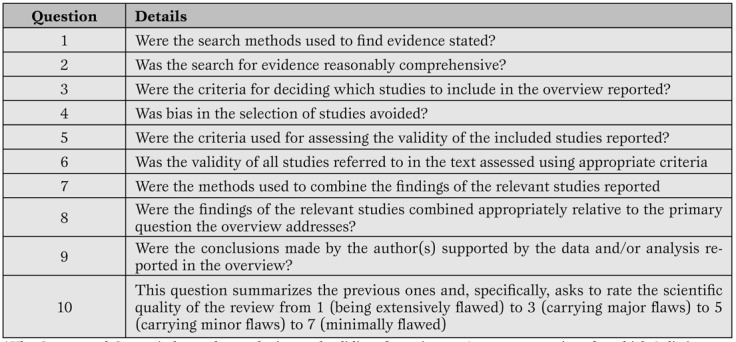
Oxman and Guyatt index for the appraisal of reviews. (19)*
Table 5
Table 5
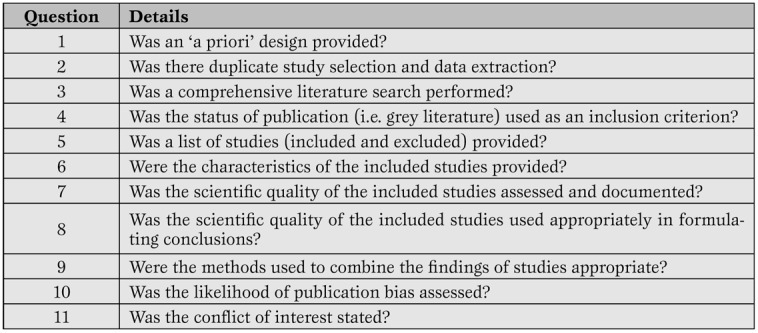
The AMSTAR tool for the appraisal of systematic reviews. (20-21)*
Figure 3
Figure 3
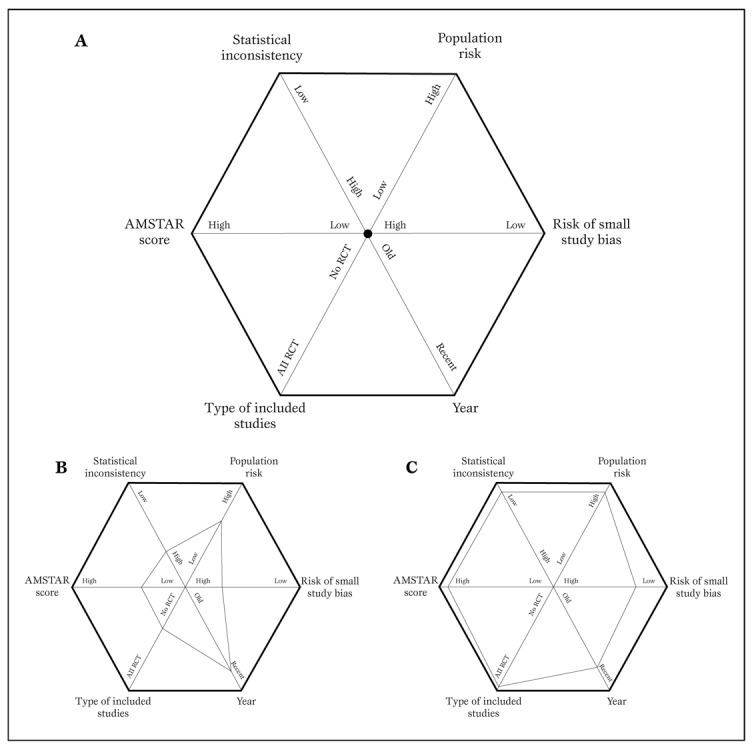
Typical diagram used to generate a Veritas plot (panel A) (22). Using this tool, a low quality meta-analysis will be represented by a hexagon with a smaller area (panel B), whereas a high quality meta-analysis will be shown as a hexagon with a larger area (panel C).
Figure 4
Figure 4
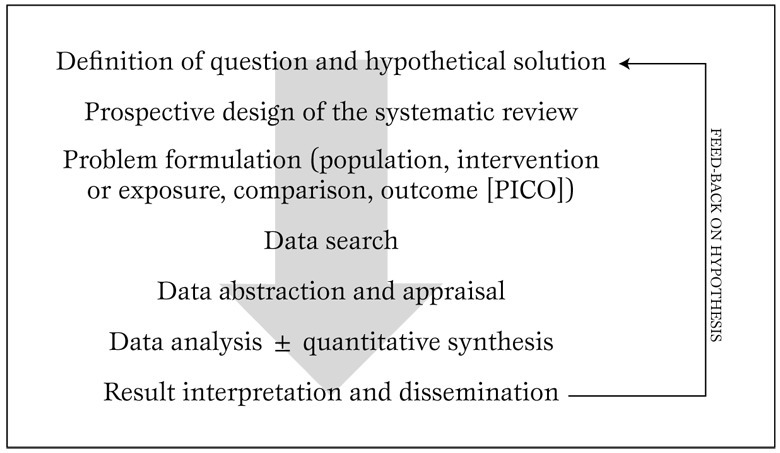
Typical algorithm for the design and conduct of a systematic review. Modified from Biondi-Zoccai et al. (5).
Figure 5
Figure 5
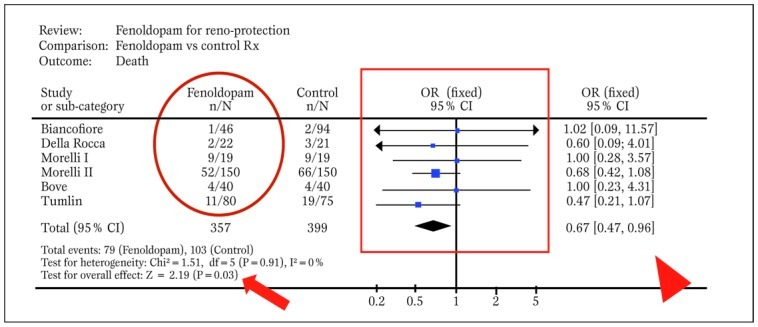
Typical forest plot generated by RevMan from a systematic review with meta-analytic pooling of dichotomous outcomes (df=degrees of freedom; E=expected cases; O=observed cases; OR=odds ratio). The solid oval highlights event counts in one of the groups under comparison, the solid box shows graphically individual and pooled point effect estimates with 95% confidence intervals, the arrowhead indicates the exact pooled point effect estimate with 95% confidence intervals (CI), the arrow shows the p value for effect, and the dashed oval highlights p value for statistical eterogeneity and measure of statistical inconsistency (I2). Modified from Landoni et al. (30).
Figure 6
Figure 6
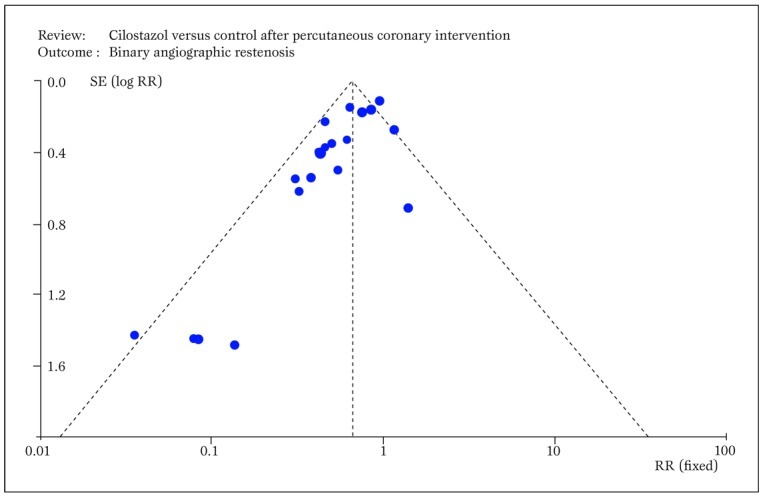
Typical funnel plot generated by RevMan showing small study bias, ie the asymmetric distribution of effect sizes in function of study precision, with selective publication of only positive small sample studies (RR=relative risk; SE=standard error). Modified from Biondi-Zoccai et al. (24).

References

    1. Egger M, Smith GD, Altman DG. Systematic reviews in health care: meta-analysis in context. BMJ Publishing Group, London. 2001;2nd ed
    1. Biondi-Zoccai GG, Agostoni P, Abbate A. Parallel hierarchy of scientific studies in cardiovascular medicine. Ital Heart J. 2003;4:819–820. - PubMed
    1. Patsopoulos NA, Analatos AA, Ioannidis JP. Relative citation impact of various study designs in the health sciences. JAMA. 2005;293:2362–2366. - PubMed
    1. Glasziou P, Djulbegovic B, Burls A. Are systematic reviews more cost-effective than randomised trials? Lancet. 2006;367:2057–2058. - PubMed
    1. Biondi-Zoccai GG, Testa L, Agostoni P. A practical algorithm for systematic reviews in cardiovascular medicine. Ital Heart J. 2004;5:486–487. - PubMed

LinkOut - more resources