


Neuraxial anesthesia for cardiac surgery: thoracic epidural and high spinal anesthesia - why is it different?
- PMID: 23440039
- PMCID: PMC3484610
Neuraxial anesthesia for cardiac surgery: thoracic epidural and high spinal anesthesia - why is it different?
Abstract
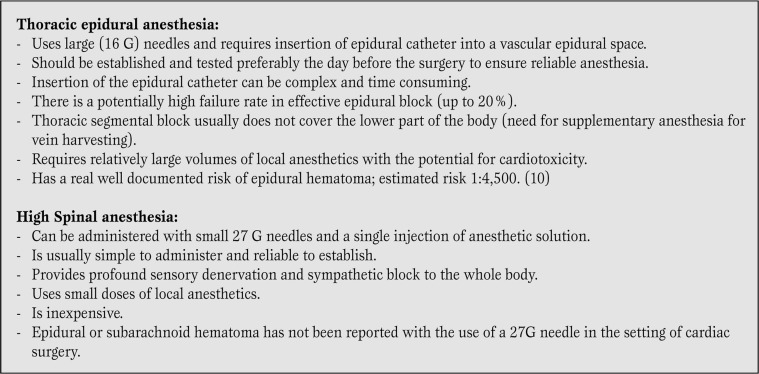
Anesthesiologists can offer much more then stable blood pressure and heart rate in the intraoperative period. By choosing appropriate anesthetic techniques they can tremendously influence perioperative stress. This may positively impact on the overall surgical outcome. One of the most intriguing aspects of neuraxial anesthesia is its ability to attenuate the stress response to surgery. At present there is no agreement on the clinical importance of such a response but there is substantial indirect evidence that it may play an important role in a patient's outcome. Neuraxial anesthesia supplemented by general anesthesia is justified and can be safely used in cardiac surgery. The authors of this expert opinion prefer spinal anesthesia to thoracic epidural anesthesia and have been using it routinely for the last 20 years without any neurological complications. The risk of spinal hematoma from a 27G spinal needle prior to full heparinization is unknown but in our opinion is remote. Both epidural and spinal techniques can and should have a place in modern cardiac anesthesia practice and should be further investigated.
Keywords: anesthesia; cardiac surgery; complication; epidural; mortality; neuraxial; outcome; spinal.
Conflict of interest statement
Figures
References
-
- Lowenstein E. Cardiovascular responses to large doses of intravenous morphine in man. N Engl J Med. 1969;281:1389–1393. - PubMed
-
- Cheng DCH, Karski J, Peniston C. et al. Morbidity outcome in early versus conventional tracheal extubation following coronary artery bypass graft (CABG) surgery: A prospective randomized controlled trial. J Thoracic Cardiovascular Surgery. 1996;112:775–764. - PubMed
-
- Bignami E, Landoni G, Biondi-Zoccai GG. et al. Epidural analgesia improves outcome in cardiac surgery: a meta-analysis of randomized controlled trials. Journal of Cardiothoracic and Vascular Anesthesia. 2010;24:586–597. - PubMed
-
- Zangrillo A, Bignami E, Biondi-Zoccai GG. et al. Spinal analgesia in cardiac surgery: a meta-analysis of randomized controlled trials. Journal of Cardiothoracic and Vascular Anesthesia. 2009;23:813–821. - PubMed
-
- Lee TW, Grocott HP, Schwinn D. Winnipeg High-Spinal Anesthesia Group et al. High spinal anesthesia for cardiac surgery: effects on beta-adrenergic receptor function, stress response, and hemodynamics. Anesthesiology. 2003;98:499–510. - PubMed
LinkOut - more resources
Full Text Sources