Pathophysiology of proteinuria and its value as an outcome measure in chronic kidney disease
- PMID: 23441592
- PMCID: PMC3791975
- DOI: 10.1111/bcp.12104
Pathophysiology of proteinuria and its value as an outcome measure in chronic kidney disease
Abstract
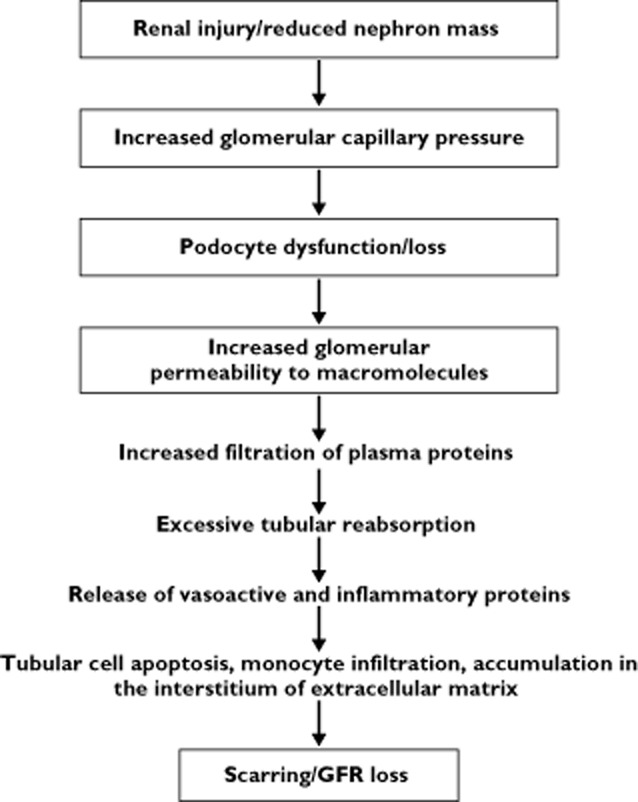
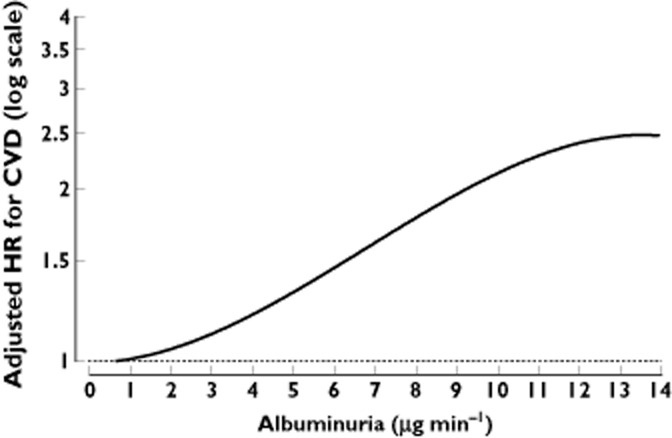
Chronic kidney diseases share common pathogenic mechanisms that, independently from the initial injury, lead to glomerular hyperfiltration, proteinuria, and progressive renal scarring and function loss. Consistent experimental evidence supports the crucial role of proteinuria in accelerating kidney disease progression to end-stage renal failure through multiple pathways, including induction of tubular chemokine expression and complement activation. These events, in turn, lead to inflammatory cell infiltration in the interstitium and sustained fibrogenesis. The extent of proteinuria is widely recognized as a marker of the severity of chronic kidney disease and as a predictor of future decline in glomerular filtration rate. More importantly, a reduction in proteinuria invariably translates into a protection from renal function decline in patients with diabetic and non-diabetic renal disease. Recent evidence also showed the existence of a relationship between proteinuria levels and cardiovascular risk, which extends to the range of urinary albumin excretion that was previously thought 'normal'. Thus, proteinuria should be considered a valuable surrogate end point for clinical trials in patients with chronic renal diseases and a target for reno- and cardioprotecive strategies.
Keywords: biomarker; cardiovascular; chronic kidney disease; proteinuria.
© 2013 The Authors. British Journal of Clinical Pharmacology © 2013 The British Pharmacological Society.
Figures
References
-
- Tonelli M, Muntner P, Lloyd A, Manns BJ, Klarenbach S, Pannu N, James MT, Hemmelgarn BR. Risk of coronary events in people with chronic kidney disease compared with those with diabetes: a population-level cohort study. Lancet. 2012;380:807–814. - PubMed
-
- Donadelli R, Zanchi C, Morigi M, Buelli S, Batani C, Tomasoni S, Corna D, Rottoli D, Benigni A, Abbate M, Remuzzi G, Zoja C. Protein overload induces fractalkine upregulation in proximal tubular cells through nuclear factor kappaB- and p38 mitogen-activated protein kinase-dependent pathways. J Am Soc Nephrol. 2003;14:2436–2446. - PubMed
-
- Cravedi P, Ruggenenti P, Remuzzi G. Kidney failure stabilizes after an increase over 2 decades. J Ren Care. 2007;33:100–104. - PubMed
-
- Poggio ED, Nef PC, Wang X, Greene T, Van Lente F, Dennis VW, Hall PM. Performance of the Cockcroft-Gault and modification of diet in renal disease equations in estimating GFR in ill hospitalized patients. Am J Kidney Dis. 2005;46:242–252. - PubMed
-
- Ruggenenti P, Gaspari F, Cannata A, Carrara F, Cella C, Ferrari S, Stucchi N, Prandini S, Ene-Iordache B, Diadei O, Perico N, Ondei P, Pisani A, Buongiorno E, Messa P, Dugo M, Remuzzi G. Measuring and estimating GFR and treatment effect in ADPKD patients: results and implications of a longitudinal cohort study. PLoS ONE. 2012;7:e32533. - PMC - PubMed
Publication types
MeSH terms
Substances
LinkOut - more resources
Full Text Sources
Other Literature Sources
Medical