


Alarmins, inflammasomes and immunity
- PMID: 23442356
- PMCID: PMC4074086
- DOI: 10.4103/2319-4170.104408
Alarmins, inflammasomes and immunity
Abstract
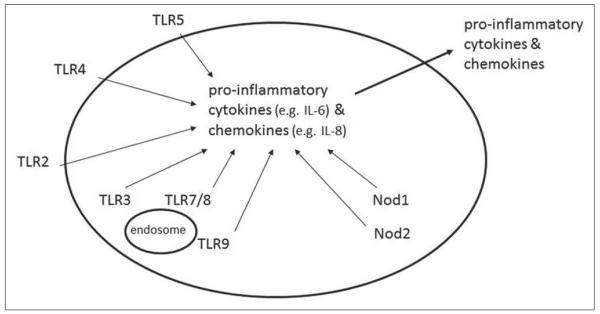
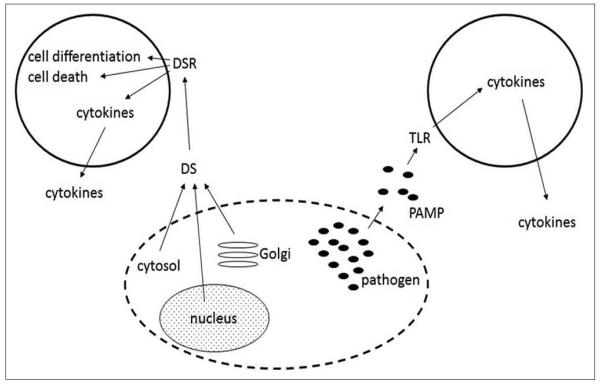
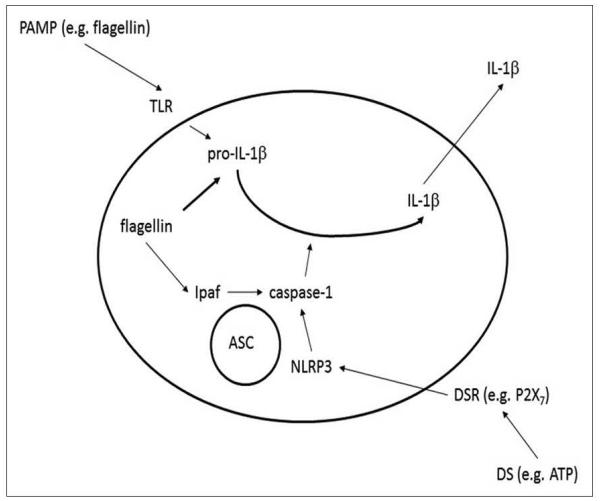
The elaboration of an effective immune response against pathogenic microbes such as viruses, intracellular bacteria or protozoan parasites relies on the recognition of microbial products called pathogen-associated molecular patterns (PAMPs) by pattern recognition receptors (PRRs) such as Toll-like receptors (TLRs). Ligation of the PRRs leads to synthesis and secretion of pro-inflammatory cytokines and chemokines. Infected cells and other stressed cells also release host-cell derived molecules, called damage-associated molecular patterns (DAMPs, danger signals, or alarmins), which are generic markers for damage. DAMPs are recognized by specific receptors on both immune and nonimmune cells, which, depending on the target cell and the cellular context, can lead to cell differentiation or cell death, and either inflammation or inhibition of inflammation. Recent research has revealed that DAMPs and PAMPs synergize to permit secretion of pro-inflammatory cytokines such as interleukin-1β (IL-1β): PAMPs stimulate synthesis of pro-IL-1β, but not its secretion; while DAMPs can stimulate assembly of an inflammasome containing, usually, a Nod-like receptor (NLR) member, and activation of the protease caspase-1, which cleaves pro-IL-1β into IL-1β, allowing its secretion. Other NLR members do not participate in formation of inflammasomes but play other essential roles in regulation of the innate immune response.
Figures
References
-
- Janeway CA., Jr. Approaching the asymptote? Evolution and revolution in immunology. Cold Spring Harb Symp Quant Biol. 1989;54(Pt 1):1–13. - PubMed
-
- Takeda K, Akira S. Toll-like receptors in innate immunity. Int Immunol. 2005;17:1–14. - PubMed
-
- Takeda K, Kaisho T, Akira S. Toll-like receptors. Arum Rev Immunol. 2003;21:335–76. - PubMed
-
- Iwasaki A, Medzhitov R. Toll-like receptor control of the adaptive immune responses. Nat Immunol. 2004;5:987–95. - PubMed
-
- Brasier AR. The NF-kappaB regulatory network. Cardiovasc Toxicol. 2006;6:111–30. - PubMed
Publication types
MeSH terms
Substances
Grants and funding
LinkOut - more resources
Full Text Sources