


Translation between the Neer- and the AO/OTA-classification for proximal humeral fractures: do we need to be bilingual to interpret the scientific literature?
- PMID: 23442552
- PMCID: PMC3610277
- DOI: 10.1186/1756-0500-6-69
Translation between the Neer- and the AO/OTA-classification for proximal humeral fractures: do we need to be bilingual to interpret the scientific literature?
Abstract
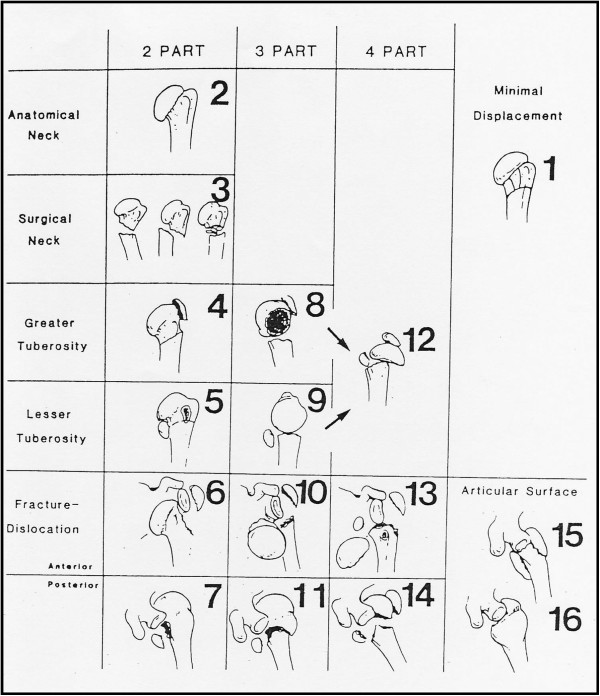
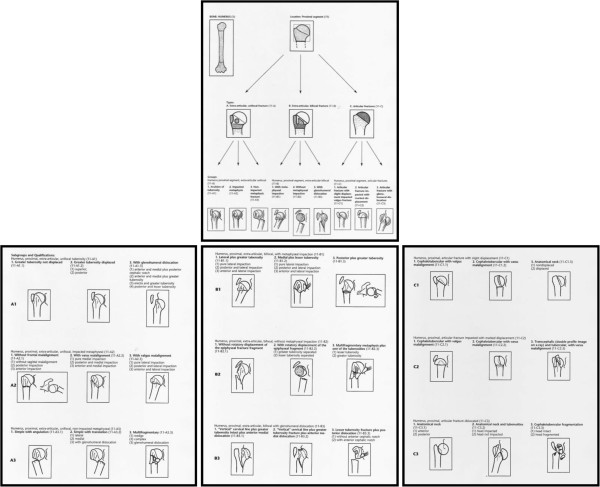
Background: The reporting and interpretation of data from clinical trials of proximal humeral fractures are hampered by the use of two partly incommensurable fracture classification systems: the Neer classification and the AO/OTA classification. It remains difficult to interpret and generalize results, to conduct prognostic studies, and to obtain consensus on treatment recommendations when concise definitions and a common 'fracture language' are lacking. Thus, we compared both classifications systems using primary data from large clinical studies to assess how thoroughly both systems conveyed clinically important classification information.
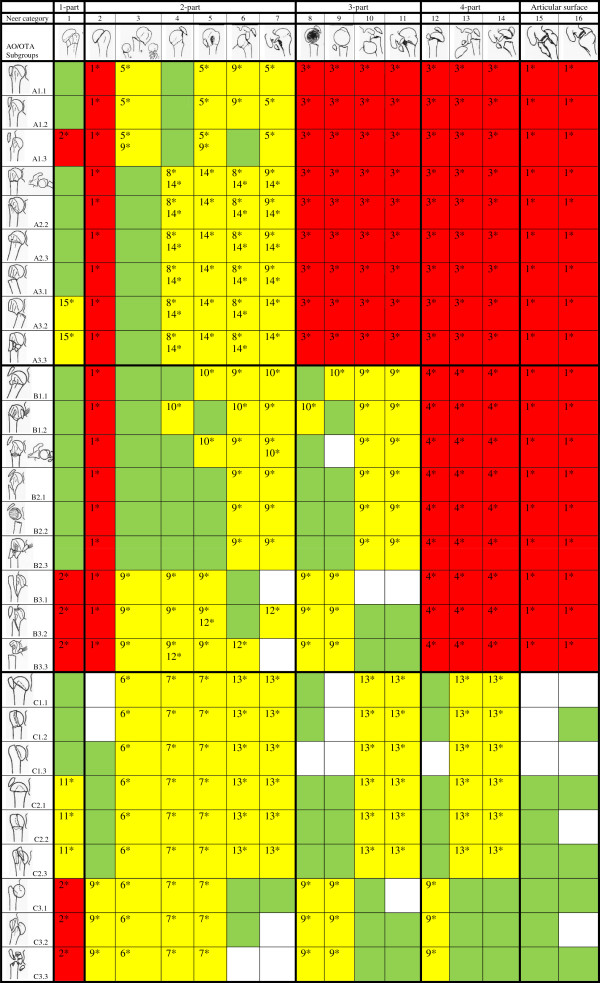
Methods: Classification data from each study were organized in a cross-table covering the 432 theoretically possible combinations between the 16 Neer categories and the 27 AO/OTA subgroups, and the plausibility of all observed combinations were assessed and discussed by the authors until consensus.
Results: We analyzed primary data from 2530 observations from seven studies providing primary data from both classification systems. Thirty-five percent (151 out of 432) of the combinations were considered 'not plausible' and thirty-four percent (149 out of 432) were considered 'problematic'.
Conclusions: Clinically important information was lost within both classification systems. Most important, the varus/valgus distinction was not found within the Neer classification and a clear definition of displacement was lacking in the AO/OTA classification. We encourage surgeons and researches to report data from both classification systems for a more thorough description of the fracture patterns and to enable cross-checking of the coding. A suitable table for cross-checking of the coding is provided herein.
Figures
References
Publication types
MeSH terms
LinkOut - more resources
Full Text Sources
Other Literature Sources
Medical
