


Identification of O-linked N-acetylglucosamine (O-GlcNAc)-modified osteoblast proteins by electron transfer dissociation tandem mass spectrometry reveals proteins critical for bone formation
- PMID: 23443134
- PMCID: PMC3617341
- DOI: 10.1074/mcp.M112.026633
Identification of O-linked N-acetylglucosamine (O-GlcNAc)-modified osteoblast proteins by electron transfer dissociation tandem mass spectrometry reveals proteins critical for bone formation
Abstract
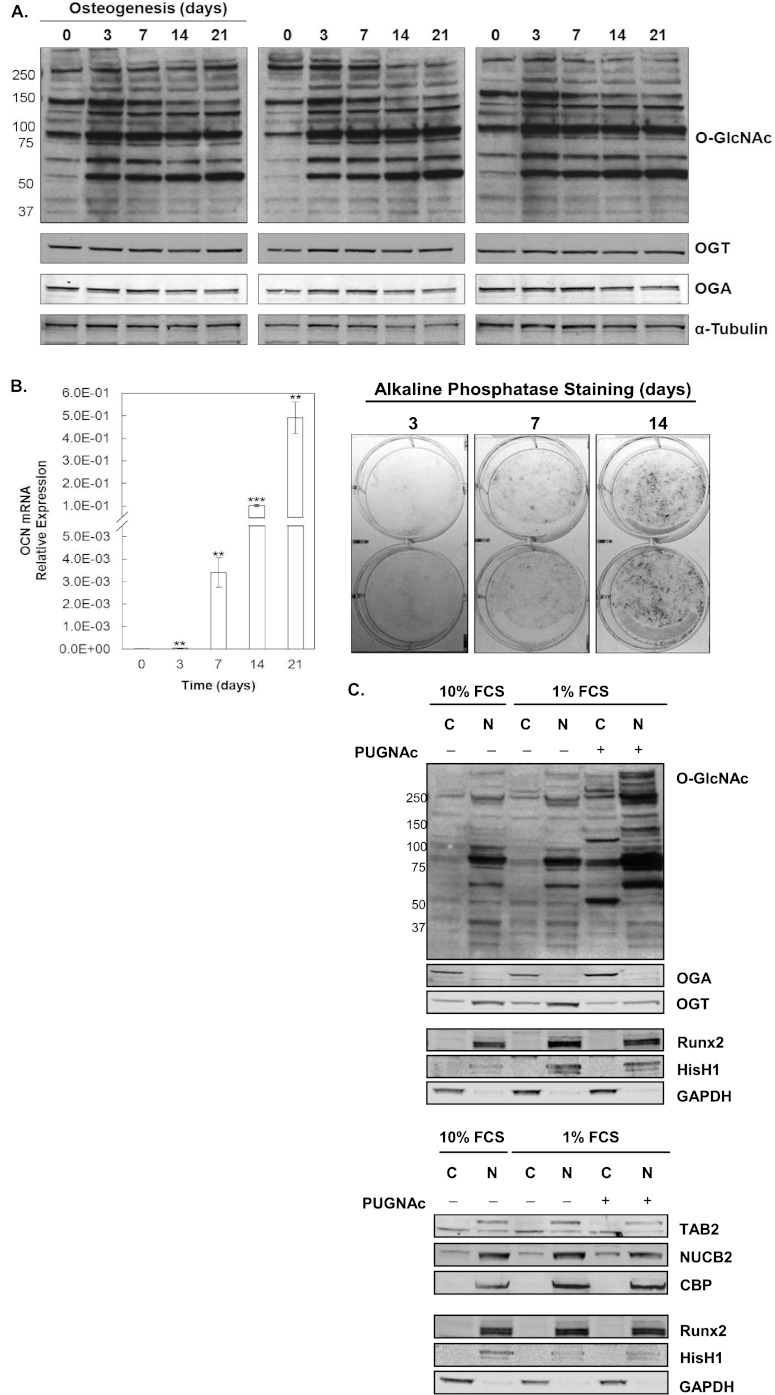
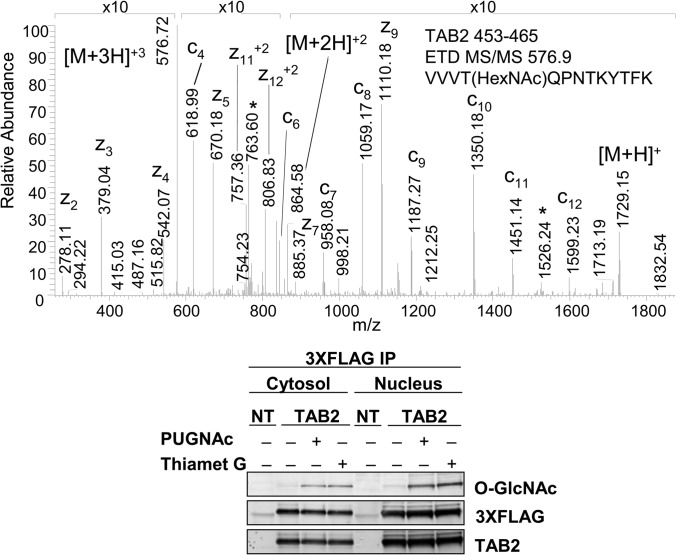
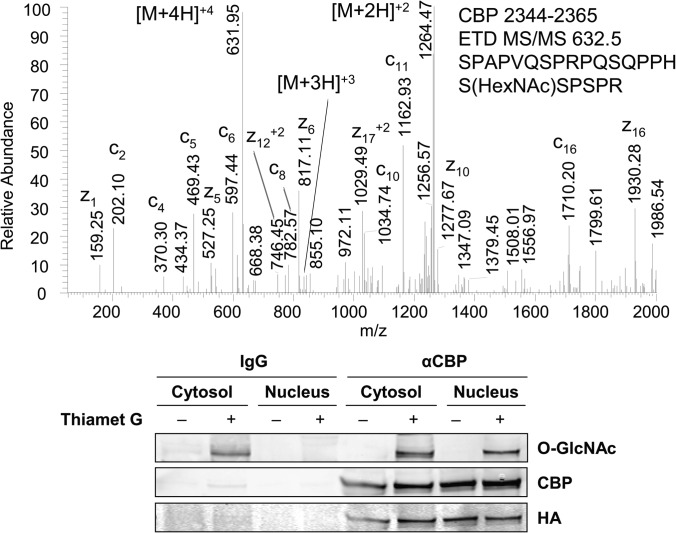
The nutrient-responsive β-O-linked N-acetylglucosamine (O-GlcNAc) modification of critical effector proteins modulates signaling and transcriptional pathways contributing to cellular development and survival. An elevation in global protein O-GlcNAc modification occurs during the early stages of osteoblast differentiation and correlates with enhanced transcriptional activity of RUNX2, a key regulator of osteogenesis. To identify other substrates of O-GlcNAc transferase in differentiating MC3T3E1 osteoblasts, O-GlcNAc-modified peptides were enriched by wheat germ agglutinin lectin weak affinity chromatography and identified by tandem mass spectrometry using electron transfer dissociation. This peptide fragmentation approach leaves the labile O-linkage intact permitting direct identification of O-GlcNAc-modified peptides. O-GlcNAc modification was observed on enzymes involved in post-translational regulation, including MAST4 and WNK1 kinases, a ubiquitin-associated protein (UBAP2l), and the histone acetyltransferase CREB-binding protein. CREB-binding protein, a transcriptional co-activator that associates with CREB and RUNX2, is O-GlcNAcylated at Ser-147 and Ser-2360, the latter of which is a known site of phosphorylation. Additionally, O-GlcNAcylation of components of the TGFβ-activated kinase 1 (TAK1) signaling complex, TAB1 and TAB2, occurred in close proximity to known sites of Ser/Thr phosphorylation and a putative nuclear localization sequence within TAB2. These findings demonstrate the presence of O-GlcNAc modification on proteins critical to bone formation, remodeling, and fracture healing and will enable evaluation of this modification on protein function and regulation.
Figures
References
-
- Alfaro J. F., Gong C. X., Monroe M. E., Aldrich J. T., Clauss T. R., Purvine S. O., Wang Z., Camp D. G., 2nd, Shabanowitz J., Stanley P., Hart G. W., Hunt D. F., Yang F., Smith R. D. (2012) Tandem mass spectrometry identifies many mouse brain O-GlcNAcylated proteins, including EGF domain-specific O-GlcNAc transferase targets. Proc. Natl. Acad. Sci. U.S.A. 109, 7280–7285 - PMC - PubMed
-
- Torres C. R., Hart G. W. (1984) Topography and polypeptide distribution of terminal N-acetylglucosamine residues on the surfaces of intact lymphocytes. Evidence for O-linked GlcNAc. J. Biol. Chem. 259, 3308–3317 - PubMed
-
- Wells L., Vosseller K., Hart G. W. (2001) Glycosylation of nucleocytoplasmic proteins: signal transduction and O-GlcNAc. Science 291, 2376–2378 - PubMed
Publication types
MeSH terms
Substances
Grants and funding
LinkOut - more resources
Full Text Sources
Other Literature Sources
Molecular Biology Databases
Miscellaneous
