Hematopoietic stem cell transplantation for children with high-risk acute lymphoblastic leukemia in first complete remission: a report from the AIEOP registry
- PMID: 23445874
- PMCID: PMC3729909
- DOI: 10.3324/haematol.2012.079707
Hematopoietic stem cell transplantation for children with high-risk acute lymphoblastic leukemia in first complete remission: a report from the AIEOP registry
Abstract
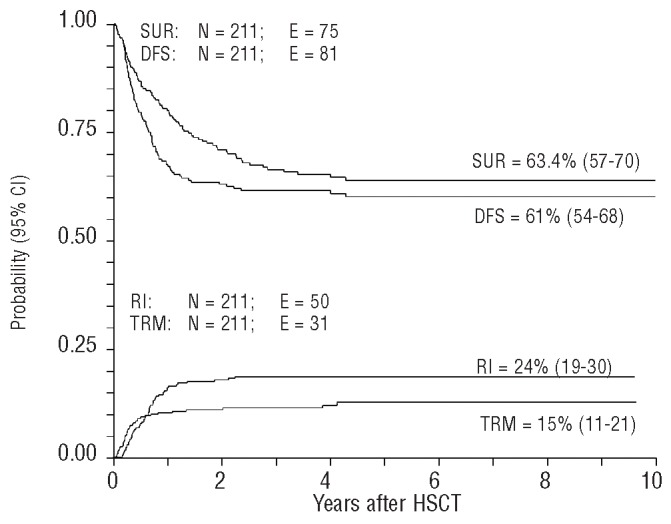
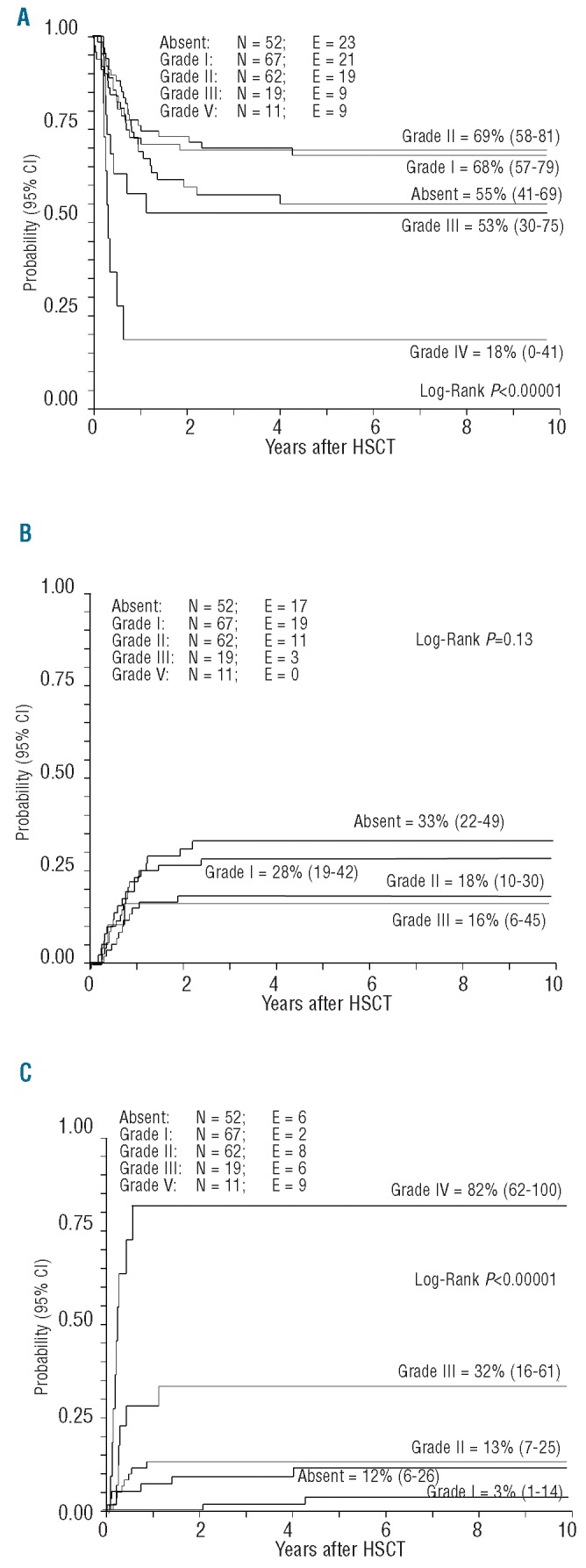
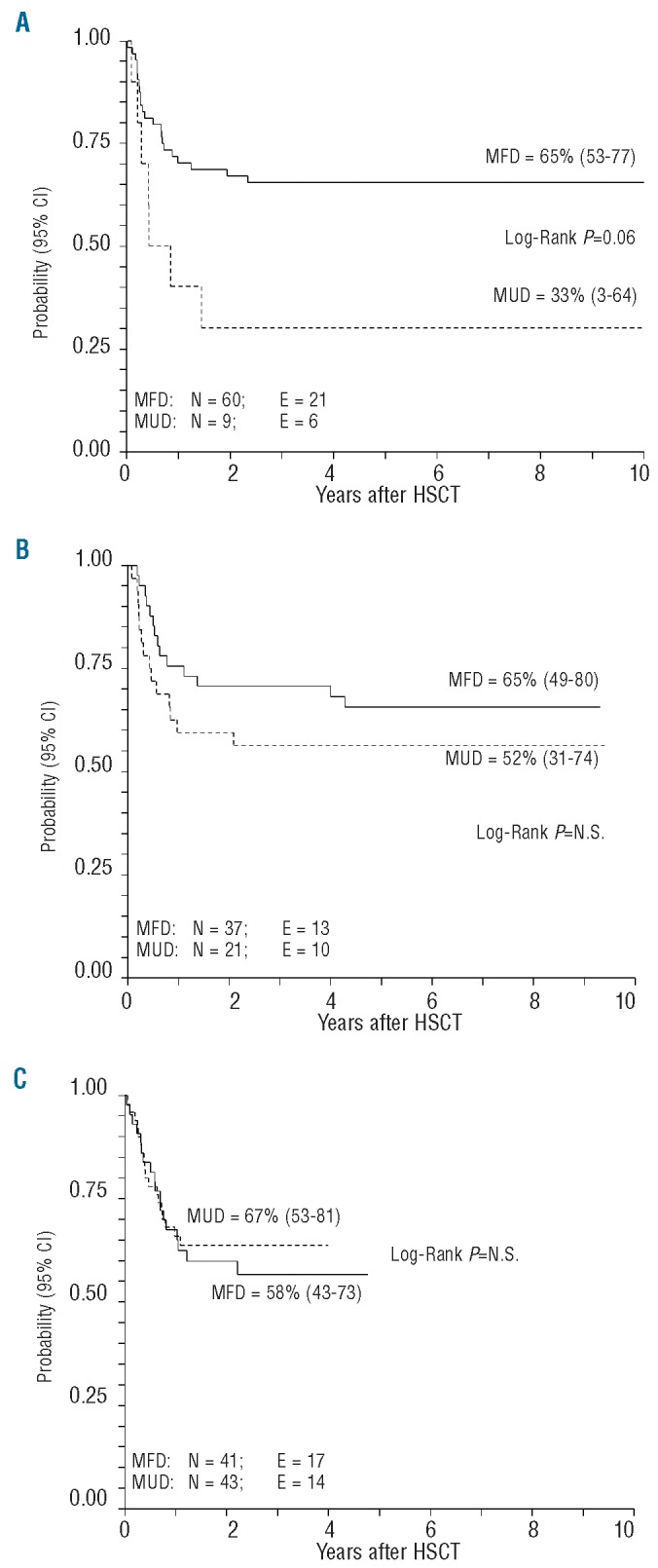
Children with high-risk acute lymphoblastic leukemia in first complete remission can benefit from allogeneic hematopoietic stem cell transplantation. We analyzed the outcome of 211 children with high-risk acute lymphoblastic leukemia in first complete remission who were given an allogeneic transplant between 1990 and 2008; the outcome of patients who, despite having an indication for transplantation and a suitable donor, did not receive the allograft for different reasons in the same time period was not analyzed. Sixty-nine patients (33%) were transplanted between 1990 and 1999, 58 (27%) between 2000 and 2005, and 84 (40%) between 2005 and 2008. A matched family donor was employed in 138 patients (65%) and an unrelated donor in 73 (35%). The 10-year probabilities of overall and disease-free survival were 63.4% and 61%, respectively. The 10-year cumulative incidences of transplantation-related mortality and relapse were 15% and 24%, respectively. After 1999, no differences in either disease-free survival or transplant-related mortality were observed in patients transplanted from unrelated or matched family donors. In multivariate analysis, grade IV acute graft-versus-host disease was an independent factor associated with worse disease-free survival. By contrast, grade I acute graft-versus-host disease and age at diagnosis between 1 and 9 years were favorable prognostic variables. Our study, not intended to evaluate whether transplantation is superior to chemotherapy for children with acute lymphoblastic leukemia in first complete remission and high-risk features, shows that the allograft cured more than 60% of these patients; in the most recent period, the outcome of recipients of grafts from matched family and unrelated donors was comparable.
Figures
References
-
- Silverman LB, Gelber RD, Dalton VK, Asselin BL, Barr RD, Clavell LA, et al. Improved outcome for children with acute lymphoblastic leukemia: results of Dana-Farber Consortium Protocol 91-01. Blood. 2001;97(5):1211–8 - PubMed
-
- Conter V, Arico M, Valsecchi MG, Rizzari C, Testi A, Miniero R, et al. Intensive BFM chemotherapy for childhood ALL: interim analysis of the AIEOP-ALL 91 study. Associazione Italiana Ematologia Oncologia Pediatrica. Haematologica. 1998;83(9):791–9 - PubMed
-
- Gaynon PS, Steinherz PG, Bleyer WA, Ablin AR, Albo VC, Finklestein JZ, et al. Improved therapy for children with acute lymphoblastic leukemia and unfavorable presenting features: a follow-up report of the Children’s Cancer Group Study CCG-106. J Clin Oncol. 1993;11(11):2234–42 - PubMed
-
- Arico M, Valsecchi MG, Conter V, Rizzari C, Pession A, Messina C, et al. Improved outcome in high-risk childhood acute lymphoblastic leukemia defined by prednisone-poor response treated with double Berlin-Frankfurt-Muenster protocol II. Blood. 2002;100(2):420–6 - PubMed
Publication types
MeSH terms
LinkOut - more resources
Full Text Sources
Other Literature Sources