Comparison of Kasai autocorrelation and maximum likelihood estimators for Doppler optical coherence tomography
- PMID: 23446044
- PMCID: PMC3745780
- DOI: 10.1109/TMI.2013.2248163
Comparison of Kasai autocorrelation and maximum likelihood estimators for Doppler optical coherence tomography
Abstract
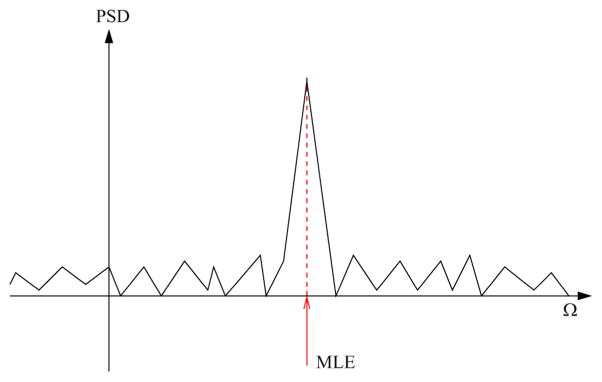
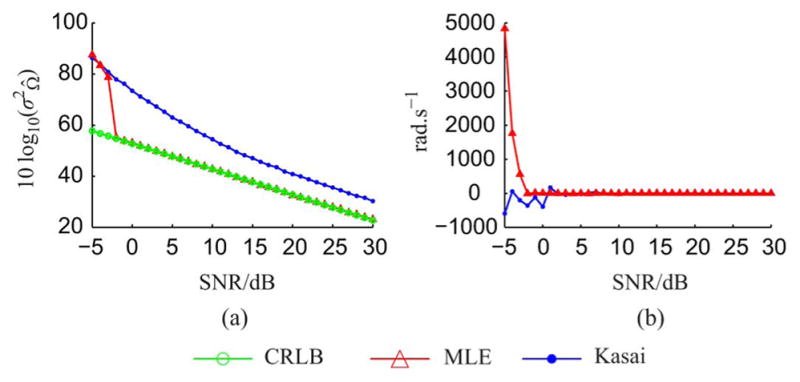
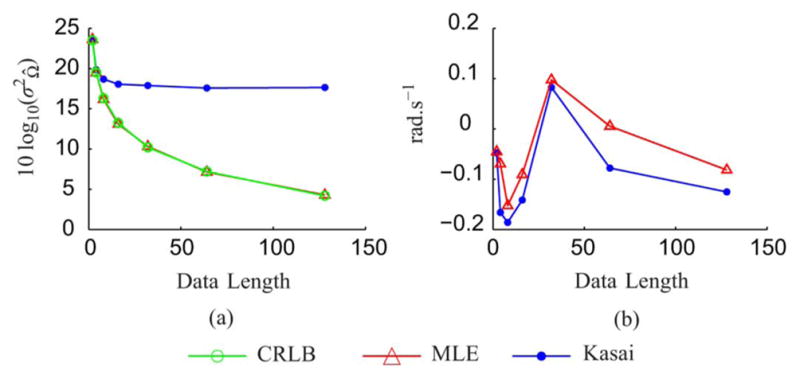
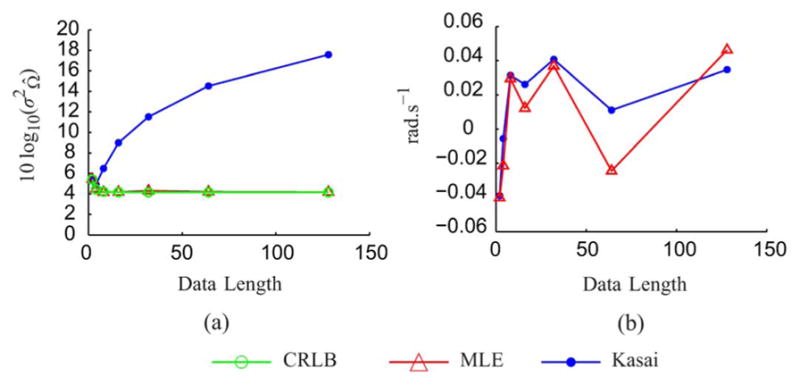
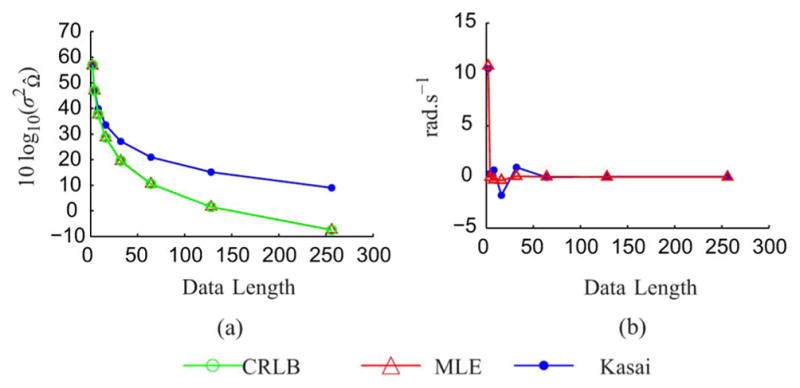
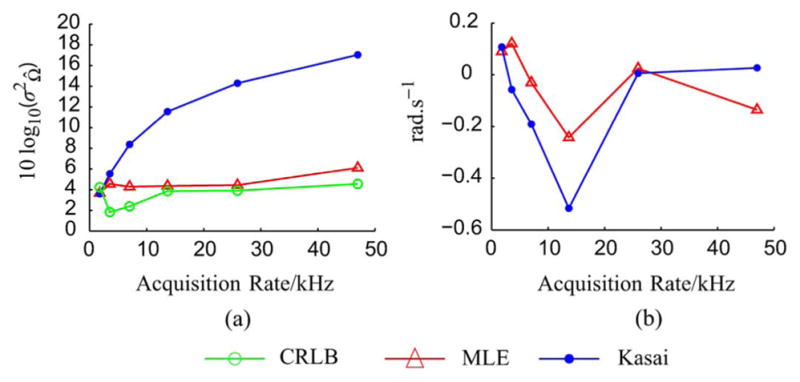
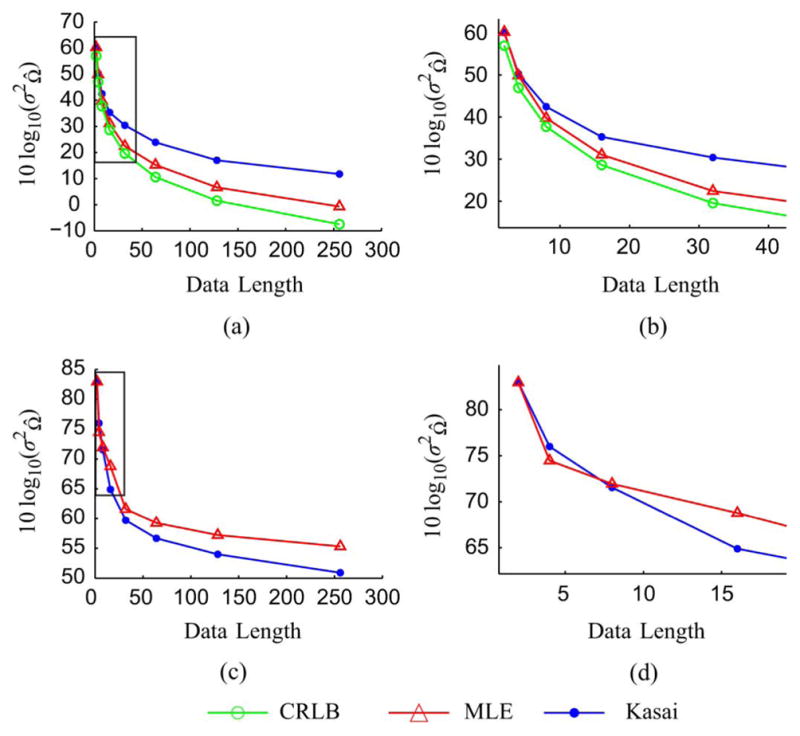
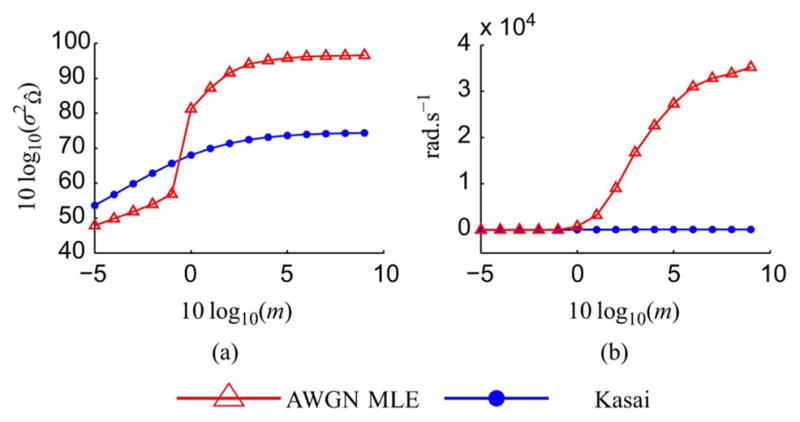
In optical coherence tomography (OCT) and ultrasound, unbiased Doppler frequency estimators with low variance are desirable for blood velocity estimation. Hardware improvements in OCT mean that ever higher acquisition rates are possible, which should also, in principle, improve estimation performance. Paradoxically, however, the widely used Kasai autocorrelation estimator's performance worsens with increasing acquisition rate. We propose that parametric estimators based on accurate models of noise statistics can offer better performance. We derive a maximum likelihood estimator (MLE) based on a simple additive white Gaussian noise model, and show that it can outperform the Kasai autocorrelation estimator. In addition, we also derive the Cramer Rao lower bound (CRLB), and show that the variance of the MLE approaches the CRLB for moderate data lengths and noise levels. We note that the MLE performance improves with longer acquisition time, and remains constant or improves with higher acquisition rates. These qualities may make it a preferred technique as OCT imaging speed continues to improve. Finally, our work motivates the development of more general parametric estimators based on statistical models of decorrelation noise.
Figures

References
-
- Izatt JA, Kulkarni MD, Yazdanfar S, Barton JK, Welch AJ. In vivo bidirectional color Doppler flow imaging of picoliter blood volumes using optical coherence tomography. Opt Lett. 1997 Sep;22(18):1439–1441. - PubMed
-
- Chen Z, Milner TE, Dave D, Nelson JS. Optical Doppler tomographic imaging of fluid flow velocity in highly scattering media. Opt Lett. 1997 Jan;22(1):64–66. - PubMed
-
- Szkulmowski M, Szkulmowska A, Bajraszewski T, Kowalczyk A, Wojtkowski M. Flow velocity estimation using joint spectral and time domain optical coherence tomography. Opt Exp. 2008 Apr;16(9):6008–6025. - PubMed
Publication types
MeSH terms
Grants and funding
LinkOut - more resources
Full Text Sources
Other Literature Sources