


Beneficial effects of a higher-protein breakfast on the appetitive, hormonal, and neural signals controlling energy intake regulation in overweight/obese, "breakfast-skipping," late-adolescent girls
- PMID: 23446906
- PMCID: PMC3718776
- DOI: 10.3945/ajcn.112.053116
Beneficial effects of a higher-protein breakfast on the appetitive, hormonal, and neural signals controlling energy intake regulation in overweight/obese, "breakfast-skipping," late-adolescent girls
Abstract
Background: Breakfast skipping is a common dietary habit practiced among adolescents and is strongly associated with obesity.
Objective: The objective was to examine whether a high-protein (HP) compared with a normal-protein (NP) breakfast leads to daily improvements in appetite, satiety, food motivation and reward, and evening snacking in overweight or obese breakfast-skipping girls.
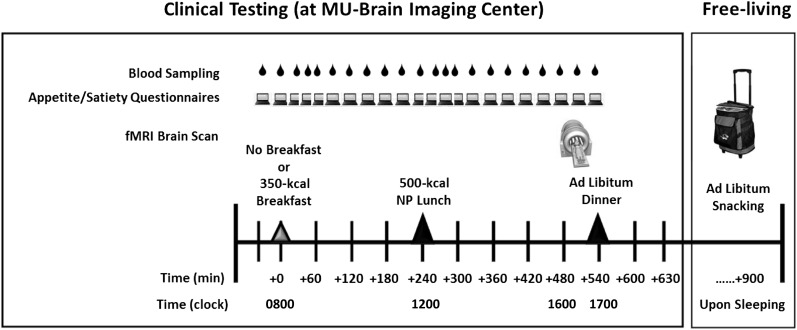
Design: A randomized crossover design was incorporated in which 20 girls [mean ± SEM age: 19 ± 1 y; body mass index (in kg/m(2)): 28.6 ± 0.7] consumed 350-kcal NP (13 g protein) cereal-based breakfasts, consumed 350-kcal HP egg- and beef-rich (35 g protein) breakfasts, or continued breakfast skipping (BS) for 6 d. On day 7, a 10-h testing day was completed that included appetite and satiety questionnaires, blood sampling, predinner food cue-stimulated functional magnetic resonance imaging brain scans, ad libitum dinner, and evening snacking.
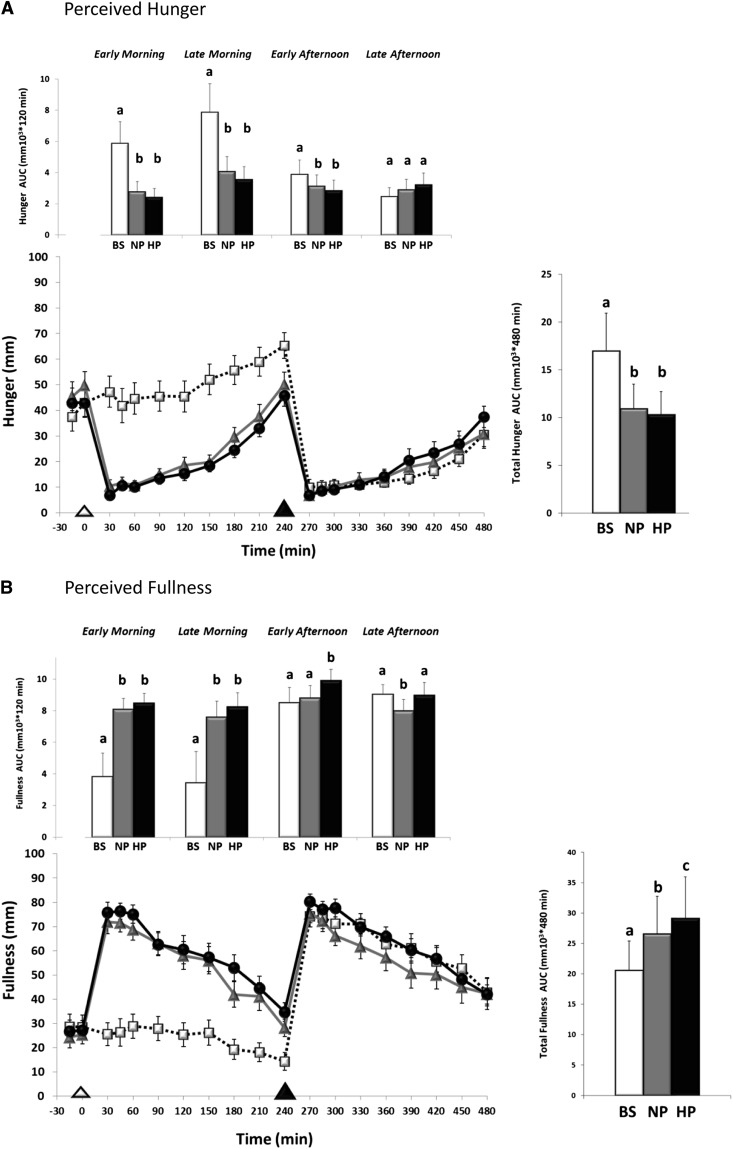
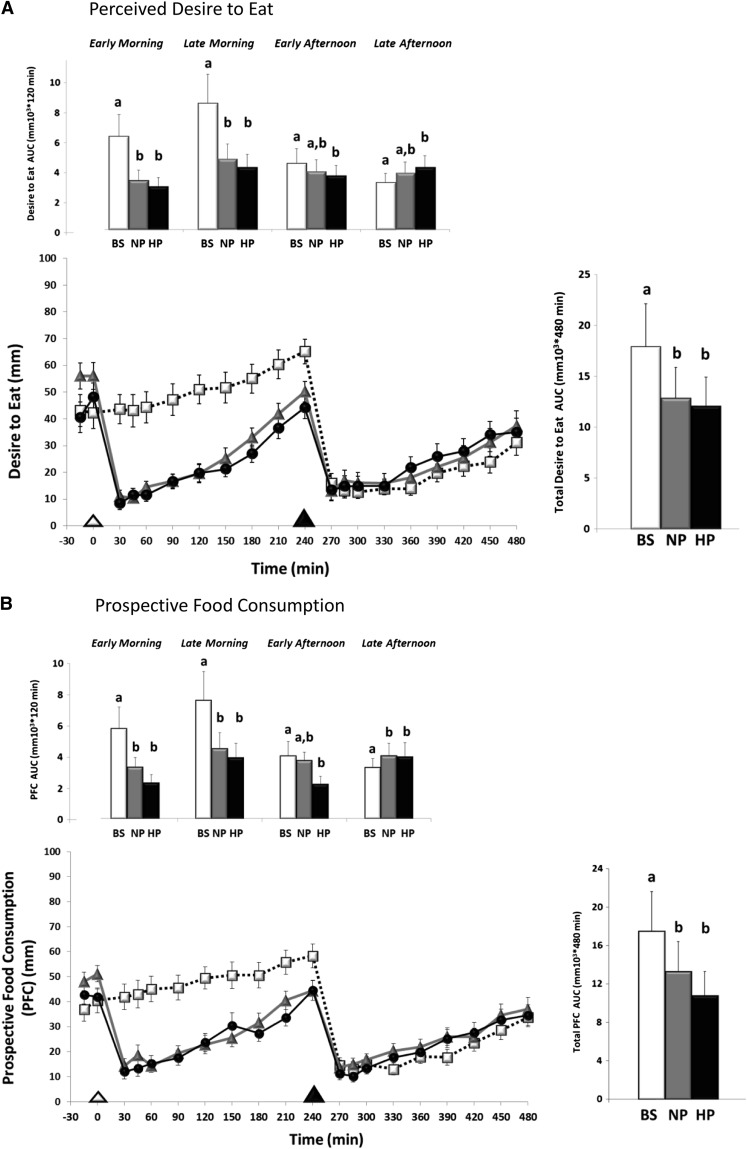
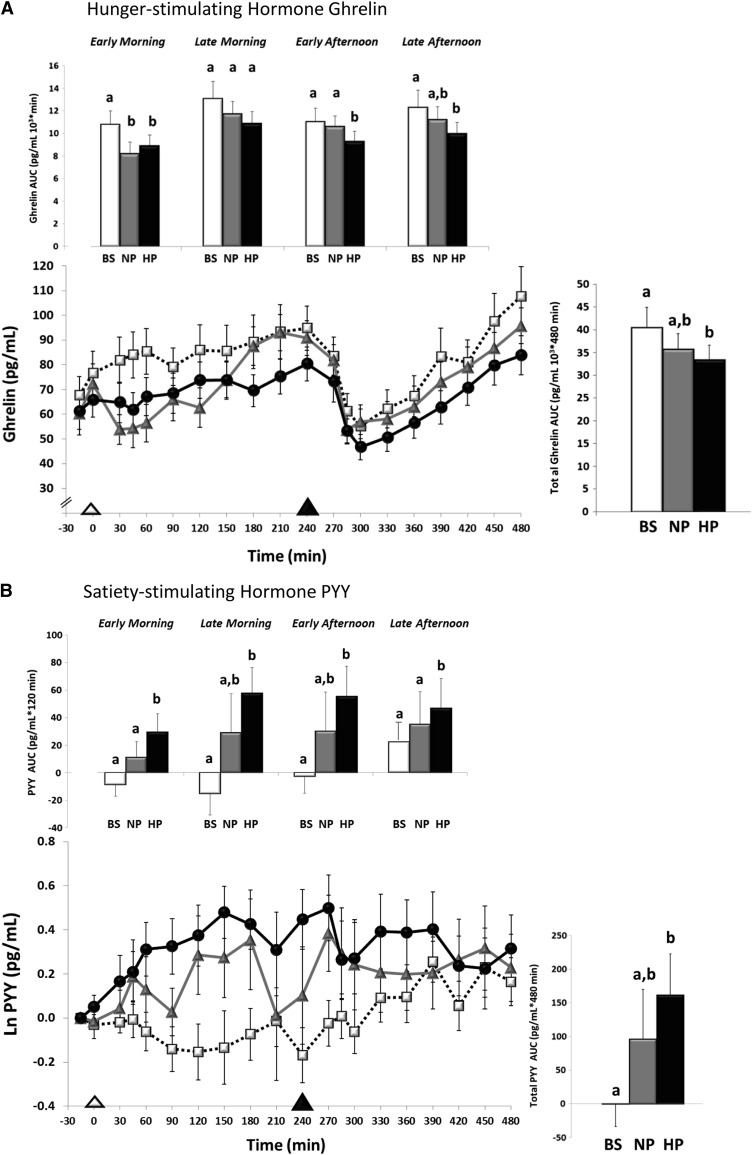
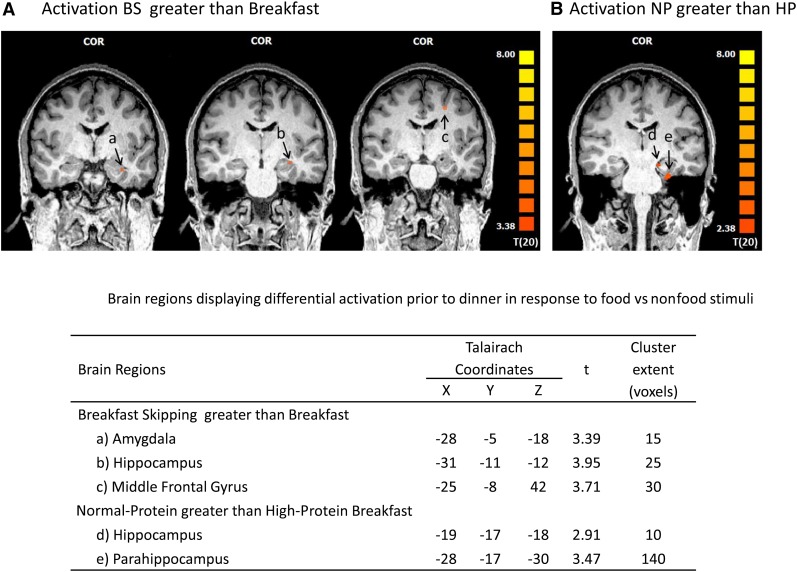
Results: The consumption of breakfast reduced daily hunger compared with BS with no differences between meals. Breakfast increased daily fullness compared with BS, with the HP breakfast eliciting greater increases than did the NP breakfast. HP, but not NP, reduced daily ghrelin and increased daily peptide YY concentrations compared with BS. Both meals reduced predinner amygdala, hippocampal, and midfrontal corticolimbic activation compared with BS. HP led to additional reductions in hippocampal and parahippocampal activation compared with NP. HP, but not NP, reduced evening snacking of high-fat foods compared with BS.
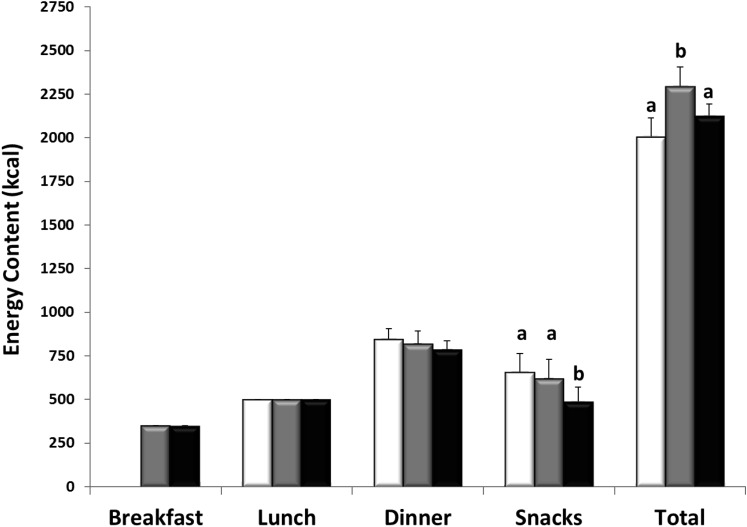
Conclusions: Breakfast led to beneficial alterations in the appetitive, hormonal, and neural signals that control food intake regulation. Only the HP breakfast led to further alterations in these signals and reduced evening snacking compared with BS, although no differences in daily energy intake were observed. These data suggest that the addition of breakfast, particularly one rich in protein, might be a useful strategy to improve satiety, reduce food motivation and reward, and improve diet quality in overweight or obese teenage girls. This trial was registered at clinicaltrials.gov as NCT01192100.
Figures
References
-
- Deshmukh-Taskar PR, Nicklas TA, O'Neil CE, Keast DR, Radcliffe JD, Cho S. The relationship of breakfast skipping and type of breakfast consumption with nutrient intake and weight status in children and adolescents: the National Health and Nutrition Examination Survey 1999-2006. J Am Diet Assoc 2010;110:869–78 - PubMed
-
- Timlin M. Breakfast eating and weight change in a 5-year prospective analysis of adolescents: Project EAT (Eating Among Teens). Pediatrics 2008;121(3):e638–45. - PubMed
-
- Siega-Riz AM, Popkin BM, Carson T. Trends in breakfast consumption for children in the United States from 1965-1991. Am J Clin Nutr 1998;67(suppl):748S–56S - PubMed
-
- Sjöberg A, Hallberg L, Hoglund D, Hulthen L. Meal pattern, food choice, nutrient intake and lifestyle factors in the Goteborg Adolescence Study. Eur J Clin Nutr 2003;57:1569–78 - PubMed
Publication types
MeSH terms
Substances
Associated data
Grants and funding
LinkOut - more resources
Full Text Sources
Other Literature Sources
Medical
Research Materials
Miscellaneous
