


Mutant HSP70 reverses autoimmune depigmentation in vitiligo
- PMID: 23447019
- PMCID: PMC3912753
- DOI: 10.1126/scitranslmed.3005127
Mutant HSP70 reverses autoimmune depigmentation in vitiligo
Abstract
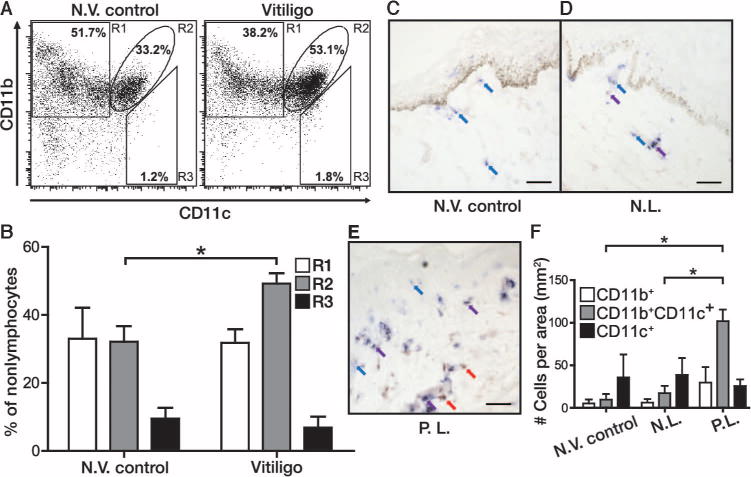
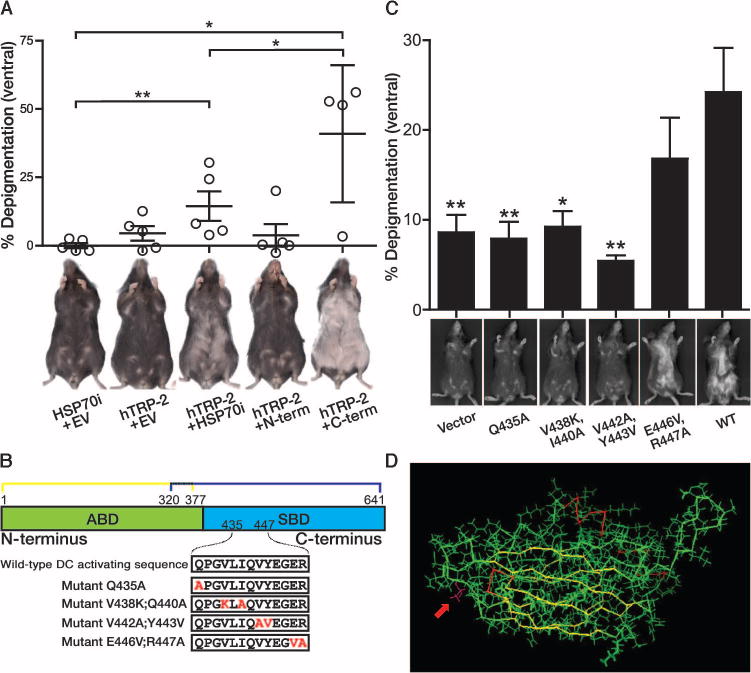
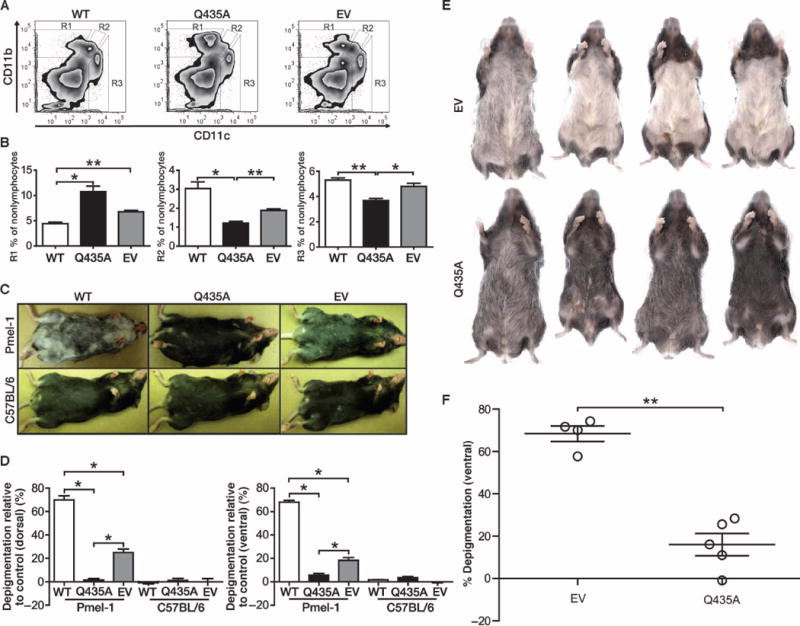
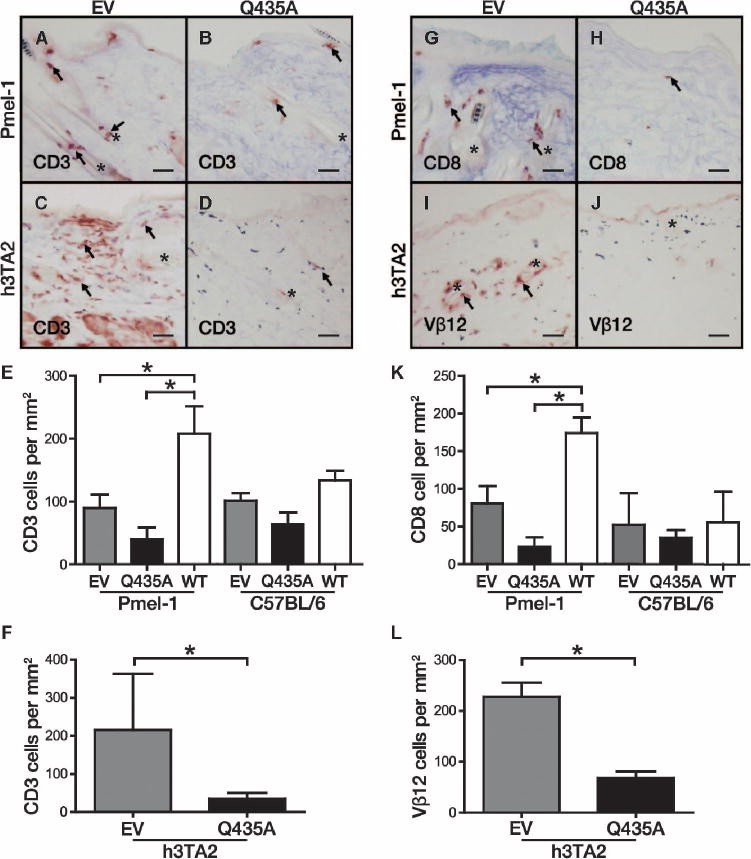
Vitiligo is an autoimmune disease characterized by destruction of melanocytes, leaving 0.5% of the population with progressive depigmentation. Current treatments offer limited efficacy. We report that modified inducible heat shock protein 70 (HSP70i) prevents T cell-mediated depigmentation. HSP70i is the molecular link between stress and the resultant immune response. We previously showed that HSP70i induces an inflammatory dendritic cell (DC) phenotype and is necessary for depigmentation in vitiligo mouse models. Here, we observed a similar DC inflammatory phenotype in vitiligo patients. In a mouse model of depigmentation, DNA vaccination with a melanocyte antigen and the carboxyl terminus of HSP70i was sufficient to drive autoimmunity. Mutational analysis of the HSP70i substrate-binding domain established the peptide QPGVLIQVYEG as invaluable for DC activation, and mutant HSP70i could not induce depigmentation. Moreover, mutant HSP70iQ435A bound human DCs and reduced their activation, as well as induced a shift from inflammatory to tolerogenic DCs in mice. HSP70iQ435A-encoding DNA applied months before spontaneous depigmentation prevented vitiligo in mice expressing a transgenic, melanocyte-reactive T cell receptor. Furthermore, use of HSP70iQ435A therapeutically in a different, rapidly depigmenting model after loss of differentiated melanocytes resulted in 76% recovery of pigmentation. Treatment also prevented relevant T cells from populating mouse skin. In addition, ex vivo treatment of human skin averted the disease-related shift from quiescent to effector T cell phenotype. Thus, HSP70iQ435A DNA delivery may offer potent treatment opportunities for vitiligo.
Conflict of interest statement
Figures
Comment in
-
Autoimmunity: Fade out, fade in.Nat Rev Immunol. 2013 Apr;13(4):220-1. doi: 10.1038/nri3434. Nat Rev Immunol. 2013. PMID: 23638509 No abstract available.
References
-
- Das PK, van den Wijngaard RM, Wankowicz-Kalinska A, Le Poole IC. A symbiotic concept of autoimmunity and tumour immunity: Lessons from vitiligo. Trends Immunol. 2001;22:130–136. - PubMed
-
- Cedercreutz K, Denman CJ, Klarquist J, Vaitla R, Boissy RE, Westerhof W, Hernandez C, Le Poole IC. Vitiligo etiology and treatment: Parameters derived from a patient survey. J Dermatol Nurs Assoc. 2010;2:265–272.
-
- Colucci R, Lotti T, Moretti S. Vitiligo: An update on current pharmacotherapy and future directions. Expert Opin Pharmacother. 2012;13:1885–1899. - PubMed
-
- Teraki Y, Hitomi K, Sato Y, Izaki S. Tacrolimus-induced rosacea-like dermatitis: A clinical analysis of 16 cases associated with tacrolimus ointment application. Dermatology. 2012;224:309–314. - PubMed
-
- Hossani-Madani AR, Halder RM. Topical treatment and combination approaches for vitiligo: New insights, new developments. G Ital Dermatol Venereol. 2010;145:57–78. - PubMed
Publication types
MeSH terms
Substances
Grants and funding
LinkOut - more resources
Full Text Sources
Other Literature Sources
Medical
Molecular Biology Databases
