


Six months of dance intervention enhances postural, sensorimotor, and cognitive performance in elderly without affecting cardio-respiratory functions
- PMID: 23447455
- PMCID: PMC3581819
- DOI: 10.3389/fnagi.2013.00005
Six months of dance intervention enhances postural, sensorimotor, and cognitive performance in elderly without affecting cardio-respiratory functions
Abstract
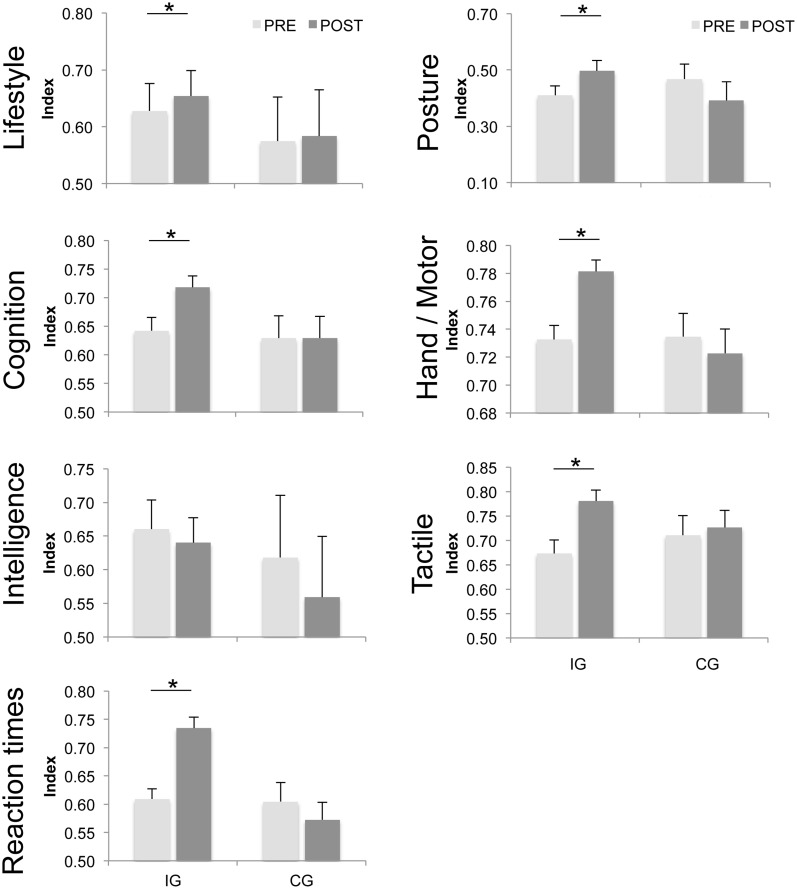
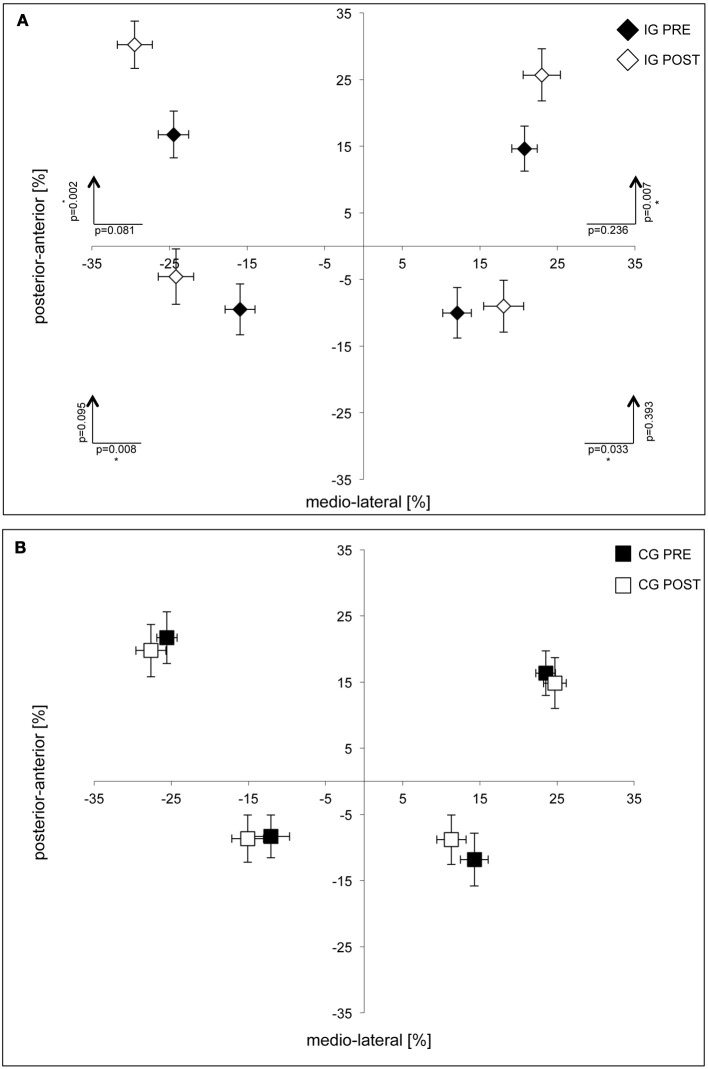
During aging, sensorimotor, cognitive and physical performance decline, but can improve by training and exercise indicating that age-related changes are treatable. Dancing is increasingly used as an intervention because it combines many diverse features making it a promising neuroplasticity-inducing tool. We here investigated the effects of a 6-month dance class (1 h/week) on a group of healthy elderly individuals compared to a matched control group (CG). We performed a broad assessment covering cognition, intelligence, attention, reaction time, motor, tactile, and postural performance, as well as subjective well-being and cardio-respiratory performance. After 6 months, in the CG no changes, or further degradation of performance was found. In the dance group, beneficial effects were found for dance-related parameters such as posture and reaction times, but also for cognitive, tactile, motor performance, and subjective well-being. These effects developed without alterations in the cardio-respiratory performance. Correlation of baseline performance with the improvement following intervention revealed that those individuals, who benefitted most from the intervention, were those who showed the lowest performance prior to the intervention. Our findings corroborate previous observations that dancing evokes widespread positive effects. The pre-post design used in the present study implies that the efficacy of dance is most likely not based on a selection bias of particularly gifted individuals. The lack of changes of cardio-respiratory fitness indicates that even moderate levels of physical activity can in combination with rich sensorimotor, cognitive, social, and emotional challenges act to ameliorate a wide spectrum of age-related decline.
Keywords: VO2max; balance; cognition; dance therapy; enriched environment; intervention; sensorimotor; successful aging.
Figures
References
-
- Alegria J., Bertelson P. (1970). Time uncertainty, number of alternatives and particular signal-response pair as determinant of choice reaction time. Acta Psychol. 33, 36–44
-
- Astrand I., Astrand P. O., Hallbäck I., Kilbom A. (1973). Reduction in maximal oxygen uptake with age. J. Appl. Physiol. 35, 649–654 - PubMed
-
- Bors D., Vigneau F. (2003). The effect of practice on Raven's Advanced Progressive Matrices. Learn. Individ. Differ. 13, 291–312
LinkOut - more resources
Full Text Sources
Other Literature Sources
Medical
Miscellaneous
