


Bilateral V-Y rotation advancement flap for fingertip amputations
- PMID: 23448959
- PMCID: PMC3280365
- DOI: 10.1007/s11552-011-9389-6
Bilateral V-Y rotation advancement flap for fingertip amputations
Abstract
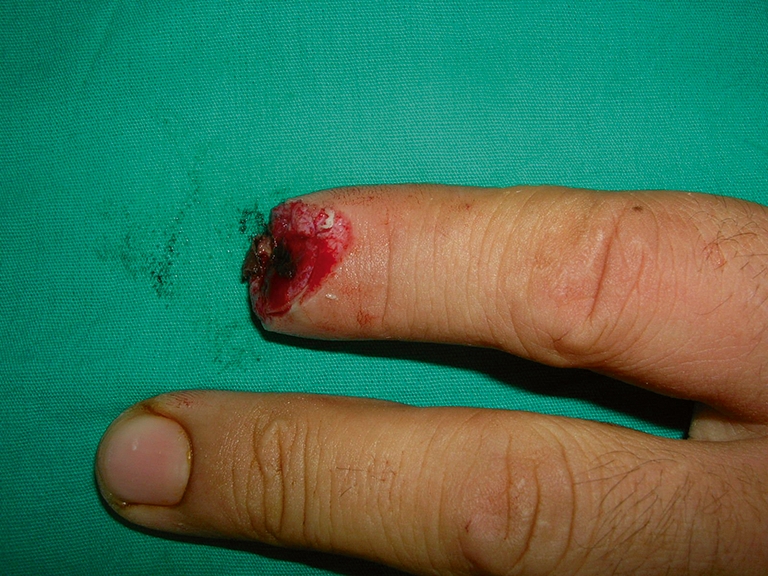
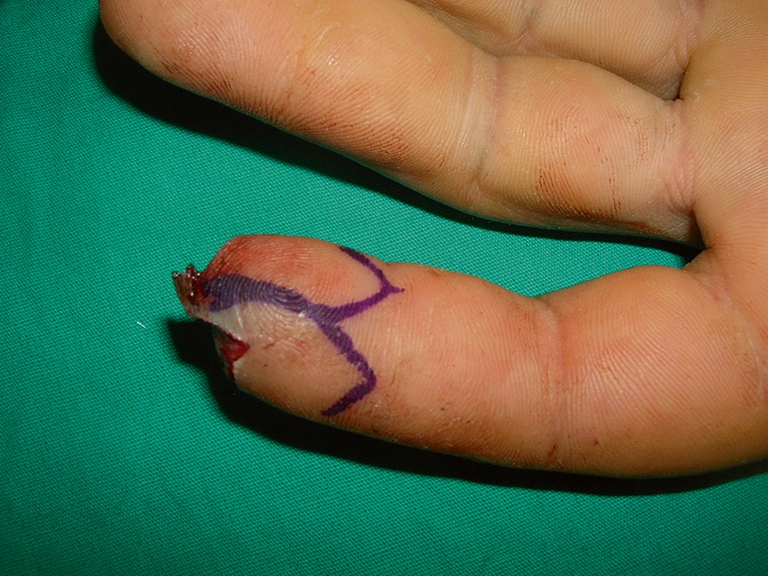
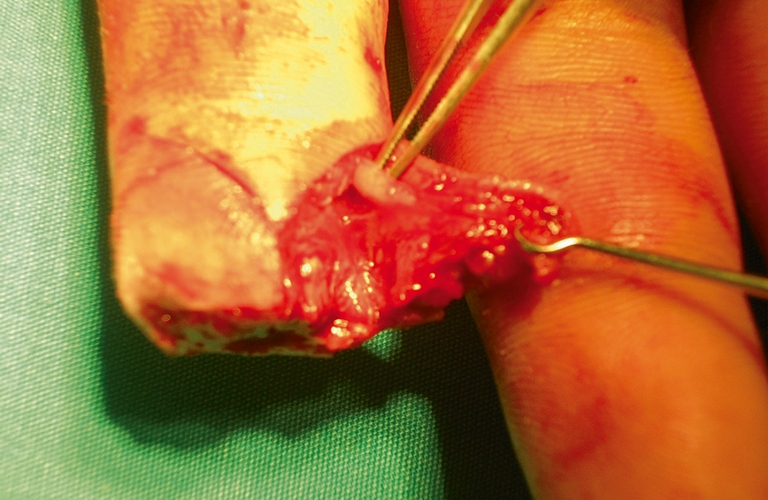
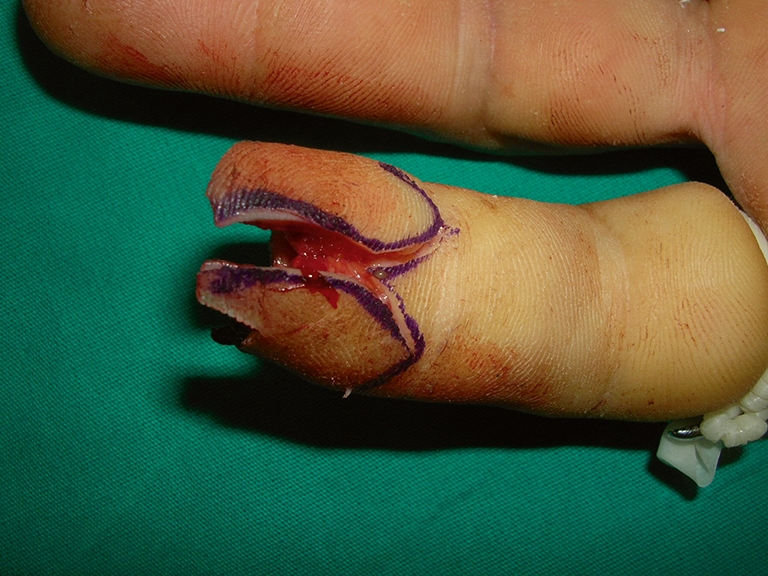
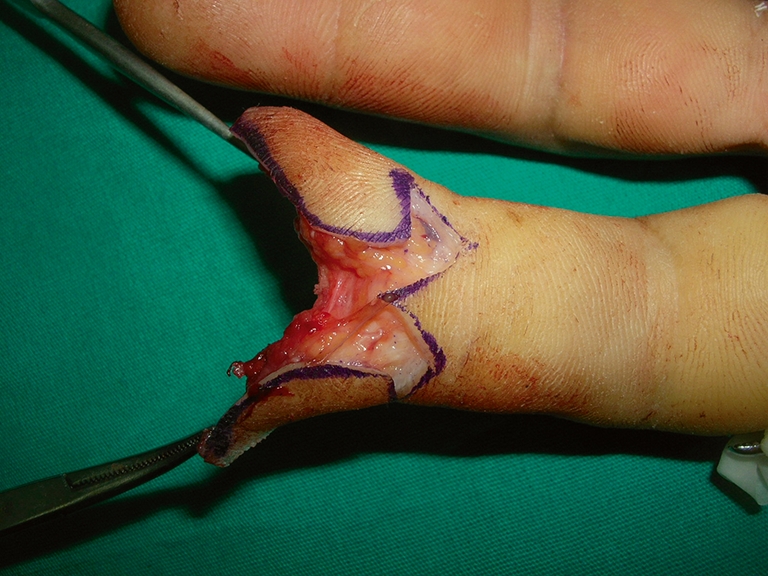
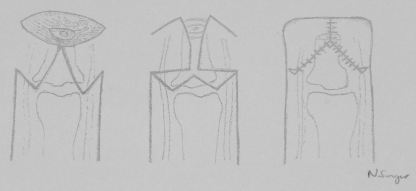
Background: Fingertip amputation is the most common type of injury in the upper limb. Goals in fingertip amputation reconstruction are covering the defect, establishing maximum tactile gnosis, keeping the length of the finger, protecting the joint function, acquiring a well-padded pulp tissue, providing a bed for growing nail, obtaining a satisfactory cosmetic appearance and allowing the patient to return to work as soon as possible. Adjacent skin and soft tissue are the best covers for fingertip injuries. However, local homodigital flaps lack enough tissue to cover the defect. To solve this problem, we used V-Y rotation advancement flap bilaterally in fingertip amputations which meets all the reconstruction goals. Rotation besides advancement makes this flap more mobile and easier to cover larger defects in all amputation planes.
Methods: Between 2007 and 2009, we performed bilateral V-Y rotation advancement flap on seven male patients' pulpa (average age, 37.6 years) whose fingertips were not replantable.
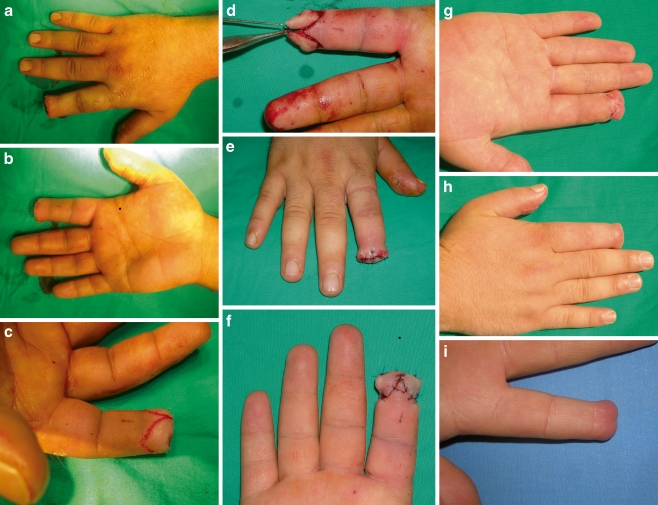
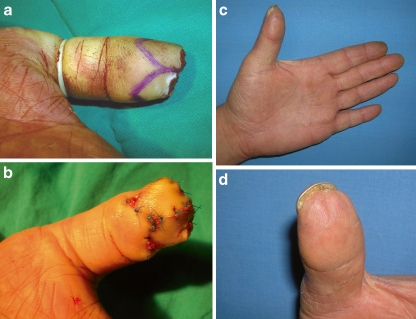
Results: Fourteen flaps were made on 7 fingers. There was neither total nor partial flap loss. Patients had neither cold intolerance nor scar hypersensitivity. Stiffness of the PIP joint did not occur. No obvious hooked nail occurred in patients who have remaining nail matrix. Because flaps contain neurovascular bundle, there was no difference in sensation and perfusion between the finger's pre-operative and post-operative status. The result was satisfactory with painless pinching.
Conclusion: In addition to the various and versatile fingertip reconstruction methods, we want to present V-Y rotation advancement flap as a quick, reliable and aesthetic method.
Keywords: Amputation; Fingertip; Pulpa; Reconstruction; V–Y flap.
Figures
References
-
- Atasoy E, et al. Reconstruction of the amputated finger tip with a triangular volar flap. A new surgical procedure. J Bone Joint Surg Am. 1970;52(5):921–926. - PubMed
LinkOut - more resources
Full Text Sources
