. 2013 Mar 1;339(6123):1088-92.
doi: 10.1126/science.1233321.

Interferon-ε protects the female reproductive tract from viral and bacterial infection

Affiliations

Interferon-ε protects the female reproductive tract from viral and bacterial infection

Ka Yee Fung et al. Science. .

Abstract

The innate immune system senses pathogens through pattern-recognition receptors (PRRs) that signal to induce effector cytokines, such as type I interferons (IFNs). We characterized IFN-ε as a type I IFN because it signaled via the Ifnar1 and Ifnar2 receptors to induce IFN-regulated genes. In contrast to other type I IFNs, IFN-ε was not induced by known PRR pathways; instead, IFN-ε was constitutively expressed by epithelial cells of the female reproductive tract (FRT) and was hormonally regulated. Ifn-ε-deficient mice had increased susceptibility to infection of the FRT by the common sexually transmitted infections (STIs) herpes simplex virus 2 and Chlamydia muridarum. Thus, IFN-ε is a potent antipathogen and immunoregulatory cytokine that may be important in combating STIs that represent a major global health and socioeconomic burden.


Figures
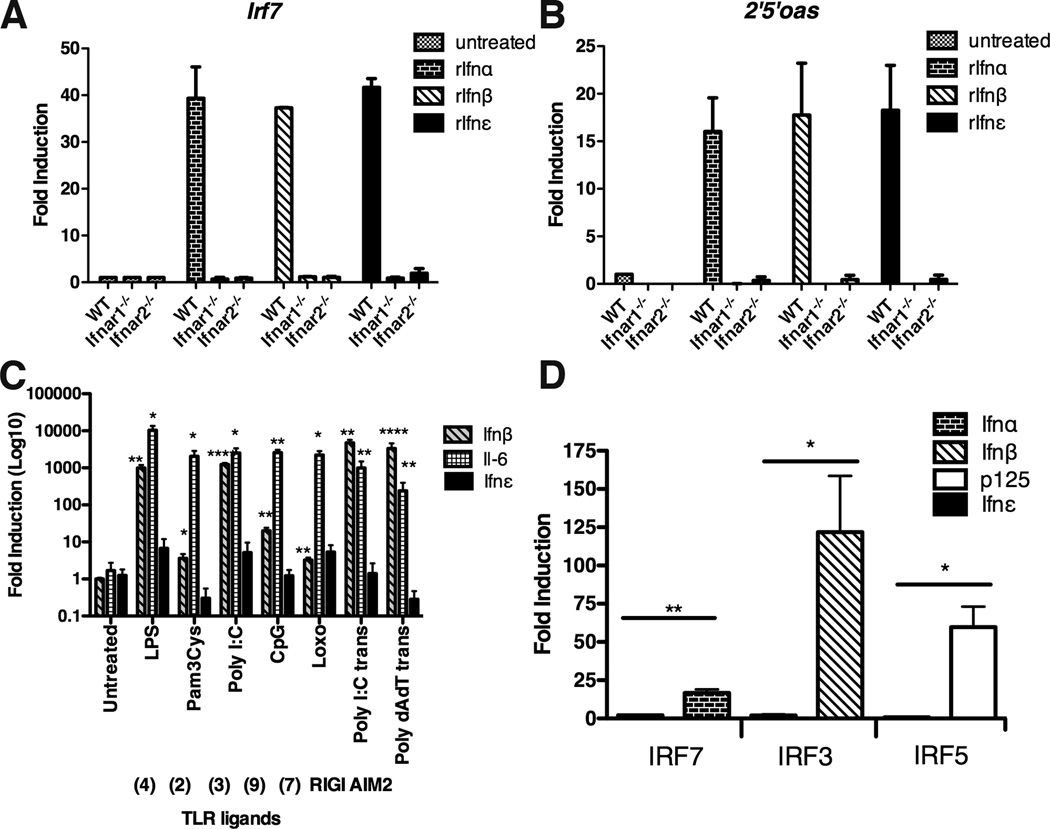
FIGURE 1
FIGURE 1. Ifnε signals through the type I IFN receptor but is not induced by TLR ligands nor regulated by IRFs
(A,B) BMMs from WT, Ifnar1−/− and Ifnar2−/− C57BL/6 mice were stimulated with recombinant mouse Ifnα1, Ifnβ or Ifnε (0.1µg/ml) for 3h. (A) Irf7 and (B) 2’5’ oas expression was measured by qRT-PCR. Data are expressed as mean + SEM. of at least three independent experiments. (C) BMMs from C57BL/6 WT mice were treated with a range of TLR ligands or transfected with Poly (I:C) and Poly (dA:dT) for 3h at 37°C. Ifnβ, Il-6 and Ifnε were measured by qRT-PCR. Data are expressed as mean + SEM. of at least three independent experiments. (D) Luciferase reporter plasmids containing Ifnα, Ifnβ, p125, or Ifnε were co-transfected with empty vector or IRF3, IRF7 or IRF5 expression vectors into HEK293 cells. Data are expressed as mean + SEM. All values are means of at least three independent experiments. *P<0.05, **P<0.01, ***P<0.001 (unpaired Student’s t-test).
FIGURE 2
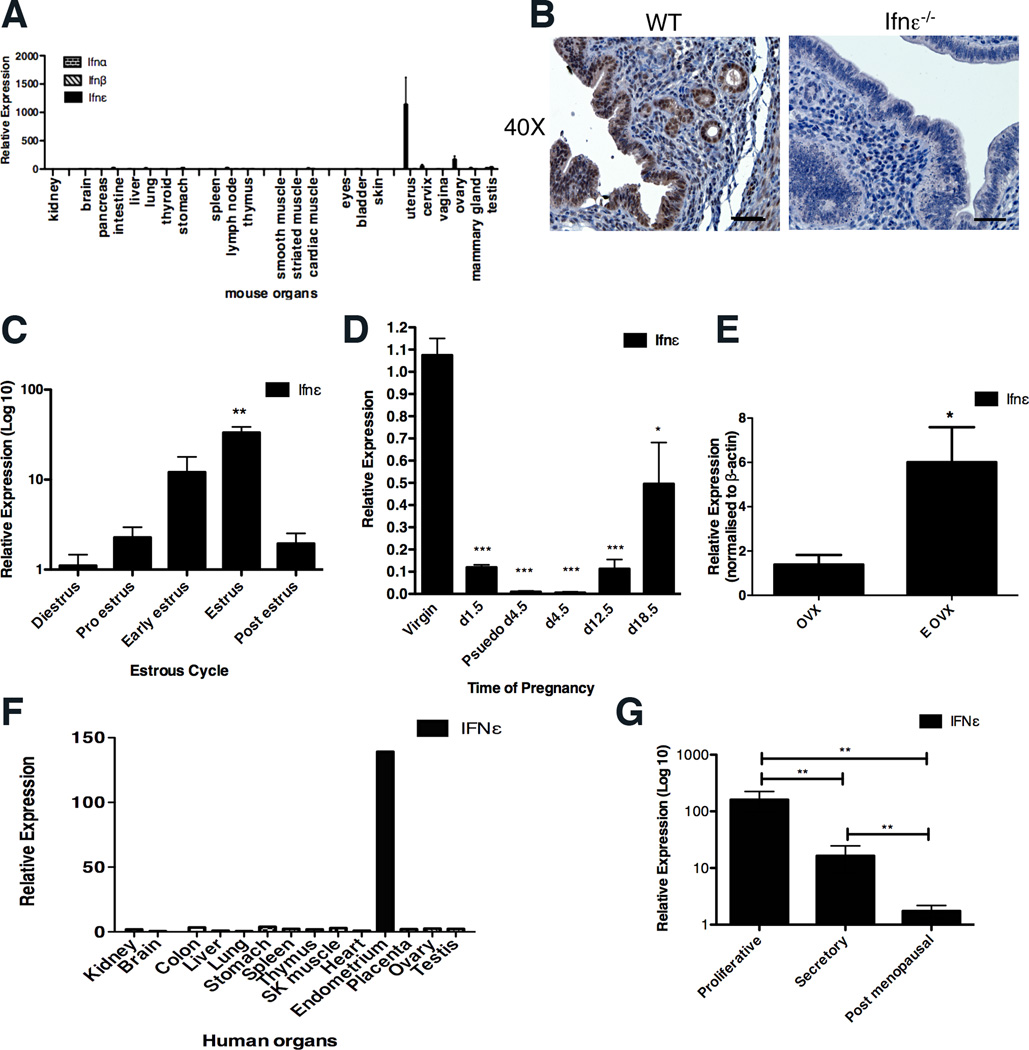
FIGURE 2. Ifnε is expressed in the female reproductive tract in both mice and humans
(A) Mouse organs were harvested and Ifnε expression was measured by qRT-PCR, normalized to 18S RNA and presented relative to Ifnε expression in kidney. Data are expressed as the mean + SEM of at least three individual mice.. (B) Representative images showing Ifnε localization in uterine tissue (at oestrous stage) of WT and Ifnε−/− C57BL/6 mice by immunohistochemistry. Scale bar = 50µm. This is representative of at least five individual mice. (C, D) Ifnε expression was measured by qRT-PCR in mouse uterus at different stages of (C) estrous cycle and (D) pregnancy.. Data are expressed as mean + SEM of at least three separate experiments. (E) Ifnε expression was determined by qRT-PCR in ovariectomized (OVX) mice and OVX mice treated with estrogen (E OVX). Data are expressed as mean + SEM of at least six individual mice and are representative of at least two separate experiments. (F) A cDNA panel of human tissues was examined for IFNε expression by qRT-PCR and the results were expressed relative to IFNε expression in kidney. (G) Epithelial cells were isolated from endometrial samples of post-menopausal women or those at different stages of the menstrual cycle and IFNε expression was measured by qRT-PCR; values are presented relative to IFNε expression in human endometrial cell lines, ECC-1. Data are expressed as mean + SEM of six individual patient samples. *P<0.05, **P<0.01, ***P<0.001 (unpaired Student’s t-test).
FIGURE 3
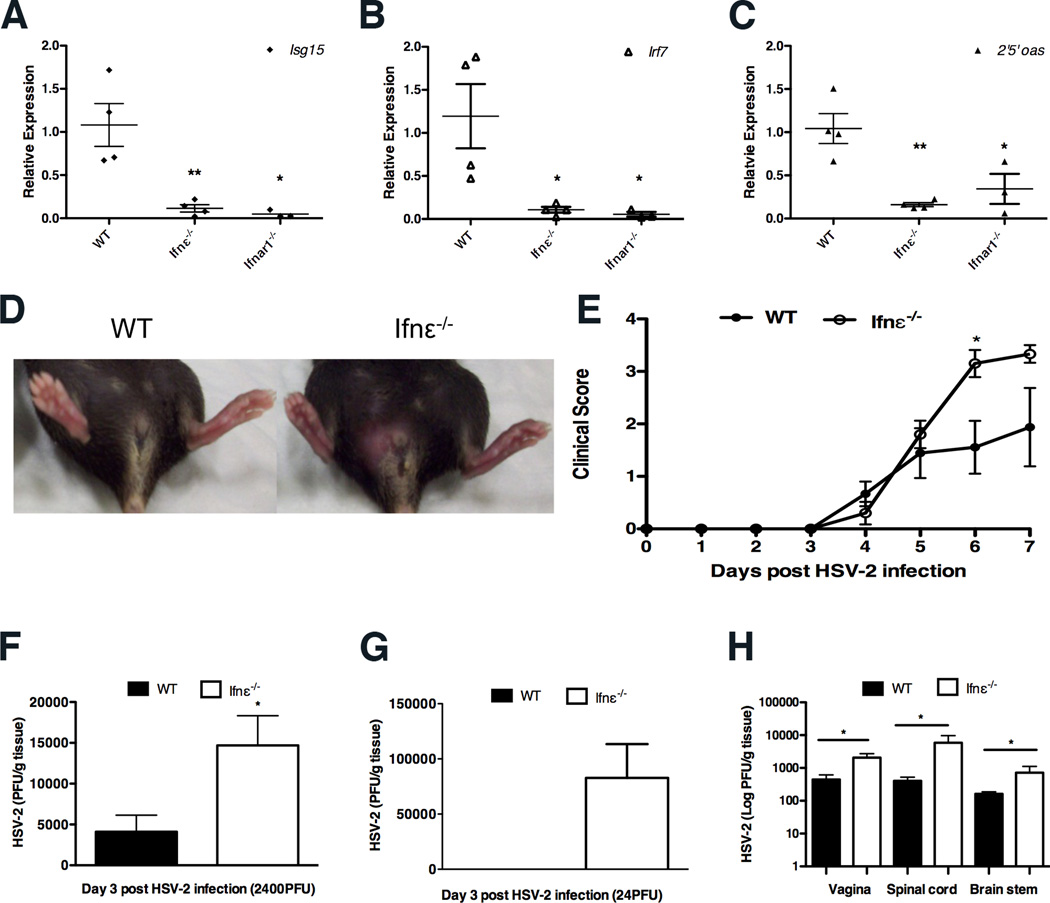
FIGURE 3. Ifnε−/− mice are more susceptible to HSV-2 vaginal infection
(A) Isg15, Irf7 and 2’5’ oas expression between WT and Ifnε−/− C57BL/6 mice was determined by qRT-PCR. The values represent means + SEM of four individual mice (B–C, E) Mice pretreated with Depo-ralovera at day -5 were infected with HSV-2 (B, E) 2400 PFU/mouse or (C) 24 PFU/mouse on day 0. (B) Representative images demonstrating overt genital lesions, redness and swelling in HSV-2 infected Ifnε−/− mice at day 7 p.i., but absent in C57BL/6 WT mice. Clinical scores of WT and Ifnε−/− C57BL/6 mice during the 7 day course of infection. Data are means + SEM of 5 individual mice and are representative of at least three separate experiments. (C–D) HSV-2 titres (PFU) from vaginal tissue of WT and Ifnε−/− C57BL/6 mice infected with (C) 2400 and (D) 24 pfu, respectively at day 3 p.i. were determined by titration of clarified vaginal tissue samples on Vero cell monolayers by plaque assay. Data are expressed as mean + SEM of five individual mice. E) HSV-2 titres from homogenates of vaginal tissue, spinal cord and brain stem of infected WT and Ifnε−/− C57BL/6 mice at day 7 p.i. were determined as in (B). Data are expressed as mean + SEM of five individual mice. *P<0.05 (unpaired Student’s t-test).
FIGURE 4
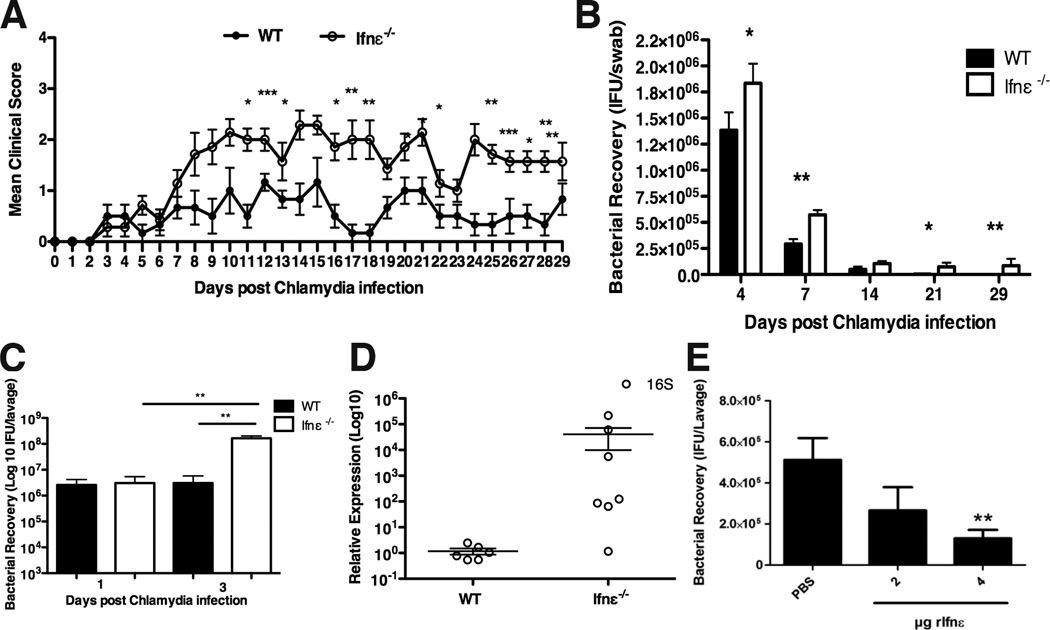
FIGURE 4. Ifnε−/− mice are more susceptible to Chlamydia muridarum vaginal infection
(A–D) Mice were pretreated with progesterone at day -7 and infected intra-vaginally with 5×10⁴ IFU C. muridarum. (A) Clinical scores were recorded daily for 30 days. Data are means + SEM of at least six individual mice. (B) Bacterial recovery from vaginal swabs of WT and Ifnε−/− C57BL/6 mice at different time points, determined by qRT-PCR for bacterial MOMP. Data are means + SEM of at least six individual mice. (C) Bacterial recovery, measured by qRT-PCR from vaginal lavage at day 1 and 3 p.i. Data are means + SEM of at least six individual mice. (D) Bacterial 16S RNA from the uterine horns of WT and Ifnε−/− C57BL/6 mice at 30 days p.i. was examined by qRT-PCR. Data are means ± SEM of at least six individual mice (E) WT C57BL/6 mice were pretreated with progesterone at day -7 and treated intra-vaginally with rIfnε (2 or 4 µg) 6h prior to C. muridarum infection. Bacterial recovery from the vaginal lavage at day 3 p.i. was measured by qRT-PCR. Data are means + SEM of at least six individual mice. *P<0.05, **P<0.01, ***P<0.001 (unpaired Student’s t-test).

Comment in

  • Cytokines: [Type] I for the girls.
    Minton K. Minton K. Nat Rev Immunol. 2013 Apr;13(4):219. doi: 10.1038/nri3428. Epub 2013 Mar 8. Nat Rev Immunol. 2013. PMID: 23470318 No abstract available.

References

    1. Hervas-Stubbs S, et al. Clin Cancer Res. 2011 May 1;17:2619. - PubMed
    1. Isaacs A, Lindenmann J. Proc R Soc Lond B Biol Sci. 1957 Sep 12;147:258. - PubMed
    1. Hardy MP, Owczarek CM, Jermiin LS, Ejdeback M, Hertzog PJ. Genomics. 2004 Aug;84:331. - PubMed
    1. Honda K, Takaoka A, Taniguchi T. Immunity. 2006 Sep;25:349. - PubMed
    1. Sato M, et al. Immunity. 2000 Oct;13:539. - PubMed

Publication types

MeSH terms