. 2013 Mar;3(3):505-16.
doi: 10.1534/g3.112.005231. Epub 2013 Mar 1.

A genomic survey of Reb homologs suggests widespread occurrence of R-bodies in proteobacteria

Affiliations

A genomic survey of Reb homologs suggests widespread occurrence of R-bodies in proteobacteria

Kasie Raymann et al. G3 (Bethesda). 2013 Mar.

Abstract

Bacteria and eukaryotes are involved in many types of interaction in nature, with important ecological consequences. However, the diversity, occurrence, and mechanisms of these interactions often are not fully known. The obligate bacterial endosymbionts of Paramecium provide their hosts with the ability to kill sensitive Paramecium strains through the production of R-bodies, highly insoluble coiled protein ribbons. R-bodies have been observed in a number of free-living bacteria, where their function is unknown. We have performed an exhaustive survey of genes coding for homologs of Reb proteins (R-body components) in complete bacterial genomes. We found that reb genes are much more widespread than previously thought, being present in representatives of major Proteobacterial subdivisions, including many free-living taxa, as well as taxa known to be involved in various kinds of interactions with eukaryotes, from mutualistic associations to pathogenicity. Reb proteins display very good conservation at the sequence level, suggesting that they may produce functional R-bodies. Phylogenomic analysis indicates that reb genes underwent a complex evolutionary history and allowed the identification of candidates potentially involved in R-body assembly, functioning, regulation, or toxicity. Our results strongly suggest that the ability to produce R-bodies is likely widespread in Proteobacteria. The potential involvement of R-bodies in as yet unexplored interactions with eukaryotes and the consequent ecological implications are discussed.

Keywords: Caedibacter; kappa particles; phylogenomics.


Figures
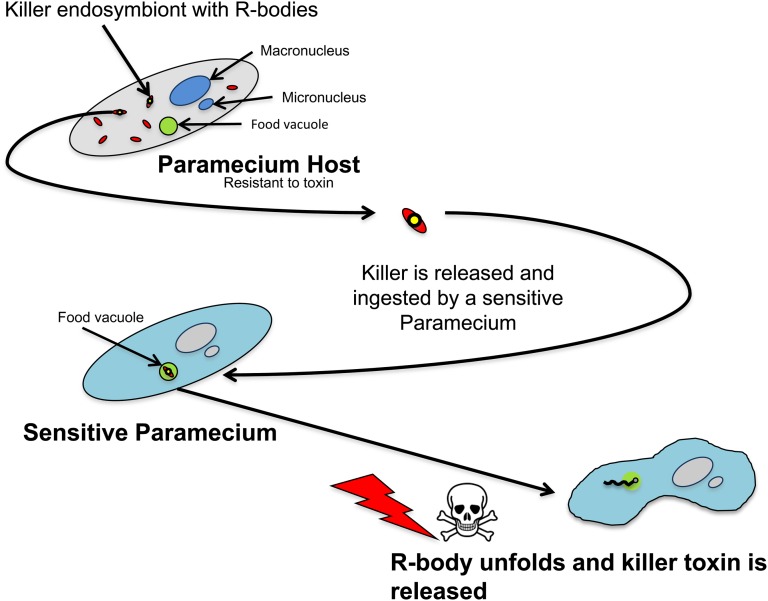
Figure 1
Figure 1
Illustration of the C. taeniospiralis R-body toxin delivery system (see main text for details and references).
Figure 2
Figure 2
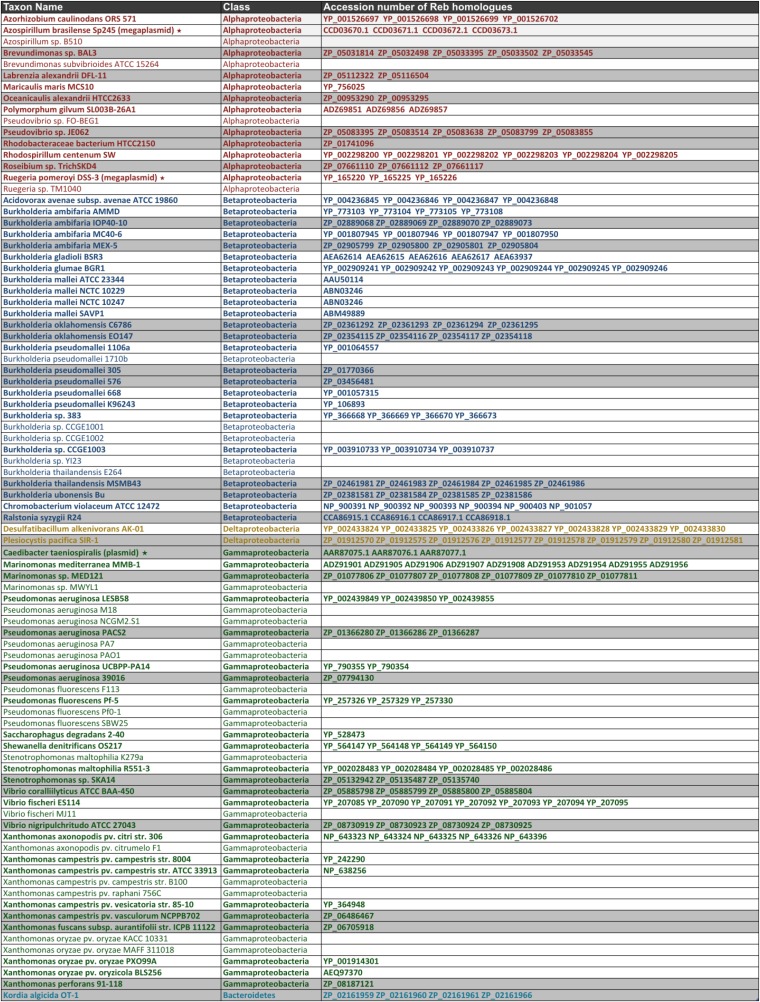
Distribution of Reb homologs. Presence/absence of Reb homologs in proteobacteria and Kordia algicida. Colors indicate the different proteobacterial subdivisions. For each genome that harbors Reb homologs, we included complete genomes of closely related taxa without any reb genes, when available. Taxa with no available complete genome sequence but harboring Reb homologs are highlighted in gray. For these taxa, the presence of extra Reb copies cannot be excluded. When present, Reb homologs are indicated by their corresponding accession number. Reb homologs located on plasmids are indicated by an asterisk. See main text for discussion.
Figure 3
Figure 3
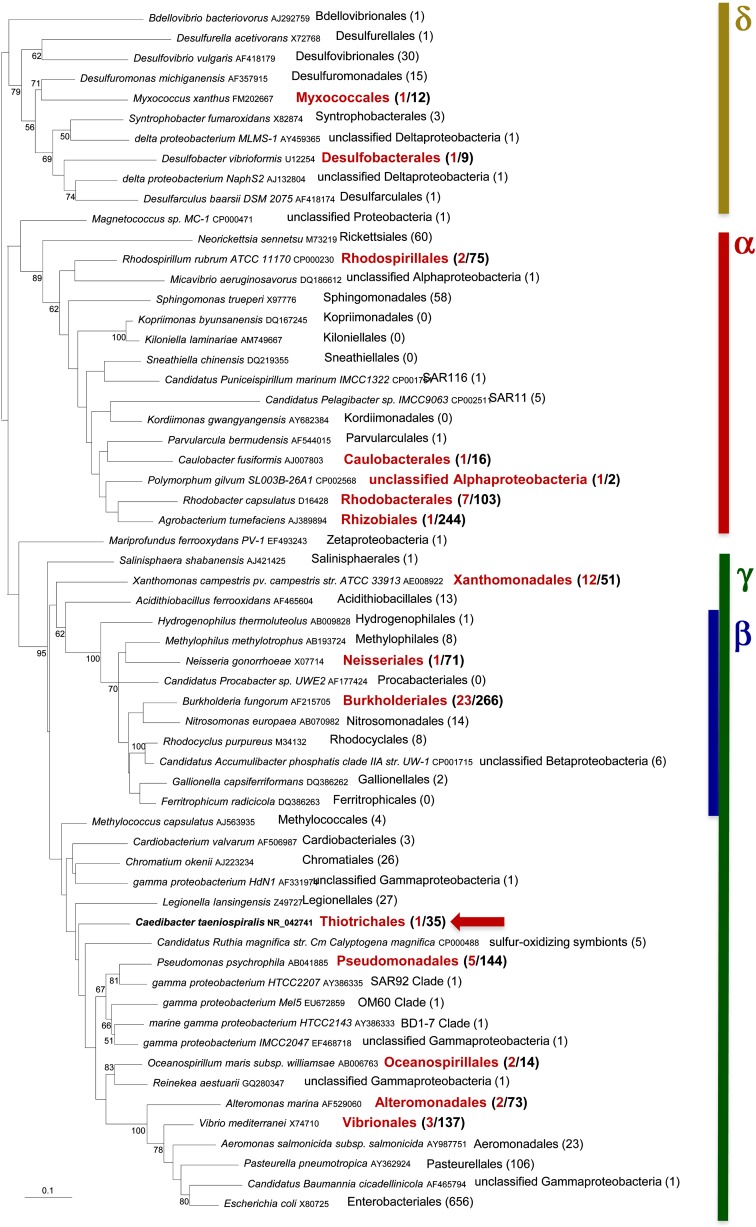
Distribution of Reb-harboring taxa across Proteobacteria. Unrooted Maximum likelihood phylogenetic tree of 16s rRNA sequences from 60 taxa representative of proteobacterial diversity. Proteobacterial orders that include members containing Reb homologs are highlighted in red. The number of Reb-harboring taxa over the total number of available complete genomes is indicated in parenthesis. Caedibacter taeniospiralis belongs to the gammaproteobacterial family of Thiotrichales (indicated by a red arrow). The tree was obtained using Treefinder with the J1 model of nucleotide substitution and a discrete gamma distribution with four categories to take into account among-site rate variation. Numbers at nodes indicate bootstrap values (BV) for 100 replicates of the original dataset. For clarity, only BVs greater than 50% are shown. The scale bar represents the average number of substitutions per site.
Figure 4
Figure 4
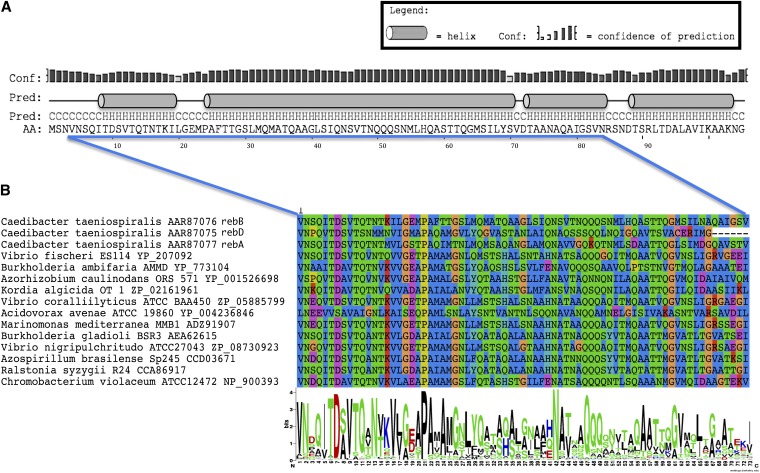
Sequence analysis. (A) Secondary structure of the RebB of C. taeniospiralis predicted by PSIPRED [http://bioinf.ucl.ac.uk/psipred (Buchan et al. 2010)]. The same structure was substantially conserved in all other Reb homologs. (B) Conserved amino acid positions identified using Weblogo on an unambiguously aligned excerpt of the entire alignment of the 203 identified Reb homologs. For clarity, only 15 representative Reb sequences are shown. Position numbers refer to the RebB of C. taeniospiralis.
Figure 5
Figure 5
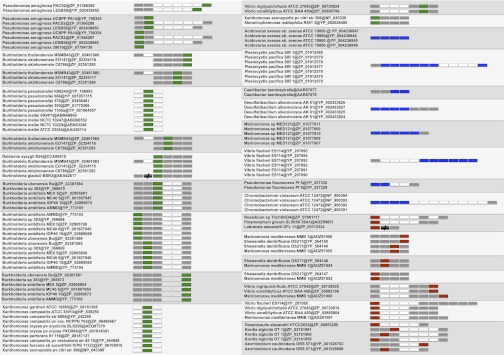
Evolutionary inference of Reb homologs based on phylogenetic analysis of the 203 Reb homologs (Figure S1). Here we have highlighted a few of the monophyletic groups. For each taxon, the genome locations of the corresponding Reb proteins are shown. Reb homologs highlighted in green are orthologs that were inferred to have been inherited through speciation events; those highlighted in blue represent paralogs issued from species-specific gene duplications; and those in red are the Reb homologs that have likely originated via horizontal transfer. Adjacent reb genes are indicated in gray. Open reading frames between reb genes are shown in white, and black slash-like symbols represent large intervening regions between reb genes.
Figure 6
Figure 6
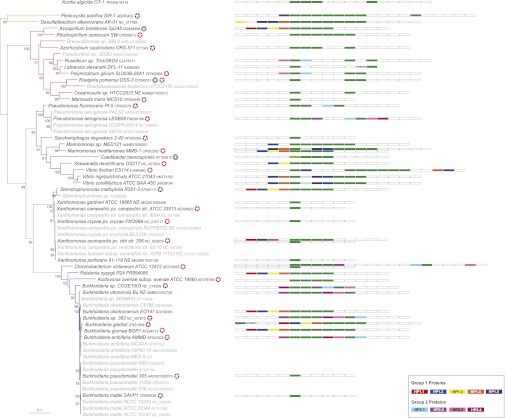
Genome synteny analysis of the reb locus mapped onto an Unrooted Maximum likelihood phylogenetic tree of 16s rRNA sequences from the 64 reb-containing Proteobacteria. The tree was created using Treefinder with the GTR model of nucleotide substitution and a discrete gamma distribution with four categories to take into account among-site rate variation. Numbers at nodes indicate BVs for 100 replicates of the original dataset. For clarity, only BVs greater than 50% are shown. The scale bar represents the average number of substitutions per site. Species where Reb homologs are located on a plasmid are marked by a black circle. A white star in a red circle marks the fully sequenced genomes used in the analysis. Reb homologs are shown in green. Homologous genes are represented by the same color. For clarity, only genes discussed in the text are indicated. Black slash-like symbols represent large regions in between genes. The RebC of C.taeniospiralis (AAR87131) is shown in light green and outlined in black to indicate its lack of homology with the other rebs. The genome context for the Flavobacterium K. algicida is shown separately.
Figure 7
Figure 7
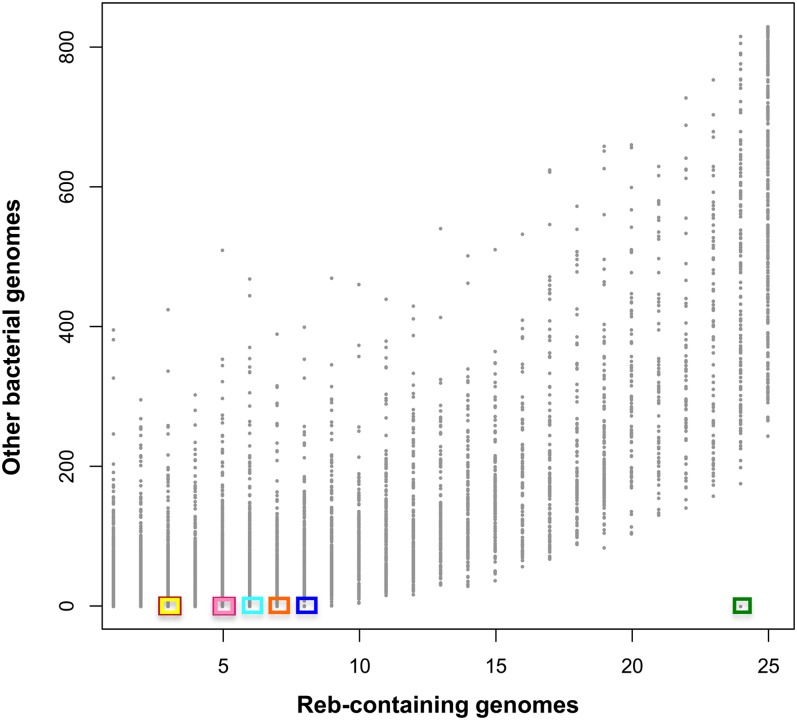
Whole genome content analysis. Graphical representation of protein families created using the R software (R Development Core Team 2011). The 25 fully sequenced Reb-harboring taxa are represented on the x-axis and the other 816 fully sequenced bacterial taxa analyzed are represented on the y-axis. Each point on the graph represents a protein family (see Materials and Methods for details on how protein families were defined). For example, the Reb family (indicated by a green box) is present in 24 fully sequenced Reb-harboring taxa but in none of the remaining genomes. The 4 Rebs of Acidovorax avenae subsp. Avenae ATCC 19860 did not fall into the Reb protein family because they are very divergent (see Figure 5 and Figure S1). The other five unique protein families specific to Reb-harboring taxa (see main text) are shown with boxes corresponding to colors as defined in the legend to Figure 6.

References

    1. Akiba N., Aono T., Toyazaki H., Sato S., Oyaizu H., 2010. phrR-like gene praR of Azorhizobium caulinodans ORS571 is essential for symbiosis with Sesbania rostrata and is involved in expression of reb genes. Appl. Environ. Microbiol. 76: 3475–3485 - PMC - PubMed
    1. Altschul S. F., Madden T. L., Schaffer A. A., Zhang J., Zhang Z., et al. , 1997. Gapped BLAST and PSI-BLAST: a new generation of protein database search programs. Nucleic Acids Res. 25: 3389–3402 - PMC - PubMed
    1. Beale G., Preer J. R., Jr, 2004. Paramecium: Genetics and Epigenetics, CRC Press, Boca Raton, FL
    1. Beier C. L., Horn M., Michel R., Schweikert M., Gortz H. D., et al. , 2002. The genus Caedibacter comprises endosymbionts of Paramecium spp. related to the Rickettsiales (Alphaproteobacteria) and to Francisella tularensis (Gammaproteobacteria). Appl. Environ. Microbiol. 68: 6043–6050 - PMC - PubMed
    1. Brown M. R., Barker J., 1999. Unexplored reservoirs of pathogenic bacteria: protozoa and biofilms. Trends Microbiol. 7: 46–50 - PubMed

Publication types

Substances

LinkOut - more resources