


Hypothermia for neuroprotection in children after cardiopulmonary arrest
- PMID: 23450604
- PMCID: PMC6517232
- DOI: 10.1002/14651858.CD009442.pub2
Hypothermia for neuroprotection in children after cardiopulmonary arrest
Abstract
Background: Cardiopulmonary arrest in paediatric patients often results in death or survival with severe brain injury. Therapeutic hypothermia, lowering of the core body temperature to 32°C to 34°C, may reduce injury to the brain in the period after the circulation has been restored. This therapy has been effective in neonates with hypoxic ischaemic encephalopathy and adults after witnessed ventricular fibrillation cardiopulmonary arrest. The effect of therapeutic hypothermia after cardiopulmonary arrest in paediatric patients is unknown.
Objectives: To assess the clinical effectiveness of therapeutic hypothermia after paediatric cardiopulmonary arrest.
Search methods: We searched the Cochrane Anaesthesia Review Group Specialized Register; Cochrane Central Register of Controlled Trials (CENTRAL) (The Cochrane Library 2011, Issue 11); Ovid MEDLINE (1966 to December 2011); Ovid EMBASE (1980 to December 2011); Ovid CINAHL (1982 to December 2011); Ovid BIOSIS (1923 to December 2011); and Web of Science (1945 to December 2011). We searched the trials registry databases for ongoing trials. We also contacted international experts in therapeutic hypothermia and paediatric critical care to locate further published and unpublished studies.
Selection criteria: We planned to include randomized and quasi-randomized controlled trials comparing therapeutic hypothermia with normothermia or standard care in children, aged 24 hours to 18 years, after paediatric cardiopulmonary arrest.
Data collection and analysis: Two authors independently assessed articles for inclusion.
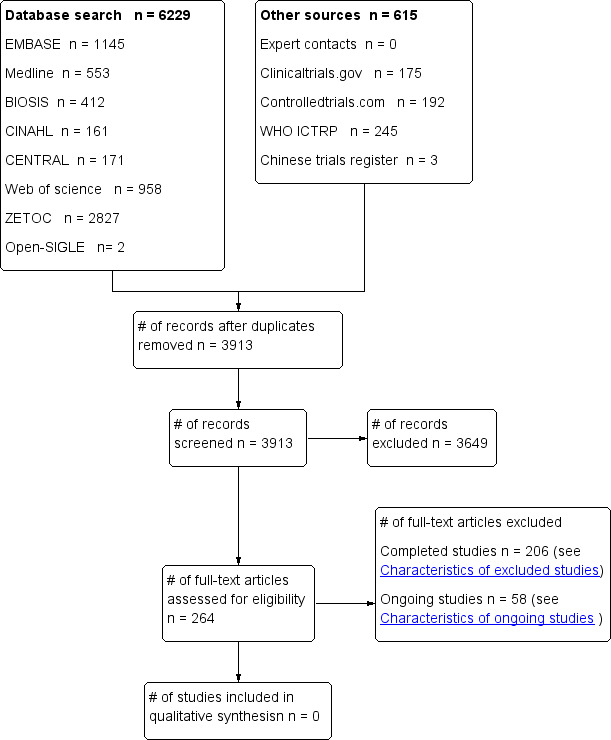
Main results: We found no studies that satisfied the inclusion criteria. We found four on-going randomized controlled trials which may be available for analysis in the future. We excluded 18 non-randomized studies. Of these 18 non-randomized studies, three compared therapeutic hypothermia with standard therapy and demonstrated no difference in mortality or the proportion of children with a good neurological outcome; a narrative report was presented.
Authors' conclusions: Based on this review, we are unable to make any recommendations for clinical practice. Randomized controlled trials are needed and the results of on-going trials will be assessed when available.
Conflict of interest statement
Barnaby Scholefield has received a travel grant to attend a hypothermia conference from the Paediatric Intensive Care Society, UK and financial support through employment to perform the systematic review from Birmingham Children's Hospital, UK. He also organised a trainee intensive care educational symposium with small (less than £700) corporate sponsorship from companies selling hypothermia cooling devices.
Gavin Perkins has received reimbursement of expenses to attend and speak at CPR conferences and to develop national and international CPR guidelines. He has received payment from Elsevier Publishing for his role as an editor for the journal Resuscitation.
Professor Khalid Khan's research is largely funded by public bodies in the UK and European Union. He has participated in research projects where pharmaceutical companies (for example Ferring Pharmaceuticals) have contributed a grant. He has received honoraria and has had travel and accommodation expenses covered or reimbursed for speaking at meetings from pharmaceutical companies (for example Ferring Pharmaceuticals) and from various Colleges, Universities and Societies. He receives royalties on his books from publishers (Hodder Arnold; Huber). His institution has received sponsorship for organising educational meetings (Alere; Ethicon; Ferring Pharmaceuticals; Hologic; Leo‐Pharma; Preglem/Quintiles; Viforpharma). He is in a Partnership where he offers advice on several matters including medical research and negligence. He provides expert reports in medical negligence cases for which a fee is paid by instructing solicitors.
All other authors: none known.
Update of
References
References to studies excluded from this review
Abend 2009 {published data only}
Bembea 2010 {published data only}
-
- Bembea MM, Nadkarni VM, Diener‐West M, Venugopal V, Carey SM, Berg RA, et al. Temperature patterns in the early postresuscitation period after pediatric inhospital cardiac arrest. Pediatric Critical Care Medicine 2010;11(6):723‐30. - PubMed
Buttram 2009 {published data only}
-
- Buttram S, Large B, Yeakel K, Williams K, Bobrow B, Dalton H. Therapeutic hypothermia after pediatric out of hospital cardiac arrest ‐ A single center experience. Critical Care Medicine 2009;37(12 Suppl):480.
Deasy 2010 {published data only}
-
- Deasy C, Bernard SA, Cameron P, Jaison A, Smith K, Harriss L, et al. Epidemiology of paediatric out‐of‐hospital cardiac arrest in Melbourne, Australia. Resuscitation 2010;81(9):1095‐100. [PUBMED: 20627518] - PubMed
Doherty 2009 {published data only}
-
- Doherty DR, Parshuram CS, Gaboury I, Hoskote A, Lacroix J, Tucci M, et al. Hypothermia therapy after pediatric cardiac arrest. Circulation 2009;119(11):1492‐500. [PUBMED: 19273725] - PubMed
Fink 2010 {published data only}
Hein 2004 {published data only}
Kessler 2011 {published data only}
Kobr 2011 {published data only}
-
- Kobr J, Pizingerova K, Sasek L, Fremuth J, Fikrlova S. Induced therapeutic hypothermia following cardiac arrest in children. Bratislavske Lekarske Listy 2011;112(2):92‐6. [PUBMED: 21456509] - PubMed
Le Guen 2011 {published data only}
Meert 2009 {published data only}
Meert 2010 {published data only}
-
- Meert K, Moler F, Dean JM. Study of hypothermia therapy after pediatric cardiac arrest reply. Pediatric Critical Care Medicine 2010;11(2):316‐7. - PubMed
Moler 2009 {published data only}
Moler 2011 {published data only}
Sanada 1998 {published data only}
-
- Sanada T, Ueki M, Tokudome M, Okamura T, Nishiki S, Niimura A, et al. [Recovery from out‐of‐hospital cardiac arrest after mild hypothermia: report of two cases]. Masui. The Japanese Journal of Anesthesiology 1998;47(6):742‐5. [PUBMED: 9691597] - PubMed
Silfvast 2003 {published data only}
-
- Silfvast T, Tiainen M, Poutiainen E, Roine RO. Therapeutic hypothermia after prolonged cardiac arrest due to non‐coronary causes. Resuscitation 2003;57(1):109‐12. [PUBMED: 12668307] - PubMed
Takeda 2009 {published data only}
-
- Takeda Y, Shiraishi K, Naito H, Morimoto N, Morita K. A randomized controlled trial of pharyngeal cooling system during cardiopulmonary resuscitation. Intensive Care Medicine 2009;35:143.
Topjian 2011 {published data only}
References to ongoing studies
NCT00754481 {published data only}
-
- NCT00754481. Hypothermia for Cardiac Arrest in Paediatrics (HypCAP). www.clinicatrials.gov NCT00754481.
NCT00797680 {published data only}
-
- NCT00797680. Duration of Hypothermia for Neuroprotection After Paediatric Cardiac Arrest. www.clinicaltrials.gov NCT00797680.
NCT00878644 {published data only}
-
- NCT00878644. Therapeutic Hypothermia to Improve Survival After Cardiac Arrest in Paediatric Patients‐(THAPCA‐OH) (Out of Hospital) Trial. www.clinicaltrials.gov NCT00878644.
NCT00880087 {published data only}
-
- NCT00880087. Therapeutic Hypothermia to Improve Survival After Cardiac Arrest in Paediatric Patients‐(THAPCA‐IH) (In Hospital) Trial. www.clinicaltrials.gov NCT00880087.
Additional references
Arrich 2012
Atkins 2009
Azzopardi 2009
-
- Azzopardi DV, Strohm B, Edwards AD, Dyet L, Halliday HL, Juszczak E, et al. Moderate hypothermia to treat perinatal asphyxial encephalopathy. The New England Journal of Medicine 2009;361(14):1349‐58. [PUBMED: 19797281] - PubMed
Bernard 2002
-
- Bernard SA, Gray TW, Buist MD, Jones BM, Silvester W, Gutteridge G, et al. Treatment of comatose survivors of out‐of‐hospital cardiac arrest with induced hypothermia. The New England Journal of Medicine 2002;346(8):557‐63. [PUBMED: 11856794] - PubMed
Biarent 2010
-
- Biarent D, Bingham R, Eich C, Lopez‐Herce J, Maconochie I, Rodriguez‐Nunez A, et al. European Resuscitation Council Guidelines for Resuscitation 2010 Section 6. Paediatric life support. Resuscitation 2010;81(10):1364‐88. [PUBMED: 20956047] - PubMed
Bigelow 1950
Busto 1987
-
- Busto R, Dietrich WD, Globus MY, Valdes I, Scheinberg P, Ginsberg MD. Small differences in intraischemic brain temperature critically determine the extent of ischemic neuronal injury. Journal of Cerebral Blood Flow and Metabolism 1987;7(6):729‐38. [PUBMED: 3693428] - PubMed
Busto 1989
-
- Busto R, Dietrich WD, Globus MY, Ginsberg MD. Postischemic moderate hypothermia inhibits CA1 hippocampal ischemic neuronal injury. Neuroscience Letters 1989;101(3):299‐304. [PUBMED: 2771174] - PubMed
Clark 2008
-
- Clark DL, Penner M, Orellana‐Jordan IM, Colbourne F. Comparison of 12, 24 and 48 h of systemic hypothermia on outcome after permanent focal ischemia in rat. Experimental Neurology 2008;212(2):386‐92. [PUBMED: 18538766] - PubMed
Colbourne 1994
-
- Colbourne F, Corbett D. Delayed and prolonged post‐ischemic hypothermia is neuroprotective in the gerbil. Brain Research 1994;654(2):265‐72. [PUBMED: 7987676] - PubMed
Colbourne 1995
Colbourne 1999
-
- Colbourne F, Li H, Buchan AM. Indefatigable CA1 sector neuroprotection with mild hypothermia induced 6 hours after severe forebrain ischemia in rats. Journal of Cerebral Blood Flow and Metabolism 1999;19(7):742‐9. [PUBMED: 10413028] - PubMed
de Caen 2010
-
- Caen AR, Kleinman ME, Chameides L, Atkins DL, Berg RA, Berg MD, et al. Part 10: Paediatric basic and advanced life support: 2010 International Consensus on Cardiopulmonary Resuscitation and Emergency Cardiovascular Care Science with Treatment Recommendations. Resuscitation 2010;81 Suppl 1:e213‐59. [PUBMED: 20956041] - PubMed
Donoghue 2005
-
- Donoghue AJ, Nadkarni V, Berg RA, Osmond MH, Wells G, Nesbitt L, et al. Out‐of‐hospital pediatric cardiac arrest: an epidemiologic review and assessment of current knowledge. Annals of Emergency Medicine 2005;46(6):512‐22. [PUBMED: 16308066] - PubMed
Duncan 2009
-
- Duncan HP, Frew E. Short‐term health system costs of paediatric in‐hospital acute life‐threatening events including cardiac arrest. Resuscitation 2009;80(5):529‐34. [PUBMED: 19339101] - PubMed
Fink 2004
Fiser 1992
-
- Fiser DH. Assessing the outcome of pediatric intensive care. The Journal of Pediatrics 1992;121(1):68‐74. [PUBMED: 1625096] - PubMed
Gluckman 2005
-
- Gluckman PD, Wyatt JS, Azzopardi D, Ballard R, Edwards AD, Ferriero DM, et al. Selective head cooling with mild systemic hypothermia after neonatal encephalopathy: multicentre randomised trial. Lancet 2005;365(9460):663‐70. [PUBMED: 15721471] - PubMed
Gunn 1997
Guyatt 2008
Haque 2006
-
- Haque IU, Latour MC, Zaritsky AL. Pediatric critical care community survey of knowledge and attitudes toward therapeutic hypothermia in comatose children after cardiac arrest. Pediatric Critical Care Medicine 2006;7(1):7‐14. [PUBMED: 16395067] - PubMed
Hickey 2000
-
- Hickey RW, Kochanek PM, Ferimer H, Graham SH, Safar P. Hypothermia and hyperthermia in children after resuscitation from cardiac arrest. Pediatrics 2000;106(1 Pt 1):118‐22. [PUBMED: 10878160] - PubMed
Higgins 2011
-
- Higgins JPT, Green S (editors). Cochrane Handbook for Systematic Reviews of Interventions Version 5.1.0 [updated March 2011}. The Cochrane Collaboration, 2011. Available from www.cochrane‐handbook.org.
Holzer 2005
-
- Holzer M, Bernard SA, Hachimi‐Idrissi S, Roine RO, Sterz F, Mullner M. Hypothermia for neuroprotection after cardiac arrest: systematic review and individual patient data meta‐analysis. Critical Care Medicine 2005;33(2):414‐8. [PUBMED: 15699847] - PubMed
Hypothermia After Cardiac Arrest Study Group 2002
-
- The Hypothermia After Cardiac Arrest Study Group. Mild therapeutic hypothermia to improve the neurologic outcome after cardiac arrest. The New England Journal of Medicine 2002;346(8):549‐56. [PUBMED: 11856793] - PubMed
Jacobs 2007
Karibe 1994
-
- Karibe H, Zarow GJ, Graham SH, Weinstein PR. Mild intraischemic hypothermia reduces postischemic hyperperfusion, delayed postischemic hypoperfusion, blood‐brain barrier disruption, brain edema, and neuronal damage volume after temporary focal cerebral ischemia in rats. Journal of Cerebral Blood Flow and Metabolism 1994;14(4):620‐7. [PUBMED: 8014209] - PubMed
Kil 1996
-
- Kil HY, Zhang J, Piantadosi CA. Brain temperature alters hydroxyl radical production during cerebral ischemia/reperfusion in rats. Journal of Cerebral Blood Flow and Metabolism 1996;16(1):100‐6. [PUBMED: 8530542] - PubMed
Morris 1993
-
- Morris RD, Krawiecki NS, Wright JA, Walter LW. Neuropsychological, academic, and adaptive functioning in children who survive in‐hospital cardiac arrest and resuscitation. Journal of Learning Disabilities 1993;26(1):46‐51. [PUBMED: 8418189] - PubMed
Nadkarni 2006
-
- Nadkarni VM, Larkin GL, Peberdy MA, Carey SM, Kaye W, Mancini ME, et al. First documented rhythm and clinical outcome from in‐hospital cardiac arrest among children and adults. JAMA 2006;295(1):50‐7. [PUBMED: 16391216] - PubMed
RevMan 5.1 [Computer program]
-
- The Nordic Cochrane Centre, The Cochrane Collaboration. Review Manager (RevMan). Version 5.1. Copenhagen: The Nordic Cochrane Centre, The Cochrane Collaboration, 2011.
Ronco 1995
-
- Ronco R, King W, Donley DK, Tilden SJ. Outcome and cost at a children's hospital following resuscitation for out‐of‐hospital cardiopulmonary arrest. Archives of Pediatrics and Adolescent Medicine 1995;149(2):210‐4. [PUBMED: 7849887] - PubMed
Scholefield 2010
-
- Scholefield BR, Duncan HP, Morris KP. Survey of the use of therapeutic hypothermia post cardiac arrest. Archives of Disease in Childhood 2010;95(10):796‐9. [PUBMED: 20736398] - PubMed
Shankaran 2005
-
- Shankaran S, Laptook AR, Ehrenkranz RA, Tyson JE, McDonald SA, Donovan EF, et al. Whole‐body hypothermia for neonates with hypoxic‐ischemic encephalopathy. The New England Journal of Medicine 2005;353(15):1574‐84. [PUBMED: 16221780] - PubMed
Shankaran 2008
Sparrow 1984
-
- Sparrow S, Balla D, Cicchetti D. Vineland Adaptive Behavoural Scale. Bloomington, MN: Pearson Assessments, 1984.
Steen 1983
-
- Steen PA, Newberg L, Milde JH, Michenfelder JD. Hypothermia and barbiturates: individual and combined effects on canine cerebral oxygen consumption. Anesthesiology 1983;58(6):527‐32. [PUBMED: 6859582] - PubMed
Suehiro 1999
-
- Suehiro E, Fujisawa H, Ito H, Ishikawa T, Maekawa T. Brain temperature modifies glutamate neurotoxicity in vivo. Journal of Neurotrauma 1999;16(4):285‐97. [PUBMED: 10225215] - PubMed
Suffoletto 2009
-
- Suffoletto B, Peberdy MA, Hoek T, Callaway C. Body temperature changes are associated with outcomes following in‐hospital cardiac arrest and return of spontaneous circulation. Resuscitation 2009;80(12):1365‐70. [PUBMED: 19804929] - PubMed
Sutcliffe 2001
-
- Sutcliffe IT, Smith HA, Stanimirovic D, Hutchison JS. Effects of moderate hypothermia on IL‐1 beta‐induced leukocyte rolling and adhesion in pial microcirculation of mice and on proinflammatory gene expression in human cerebral endothelial cells. Journal of Cerebral Blood Flow and Metabolism 2001;21(11):1310‐9. [PUBMED: 11702046] - PubMed
Takasu 1996
-
- Takasu A, Yagi K, Okada Y. Effect of mild hypothermia on ischemia‐induced release of endothelin‐1 in dog brain. Resuscitation 1996;31(1):59‐64. [PUBMED: 8701110] - PubMed
Takasu 2001
-
- Takasu A, Saitoh D, Kaneko N, Sakamoto T, Okada Y. Hyperthermia: is it an ominous sign after cardiac arrest?. Resuscitation 2001;49(3):273‐7. [PUBMED: 11719121] - PubMed
Takino 1991
-
- Takino M, Okada Y. Hyperthermia following cardiopulmonary resuscitation. Intensive care medicine 1991;17(7):419‐20. [PUBMED: 1774396] - PubMed
Walters 2011
-
- Walters JH, Morley PT, Nolan JP. The role of hypothermia in post‐cardiac arrest patients with return of spontaneous circulation: a systematic review. Resuscitation 2011;82(5):508‐16. [PUBMED: 21367510] - PubMed
Xu 2002
-
- Xu L, Yenari MA, Steinberg GK, Giffard RG. Mild hypothermia reduces apoptosis of mouse neurons in vitro early in the cascade. Journal of Cerebral Blood Flow and Metabolism 2002;22(1):21‐8. [PUBMED: 11807390] - PubMed
Yenari 2002
-
- Yenari MA, Iwayama S, Cheng D, Sun GH, Fujimura M, Morita‐Fujimura Y, et al. Mild hypothermia attenuates cytochrome c release but does not alter Bcl‐2 expression or caspase activation after experimental stroke. Journal of Cerebral Blood Flow and Metabolism 2002;22(1):29‐38. [PUBMED: 11807391] - PubMed
Young 2004
-
- Young KD, Gausche‐Hill M, McClung CD, Lewis RJ. A prospective, population‐based study of the epidemiology and outcome of out‐of‐hospital pediatric cardiopulmonary arrest. Pediatrics 2004;114(1):157‐64. [PUBMED: 15231922] - PubMed
Zeiner 2001
-
- Zeiner A, Holzer M, Sterz F, Schorkhuber W, Eisenburger P, Havel C, et al. Hyperthermia after cardiac arrest is associated with an unfavorable neurologic outcome. Archives of internal medicine 2001;161(16):2007‐12. [PUBMED: 11525703] - PubMed
Publication types
MeSH terms
LinkOut - more resources
Full Text Sources
Other Literature Sources
Medical
