. 2013;8(2):e56795.
doi: 10.1371/journal.pone.0056795. Epub 2013 Feb 22.

High prevalence of human cytomegalovirus proteins and nucleic acids in primary breast cancer and metastatic sentinel lymph nodes

Affiliations

High prevalence of human cytomegalovirus proteins and nucleic acids in primary breast cancer and metastatic sentinel lymph nodes

Chato Taher et al. PLoS One. 2013.

Abstract

Background: Breast cancer is a leading cause of death among women worldwide. Increasing evidence implies that human cytomegalovirus (HCMV) infection is associated with several malignancies. We aimed to examine whether HCMV is present in breast cancer and sentinel lymph node (SLN) metastases.

Materials and methods: Formalin-fixed paraffin-embedded tissue specimens from breast cancer and paired sentinel lymph node (SLN) samples were obtained from patients with (n = 35) and without SLN metastasis (n = 38). HCMV immediate early (IE) and late (LA) proteins were detected using a sensitive immunohistochemistry (IHC) technique and HCMV DNA by real-time PCR.

Results: HCMV IE and LA proteins were abundantly expressed in 100% of breast cancer specimens. In SLN specimens, 94% of samples with metastases (n = 34) were positive for HCMV IE and LA proteins, mostly confined to neoplastic cells while some inflammatory cells were HCMV positive in 60% of lymph nodes without metastases (n = 35). The presence of HCMV DNA was confirmed in 12/12 (100%) of breast cancer and 10/11 (91%) SLN specimens from the metastatic group, but was not detected in 5/5 HCMV-negative, SLN-negative specimens. There was no statistically significant association between HCMV infection grades and progesterone receptor, estrogen receptor alpha and Elston grade status.

Conclusions: The role of HCMV in the pathogenesis of breast cancer is unclear. As HCMV proteins were mainly confined to neoplastic cells in primary breast cancer and SLN samples, our observations raise the question whether HCMV contributes to the tumorigenesis of breast cancer and its metastases.


Conflict of interest statement

Competing Interests: The authors have read the journal’s policy and have the following conflicts: CSN has received speakers fees and travel grants from Roche to present the groups data on molecular mechanisms of CMV infection at scientific meeting and at one SAB meeting for Roche and also earlier held an independent investigational grant from Roche to perform a clinical trial on anti-CMV treatment in glioblastoma patients. All this was more than 3 years ago. This does not alter the authors' adherence to all the PLOS ONE policies on sharing data and materials.

Figures

Figure 1
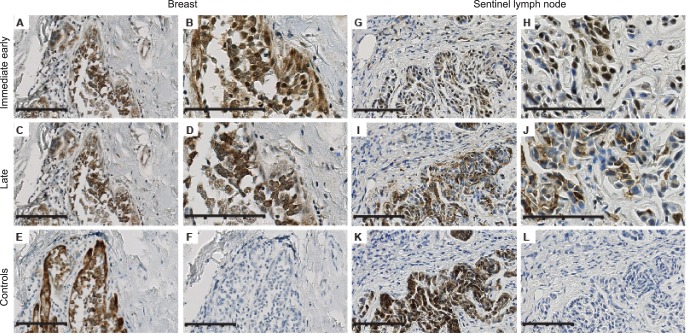
Figure 1. Immunohistochemistry of breast cancer and SLN samples.
HCMV proteins were detected in the tissue sections from breast cancer patients (A–D) and tissue sections from sentinel lymph node (G–J) by immunohistochemistry. HCMV IE expression is confined to tumor cells both in breast and SLN specimens (A and G 20x; B and H 40x). (C, D, I, and J), same sections show immunoreactivity to HCMV LA protein (C, I 20x and D, J 40X). Cytokeratin was used as an epithelial marker and positive control (E, K) and omitting primary antibody was used as a negative control (F and L, 20x). Scale bars: (B, D, H, J, 100 µm), (Others 80 µm).
Figure 2
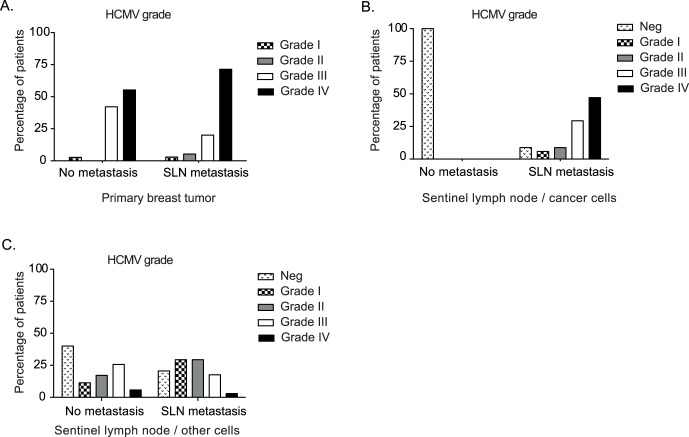
Figure 2. HCMV IE grade in cancer cells from breast and SLN, and in inflammatory cells from SLN samples.
Patients were divided into 2 groups based on the presence or absence of SLN metastasis in both breast (A) and SLN (B and C) specimens. The positivity of HCMV was graded into four grades based on the percentage of HCMV IE positive cells in tumors from breast and paired SLN: Grade I (<25% cells positive for HCMV IE), grade II (25–49%), grade III (50–75%) and grade IV (>75%). The presence of HCMV IE-infected inflammatory cells in SLN specimen is shown in (C).
Figure 3
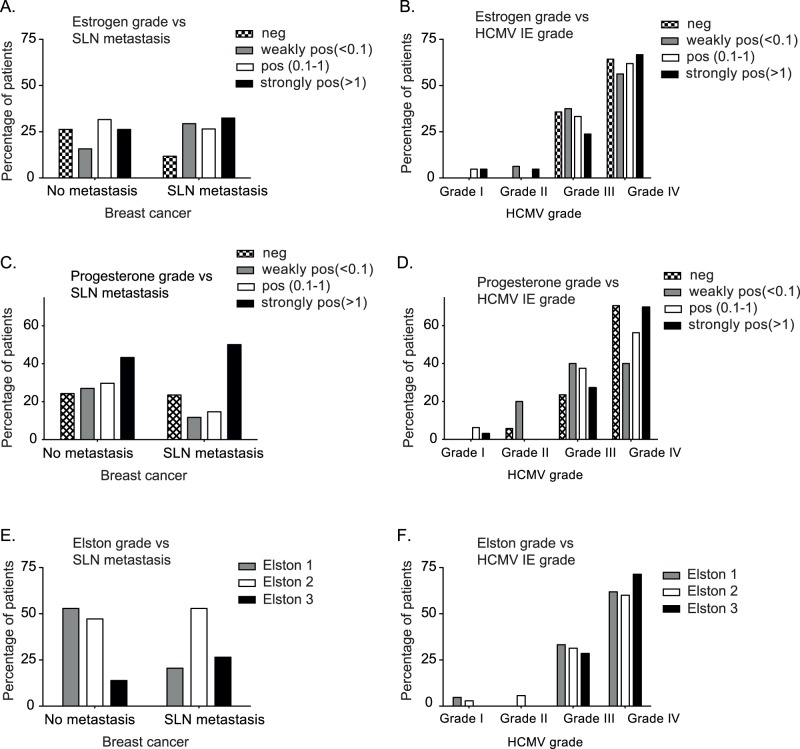
Figure 3. HCMV IE expression in breast cancer tissue and clinical prognostic markers.
Expression of estrogen (A) and progesterone (B) receptor and Elston grading from breast cancer tissue of the SLN-negative and SLN-positive group are shown and are plotted in relation to HCMV IE grading (B, D and F) respectively.
Figure 4
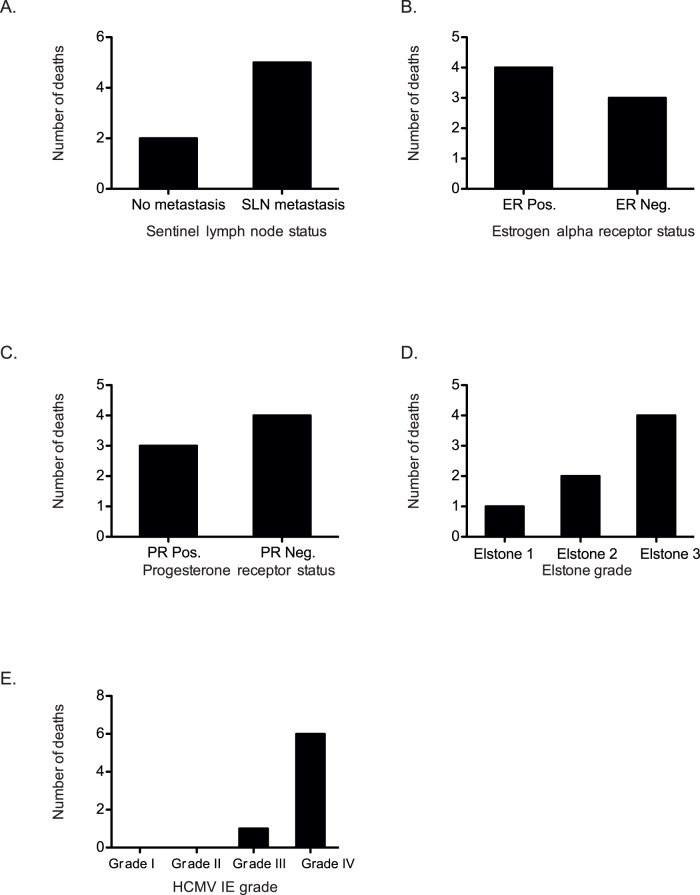
Figure 4. Death of breast cancer patients in relation to known prognostic markers and HCMV IE grade.
Among 73 patients included in this study, 7 deaths were recorded in the SLN-negative (n = 2) and SLN-positive (n = 5) groups (A), 3 of 7 patients were negative for estrogen receptor (B), Progesterone expression were negative in 4 of 7 patients (C). 4 of 7 had high Elston grade (D), HCMV IE grade IV was observed in 6 of 7 patients (E).

References

    1. Key TJ, Verkasalo PK, Banks E (2001) Epidemiology of breast cancer. Lancet Oncol 2: 133–140. - PubMed
    1. Anders CK, Carey LA (2009) Biology, metastatic patterns, and treatment of patients with triple-negative breast cancer. Clin Breast Cancer 9 Suppl 2 S73–81. - PMC - PubMed
    1. Joshi D, Quadri M, Gangane N, Joshi R (2009) Association of Epstein Barr virus infection (EBV) with breast cancer in rural Indian women. PLoS One 4: e8180. - PMC - PubMed
    1. Melana SM, Nepomnaschy I, Hasa J, Djougarian A, Holland JF, et al. (2010) Detection of human mammary tumor virus proteins in human breast cancer cells. J Virol Methods 163: 157–161. - PubMed
    1. Tsai JH, Hsu CS, Tsai CH, Su JM, Liu YT, et al. (2007) Relationship between viral factors, axillary lymph node status and survival in breast cancer. J Cancer Res Clin Oncol 133: 13–21. - PMC - PubMed

Publication types