


Molecular subtypes in head and neck cancer exhibit distinct patterns of chromosomal gain and loss of canonical cancer genes
- PMID: 23451093
- PMCID: PMC3579892
- DOI: 10.1371/journal.pone.0056823
Molecular subtypes in head and neck cancer exhibit distinct patterns of chromosomal gain and loss of canonical cancer genes
Erratum in
- PLoS One. 2013;8(7). doi:10.1371/annotation/b42f61c5-cb7e-49ca-8cd6-6e1f7903ad08. Sailey, Charles G [corrected to Sailey, Charles J]
- PLoS One. 2014;9(1). doi:10.1371/annotation/e9ad5950-a048-4a44-8e26-d8b07a9d4bb8
-
Correction: Molecular Subtypes in Head and Neck Cancer Exhibit Distinct Patterns of Chromosomal Gain and Loss of Canonical Cancer Genes.PLoS One. 2018 Mar 15;13(3):e0194674. doi: 10.1371/journal.pone.0194674. eCollection 2018. PLoS One. 2018. PMID: 29543916 Free PMC article.
Abstract
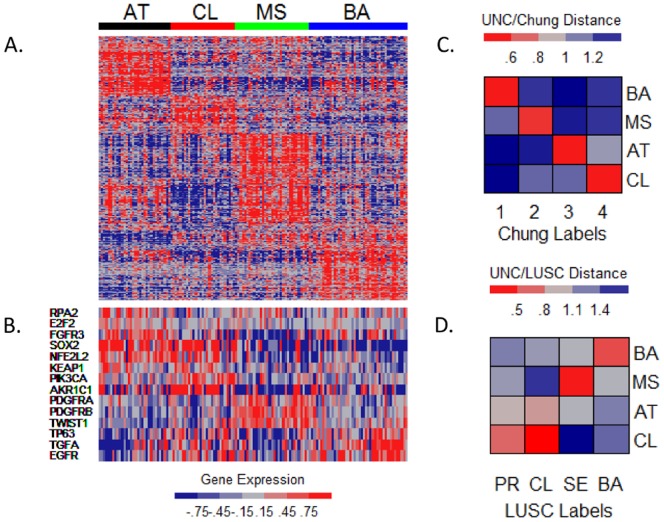
Head and neck squamous cell carcinoma (HNSCC) is a frequently fatal heterogeneous disease. Beyond the role of human papilloma virus (HPV), no validated molecular characterization of the disease has been established. Using an integrated genomic analysis and validation methodology we confirm four molecular classes of HNSCC (basal, mesenchymal, atypical, and classical) consistent with signatures established for squamous carcinoma of the lung, including deregulation of the KEAP1/NFE2L2 oxidative stress pathway, differential utilization of the lineage markers SOX2 and TP63, and preference for the oncogenes PIK3CA and EGFR. For potential clinical use the signatures are complimentary to classification by HPV infection status as well as the putative high risk marker CCND1 copy number gain. A molecular etiology for the subtypes is suggested by statistically significant chromosomal gains and losses and differential cell of origin expression patterns. Model systems representative of each of the four subtypes are also presented.
Conflict of interest statement
Figures


References
-
- Siegel R, Naishadham D, Jemal A (2012) Cancer Statistics 2012. CA: Cancer J. Clin. 62: 10–29. - PubMed
-
- Mehanna H, West CML, Nutting C, Paleri V (2010) Head and Neck Cancer – Part 2: Treatment and Prognostic Factors. Brit. Med. J. 341, c4690. - PubMed
-
- Edge SB, Byrd DR, Compton CC, Fritz AG, Greene FL, Trotti A, Eds. (2009) AJCC Cancer Staging Manual. New York: Springer. 656 p.
-
- Perou CM, Sorlie T, Eisen MB, van de Rijn M, Jeffrey SS, et al. (2000) Molecular Portraits of Human Breast Tumors. Nature (406) 747–752. - PubMed
Publication types
MeSH terms
Substances
Associated data
- Actions
Grants and funding
LinkOut - more resources
Full Text Sources
Other Literature Sources
Medical
Molecular Biology Databases
Research Materials
Miscellaneous
