


Simulation-based education with mastery learning improves paracentesis skills
- PMID: 23451302
- PMCID: PMC3312528
- DOI: 10.4300/JGME-D-11-00161.1
Simulation-based education with mastery learning improves paracentesis skills
Abstract
Background: Paracentesis is a commonly performed bedside procedure that has the potential for serious complications. Therefore, simulation-based education for paracentesis is valuable for clinicians.
Objective: To assess internal medicine residents' procedural skills before and after simulation-based mastery learning on a paracentesis simulator.
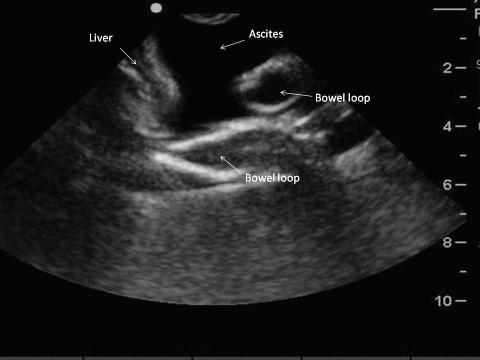
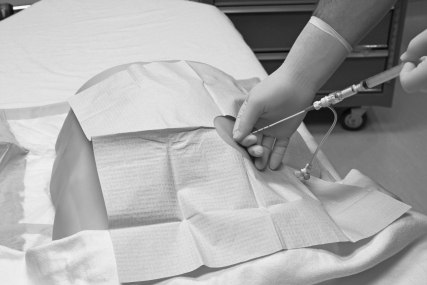
Methods: A team with expertise in simulation and procedural skills developed and created a high fidelity, ultrasound-compatible paracentesis simulator. Fifty-eight first-year internal medicine residents completed a mastery learning-based intervention using the paracentesis simulator. Residents underwent baseline skill assessment (pretest) using a 25-item checklist. Residents completed a posttest after a 3-hour education session featuring a demonstration of the procedure, deliberate practice, ultrasound training, and feedback. All residents were expected to meet or exceed a minimum passing score (MPS) at posttest, the key feature of mastery learning. We compared pretest and posttest checklist scores to evaluate the effect of the educational intervention. Residents rated the training sessions.
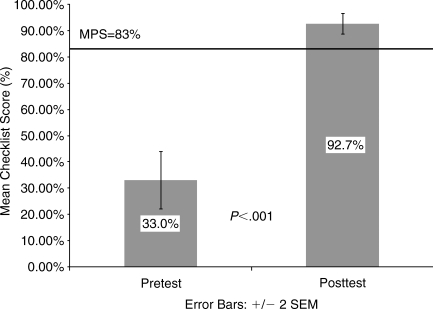
Results: Residents' paracentesis skills improved from an average pretest score of 33.0% (SD = 15.2%) to 92.7% (SD = 5.4%) at posttest (P < .001). After the training intervention, all residents met or exceeded the MPS. The training sessions and realism of the simulation were rated highly by learners.
Conclusion: This study demonstrates the ability of a paracentesis simulator to significantly improve procedural competence.
Figures
References
-
- American Board of Internal Medicine. Internal medicine policies: procedures required for internal medicine. http://www.abim.org/certification/policies/imss/im.aspx. Accessed January 10, 2012.
-
- Accreditation Council for Graduate Medical Education. ACGME program requirements for graduate medical in gastroenterology. http://www.acgme.org/acWebsite/downloads/RRC_progReq/144_gastroenterolog.... Accessed January 10, 2012.
-
- Wigton RS, Blank LL, Nicolas JA, Tape TG. Procedural skills training in internal medicine residencies: a survey of program directors. Ann Intern Med. 1989;111(11):932–938. - PubMed
-
- Huang GC, Smith CC, Gordon CE, Feller-Kopman DJ, Davis RB, Phillips RS. Beyond the comfort zone: residents assess their comfort performing inpatient medicine procedures. Am J Med. 2006;119(1):71.e17–e24. - PubMed
-
- Guardino JM, Proctor DD, Lopez R, Carey W. Utilization of and adherence to the gastroenterology core curriculum on hepatology training during a gastrointestinal fellowship. Clin Gastroenterol Hepatol. 2008;6(6):682–688. - PubMed
LinkOut - more resources
Full Text Sources
Miscellaneous
