


Effects of different complementary feeding regimens on iron status and enteric microbiota in breastfed infants
- PMID: 23452586
- PMCID: PMC3674183
- DOI: 10.1016/j.jpeds.2013.01.024
Effects of different complementary feeding regimens on iron status and enteric microbiota in breastfed infants
Abstract
Objective: To compare iron status in breastfed infants randomized to groups receiving complementary feeding regimens that provided iron from fortified infant cereals or meats, and to examine the development of the enteric microbiota in these groups.
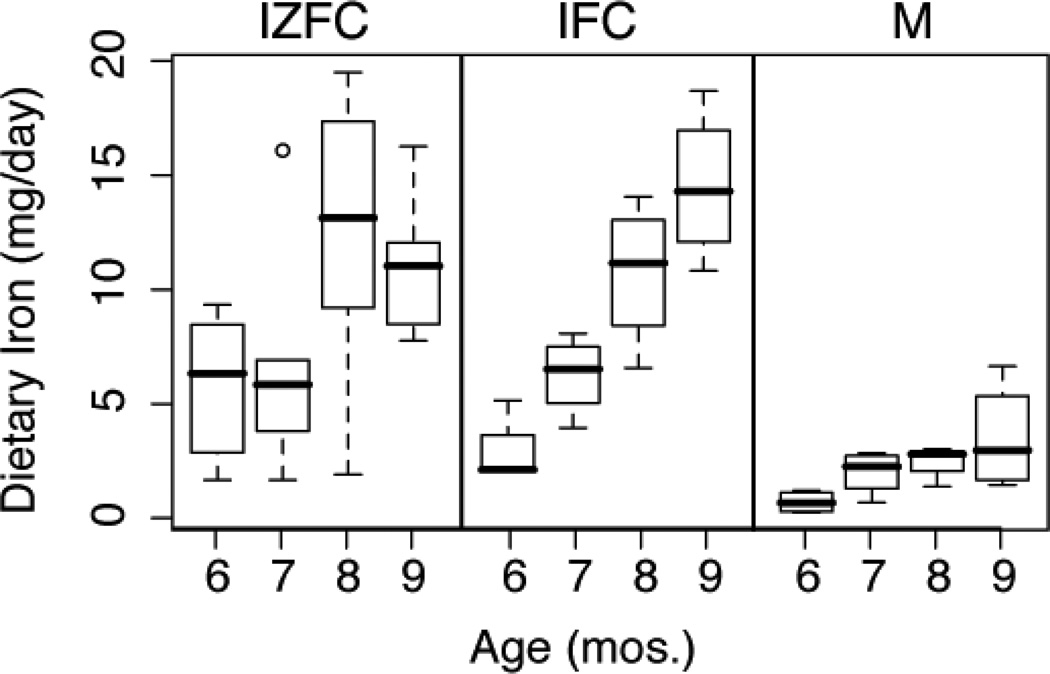
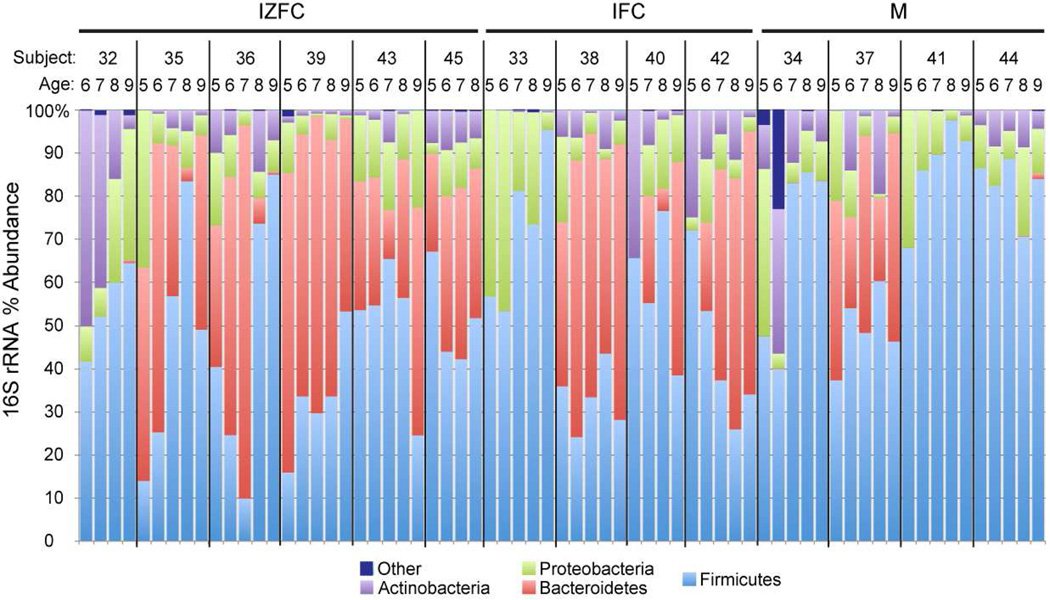
Study design: Forty-five exclusively breastfed 5-month-old infants were randomized to 1 of 3 feeding groups (FGs)-commercially available pureed meats, iron- and zinc-fortified infant cereals, or iron-only fortified infant cereals-as the first and primary complementary food through 9-10 months of age. Dietary iron was determined by monthly 3-day diet records. Iron status was assessed at the end of the study by measurements of hemoglobin, serum ferritin, and soluble transferrin receptor levels. In a subsample of 14 infants, enteric microbiota were profiled in monthly stool samples (5-9 months) by 16S ribosomal RNA gene pyrosequencing.
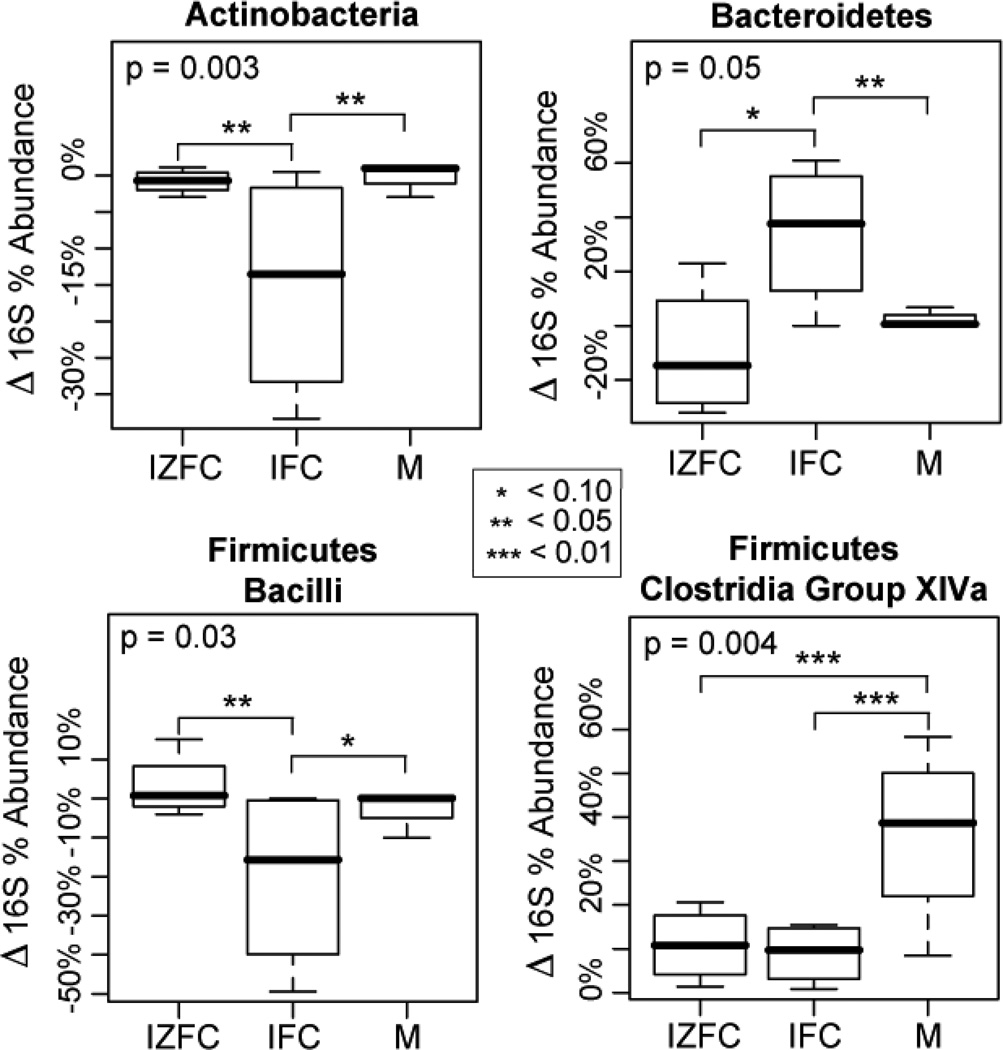
Results: Infants in the 2 cereal FGs had 2- to 3-fold greater daily iron intakes versus the meat FG (P < .0001). More than one-quarter (27%) of the infants had a low serum ferritin level, and 36% were mildly anemic, with no significant differences by FG; more infants in the meat FG had a high soluble transferrin receptor value (P = .03). Sequence analysis identified differences by time and FG in the abundances of several bacterial groups, including significantly more abundant butyrate-producing Clostridium group XIVa in the meat FG (P = .01) CONCLUSION: A high percentage of healthy infants who were breastfed-only were iron-deficient, and complementary feeding, including iron exposure, influenced the development of the enteric microbiota. If these findings are confirmed, then reconsideration of strategies to both meet infants' iron requirements and optimize the developing microbiome may be warranted.
Keywords: FG; Feeding group; Ribosomal RNA; Soluble transferrin receptor; TDI; Total dietary iron; rRNA; sTfR.
Copyright © 2013 Mosby, Inc. All rights reserved.
Conflict of interest statement
The authors declare no conflicts of interest.
Figures
References
-
- American Academy of Pediatrics. Pediatric Nutrition Handbook. 6th ed. Elk Grove, IL: American Academy of Pediatrics; 2009.
-
- Centers for Disease Control and Prevention. Recommendations for preventing and controlling iron deficiency in the United States. MMWR Morb Mortal Wkly Rep. 1998;47(RR 3):1–36. - PubMed
-
- PAHO/WHO. Guiding Principles for Complementary Feeding of the Breastfed Child. Washington, DC: PAHO, WHO; 2003.
-
- Hurrell R, Egli I. Iron bioavailability and dietary reference values. Am J Clin Nutr. 2010;91:1461S–1467S. - PubMed
Publication types
MeSH terms
Substances
Grants and funding
LinkOut - more resources
Full Text Sources
Other Literature Sources
Medical
