


Course and etiology of dysexecutive MCI in a community sample
- PMID: 23452959
- PMCID: PMC3933297
- DOI: 10.1016/j.jalz.2012.10.014
Course and etiology of dysexecutive MCI in a community sample
Abstract
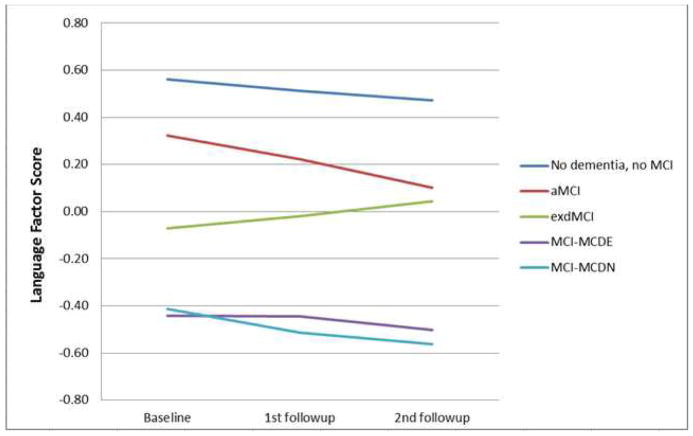
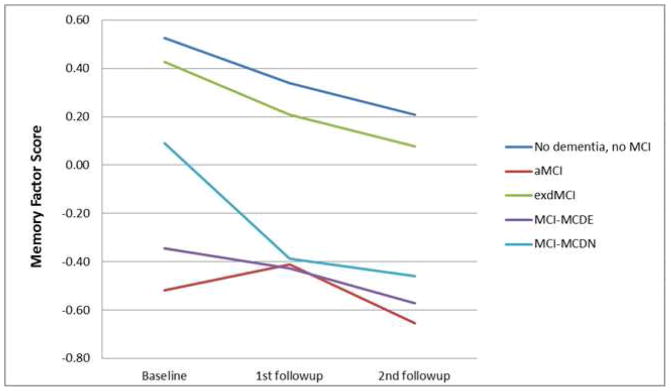
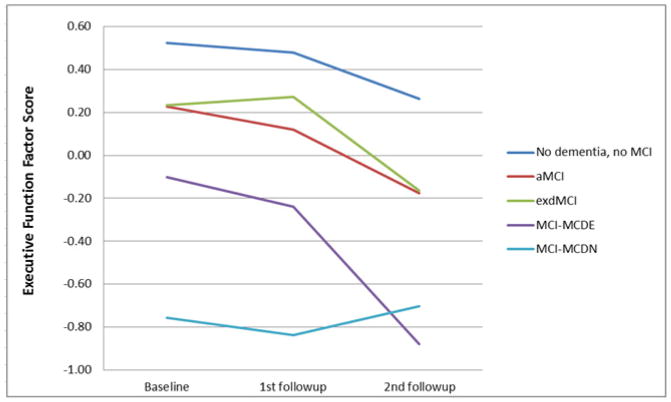
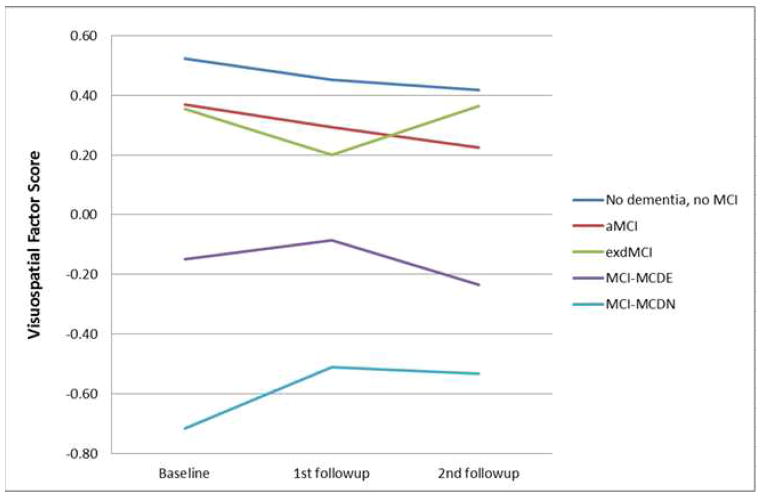
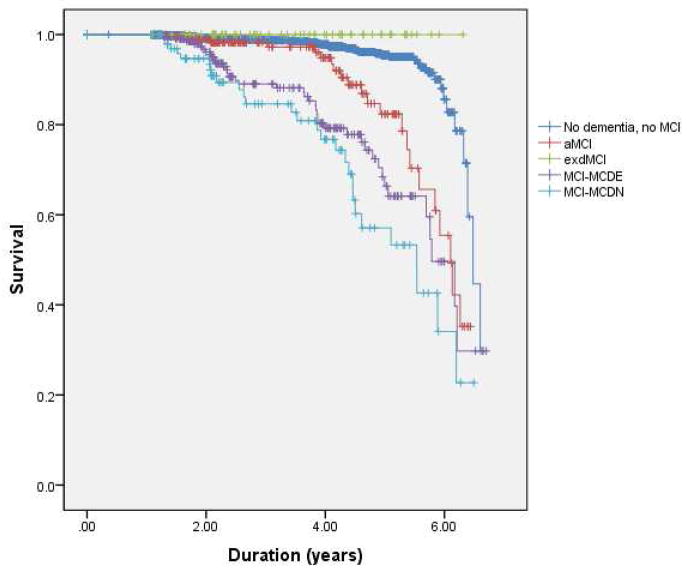
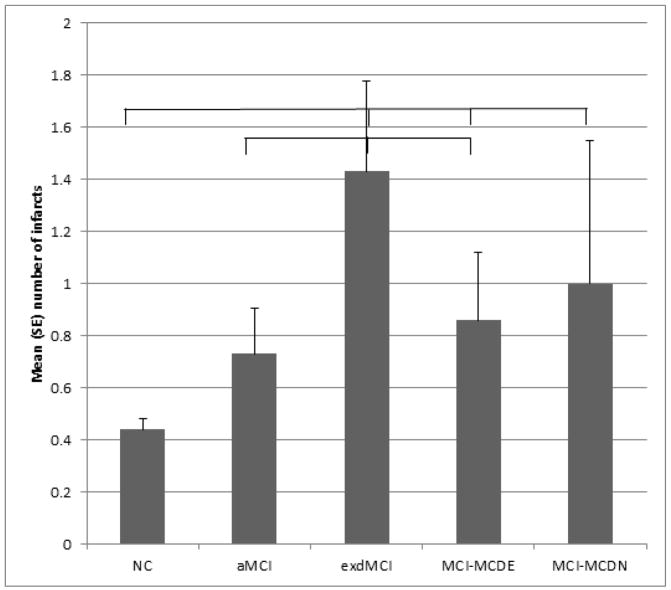
Background: Amnestic mild cognitive impairment (aMCI) is associated with an elevated risk of progressing to Alzheimer's disease. Much less is known about the course of dysexecutive mild cognitive impairment (dMCI). The goals of this study were to determine how the profile of cognitive deficits differs over time between patients with dMCI and aMCI, and control subjects; if the type of dementia differs between dMCI and aMCI in patients who progress to dementia; and if dMCI is more associated with stroke and white matter hyperintensity on magnetic resonance imaging (MRI) than aMCI.
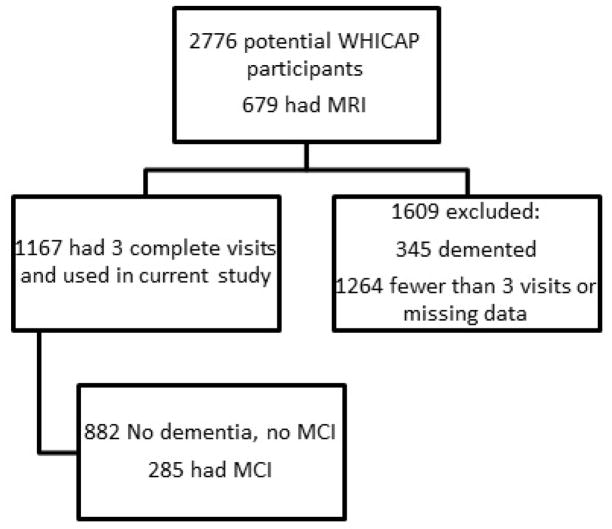
Methods: The authors undertook a prospective evaluation of an inception cohort of 1167 ethnically diverse elders recruited from an urban community-based sample monitored with clinical and neuropsychological testing for an average of 4.5 years (standard deviation, 0.8 year). A subset of the subjects underwent MRI. We compared four groups of MCI patients: single-domain amnestic and dysexecutive MCI, and multiple-domain MCI with and without executive dysfunction.
Results: Compared with aMCI, dMCI was less likely to involve other areas of cognition over time and progress to dementia. None of the 33 single-domain dMCI patients progressed to dementia. The presence of executive dysfunction in multiple-domain MCI did not increase risk of progression to dementia. Patients with multiple-domain MCI with executive dysfunction who progressed to dementia were less likely to have an Alzheimer's-type dementia than MCI patients without executive dysfunction. Patients with dMCI were more likely to experience stroke, but not white matter hyperintensity, detected via MRI than patients with aMCI.
Conclusions: dMCI appears to follow a different course, and is less associated with Alzheimer's disease and more associated with stroke than aMCI.
Keywords: Dementia; Executive function; MRI; Mild cognitive impairment.
Copyright © 2013 The Alzheimer's Association. Published by Elsevier Inc. All rights reserved.
Figures
References
-
- Mitchell AJ, Shiri-Feshki M. Temporal trends in the long term risk of progression of mild cognitive impairment: a pooled analysis. J Neurol Neurosurg Psychiatry. 2008;79(12):1386–91. - PubMed
-
- Fischer P, et al. Conversion from subtypes of mild cognitive impairment to Alzheimer dementia. Neurology. 2007;68(4):288–91. - PubMed
-
- Palmer K, et al. Mild cognitive impairment in the general population: occurrence and progression to Alzheimer disease. Am J Geriatr Psychiatry. 2008;16(7):603–11. - PubMed
Publication types
MeSH terms
Grants and funding
- R01 NS076837/NS/NINDS NIH HHS/United States
- R01 AG034189/AG/NIA NIH HHS/United States
- P01AG07232/AG/NIA NIH HHS/United States
- P01 AG007232/AG/NIA NIH HHS/United States
- R01AG037212/AG/NIA NIH HHS/United States
- R01 AG037212/AG/NIA NIH HHS/United States
- P30 AG010129/AG/NIA NIH HHS/United States
- UL1RR024156/RR/NCRR NIH HHS/United States
- R01 AG042292/AG/NIA NIH HHS/United States
- T32 NS007153/NS/NINDS NIH HHS/United States
- P50 AG008702/AG/NIA NIH HHS/United States
- UL1 RR024156/RR/NCRR NIH HHS/United States
- R00 NS060766/NS/NINDS NIH HHS/United States
LinkOut - more resources
Full Text Sources
Other Literature Sources
Medical
