


Cochlear implants in the United Kingdom: awareness and utilization
- PMID: 23453150
- PMCID: PMC3663289
- DOI: 10.1179/1467010013Z.00000000077
Cochlear implants in the United Kingdom: awareness and utilization
Abstract
Introduction: Every child and adult in the United Kingdom who fulfils the criteria for cochlear implantation is entitled to receive treatment under the National Health Service (NHS); children since 2009 are eligible for bilateral simultaneous implants and adults single implants unless they have additional sensory needs.
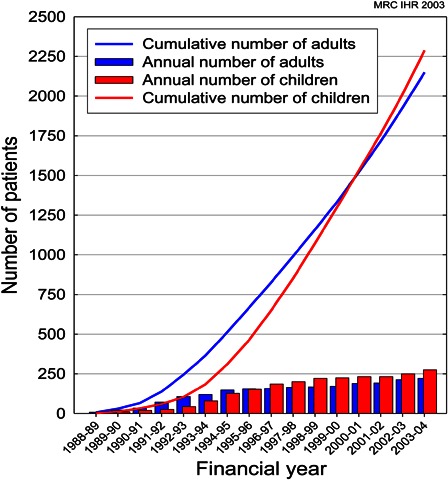
History: During a period between 1982 and 1990, when a number of individual teams ran programmes using charitable funding, the British Cochlear Implant Group approached the UK Department of Health, who agreed to set up a 4-year pilot study of 10 programmes, including one children's programme. The outcomes were collected and analysed by the Medical Research Council's Institute of Hearing Research. The results, showing positive outcomes for adults and children, were published in 1995 and subsequently funding was provided directly by the NHS.
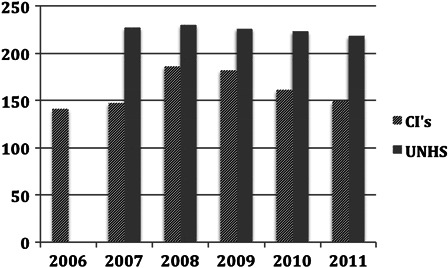
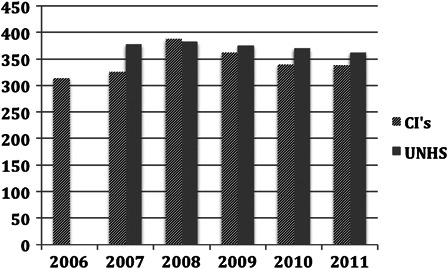
Access: Between 2001 and 2006 the Universal Newborn Hearing Screen (UNHS) was implemented in England and Wales and also in Scotland and Northern Ireland. Data from UNHS and also data from the three main cochlear implant manufacturers have allowed estimates of access to cochlear implants for children and adults within the criteria for implantation.
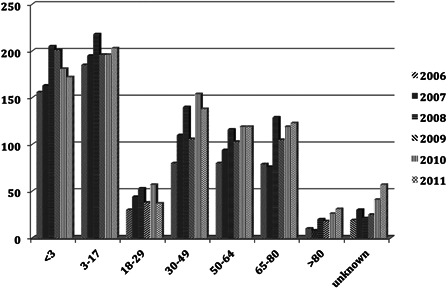
Children: Between 2006 and 2011 the figures show that 74% of estimated eligible children aged 0-3 years have received implants and 94% by the age of 17.
Adults: For adults the figures are considerably lower, with only about 5% of those eligible for an implant actually receiving one. The reasons for this include, to a lesser degree, the fact that guidelines by the National Institute of Clinical Excellence (NICE) are stricter than in some other European countries, but chiefly because of lack of awareness among candidates and professionals, both of criteria for eligibility and of the potential advantages from cochlear implantation.
Figures
References
-
- Cooper H.R., Carpenter L., Aleksy W., Booth C.L., Read T.E., Graham J.M., et al. 1989. UCH/RNID single channel extracochlear implant: results in thirty profoundly deafened adults. The Journal of Laryngology and Otology Supplement, 18: 22–38 - PubMed
-
- Davis A. 1995. Hearing in adults: the prevalence and distribution of hearing impairment and reported hearing disability in the MRC Institute of Hearing Research's National Study of Hearing. London: Whurr Publishers
-
- Davis A., Bamford J., Steven J. 2001. Performance of neonatal and infant hearing screens: sensitivity and specificity. British Journal of Audiology, 35(1): 3–15 - PubMed
-
- Davis A.C. 1989. The prevalence of hearing impairment and reported hearing disability among adults in Great Britain. International Journal of Epidemiology, 18(4): 911–917 - PubMed
MeSH terms
LinkOut - more resources
Full Text Sources
Other Literature Sources
Medical
Miscellaneous
