. 2013 Mar 28;49(6):1121-33.
doi: 10.1016/j.molcel.2013.01.034. Epub 2013 Feb 28.

The n-SET domain of Set1 regulates H2B ubiquitylation-dependent H3K4 methylation

Affiliations

The n-SET domain of Set1 regulates H2B ubiquitylation-dependent H3K4 methylation

Jaehoon Kim et al. Mol Cell. .

Abstract

Past studies have documented a crosstalk between H2B ubiquitylation (H2Bub) and H3K4 methylation, but little (if any) direct evidence exists explaining the mechanism underlying H2Bub-dependent H3K4 methylation on chromatin templates. Here, we took advantage of an in vitro histone methyltransferase assay employing a reconstituted yeast Set1 complex (ySet1C) and a recombinant chromatin template containing fully ubiquitylated H2B to gain valuable insights. Combined with genetic analyses, we demonstrate that the n-SET domain within Set1, but not Swd2, is essential for H2Bub-dependent H3K4 methylation. Spp1, a homolog of human CFP1, is conditionally involved in this crosstalk. Our findings extend to the human Set1 complex, underscoring the conserved nature of this disease-relevant crosstalk pathway. As not all members of the H3K4 methyltransferase family contain n-SET domains, our studies draw attention to the n-SET domain as a predictor of an H2B ubiquitylation-sensing mechanism that leads to downstream H3K4 methylation.


Figures

Figure 1
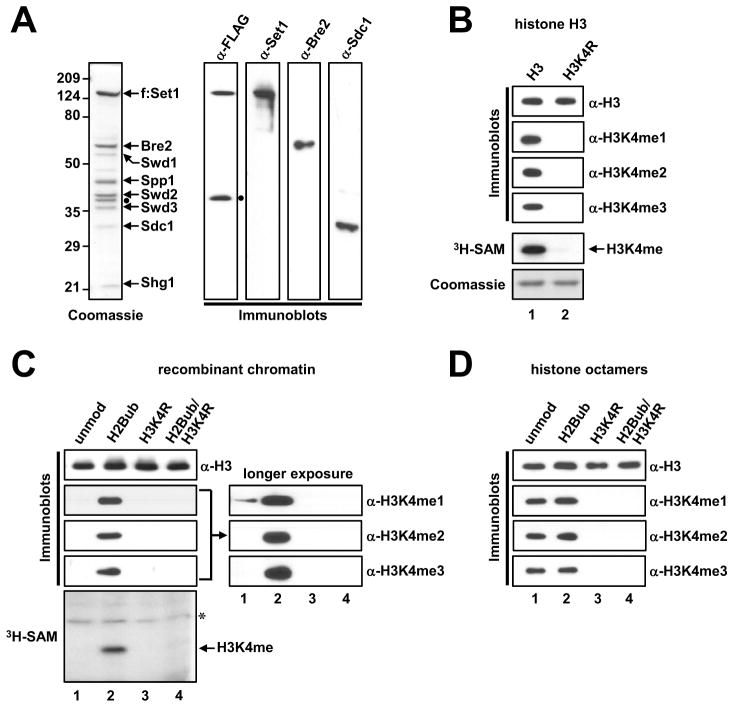
Figure 1. Establishment of In Vitro H3K4 Methylation Assays with Purified Yeast Set1 Complex and Ubiquitylated H2B-Containing Recombinant Chromatin
(A) SDS-PAGE/Coomassie Blue staining and immunoblot analyses of the purified, baculovirus-reconstituted ySet1C. Band identities were confirmed by LC/MS analysis and by immunoblot. The dot indicates an N-terminal degradation product of FLAG-tagged Set1. (B, C and D) Ubiquitylated H2B directly stimulates H3K4 methylation. Free H3 or H3K4R (B), chromatin templates assembled with indicated pre-modified histones (C) and octamers with indicated pre-modified histones (D) were subjected to in vitro HMT assays with purified ySet1C. H3 methylation status was monitored by immunoblotting with indicated antibodies or by fluorography (in this and subsequent figures). The asterisk in (C) indicates an uncharacterized methylation signal from a component in the chromatin assembly factor or ySet1C preparations. Note: unmod, unmodified histones; H2Bub, lysine(K)120-ubiquitylated H2B; H3K4R, H3 containing an arginine(R) substitution at lysine(K)4; H3K4me, lysine(K)4-methylated H3; H3K4me1, lysine(K)4-mono-methylated H3; H3K4me2, lysine(K)4-di-methylated H3; H3K4me3, lysine(K)4-tri-methylated H3. See also Figure S1.
Figure 2
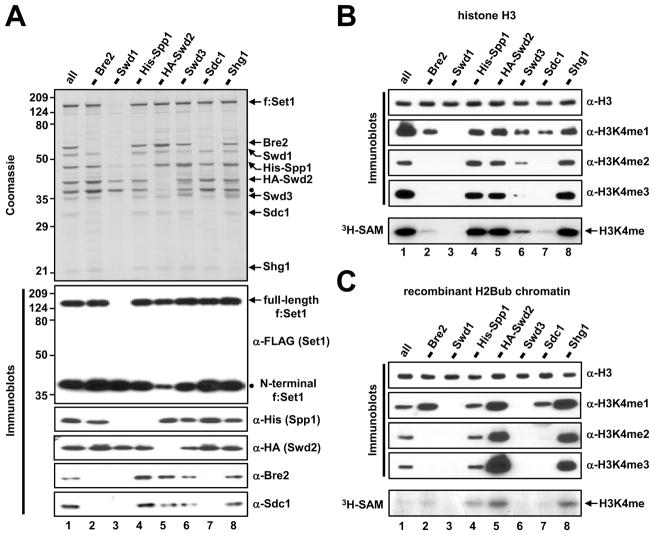
Figure 2. Subunit Requirement for H3K4 Methylation Activity of the Yeast Set1 Complex
(A) SDS-PAGE/Coomassie Blue staining and immunoblot analyses of purified ySet1Cs reconstituted with baculovirus vectors in the absence of the indicated subunits. Complex loading was normalized to FLAG-Set1 (except lane 3, see below). (B and C) Free histone H3 (B) and H2Bub-chromatin templates (C) were subjected to in vitro HMT assays with indicated ySet1Cs. Note that because of inefficient complex formation in the absence of Swd1, a volume of the Swd1-deficient sample (lanes 3) equal to that of the intact complex sample (lanes 1) was used for SDS-PAGE and in vitro HMT assays. See also Figure S2.
Figure 3
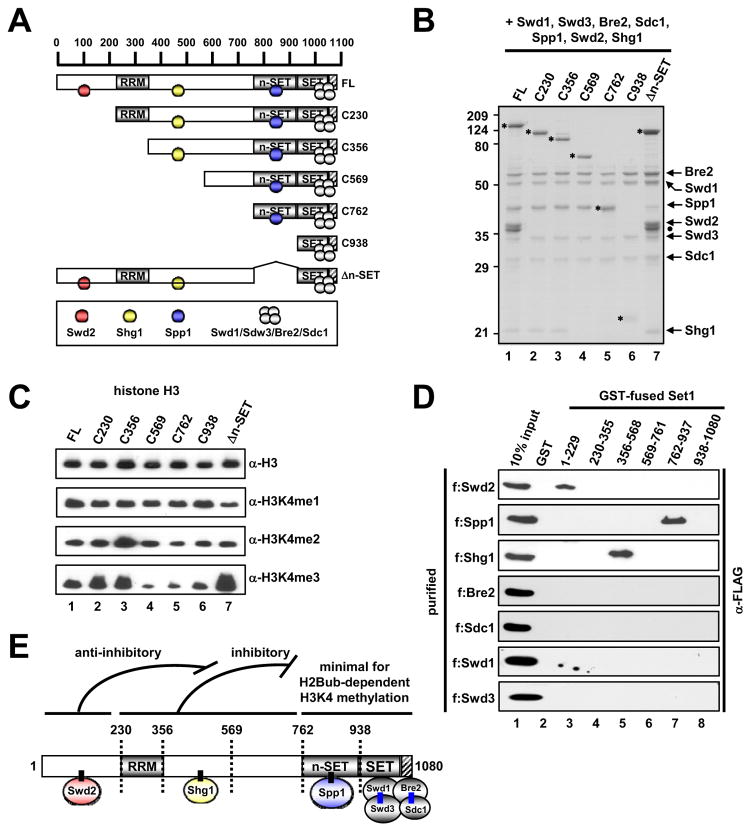
Figure 3. Subunit Interactions within the Yeast Set1 Complex
(A) A schematic diagram of Set1 and derived fragments, with predicted RRM, n-SET, SET and post-SET domains, and subunit associations deduced from interaction studies. Hatched box, the post-SET domain in this and other figures. (B) SDS-PAGE/Coomassie Blue staining of purified ySet1Cs reconstituted with baculoviruses expressing FLAG-Set1 or FLAG-Set1 fragments and all seven (untagged) ySet1C subunits. FLAG-Set1 polypeptides are marked by asterisks. Complex loading was normalized to Swd1, Swd3, Bre2 and Sdc1. Note that the C762 Set1 fragment co-migrates with Spp1. (C) In vitro HMT assays with free histone H3 and indicated purified ySet1Cs. (D) Direct binding of purified FLAG-tagged ySet1C subunits (Figure S3G) to GST-Set1 fragments (Figure S3F) relative to GST. (E) Schematic model of subunit interactions with Set1. Direct interactions established in this study are depicted by short, black connecting lines. Direct Bre2-Sdc1 and Swd1-Swd3 interactions established in earlier studies (Roguev et al., 2001; Dehé et al., 2006; Halbach et al., 2009) are indicated by blue lines. Apparent functions of Set1 domains in methylation activity, indicated at the top, are deduced from Figure 4. Numbers indicate amino acid residues. Although not depicted, an interaction between Swd1-Swd3 and a region that lies N-terminal to the SET domain (probably the n-SET domain associated with Spp1: see Figure 6) is suggested by the observation that a Set1 fragment encoding residues 1–900 is co-immunoprecipitated with Swd1-Swd3 (Dehé et al., 2006). See also Figure S3.
Figure 4
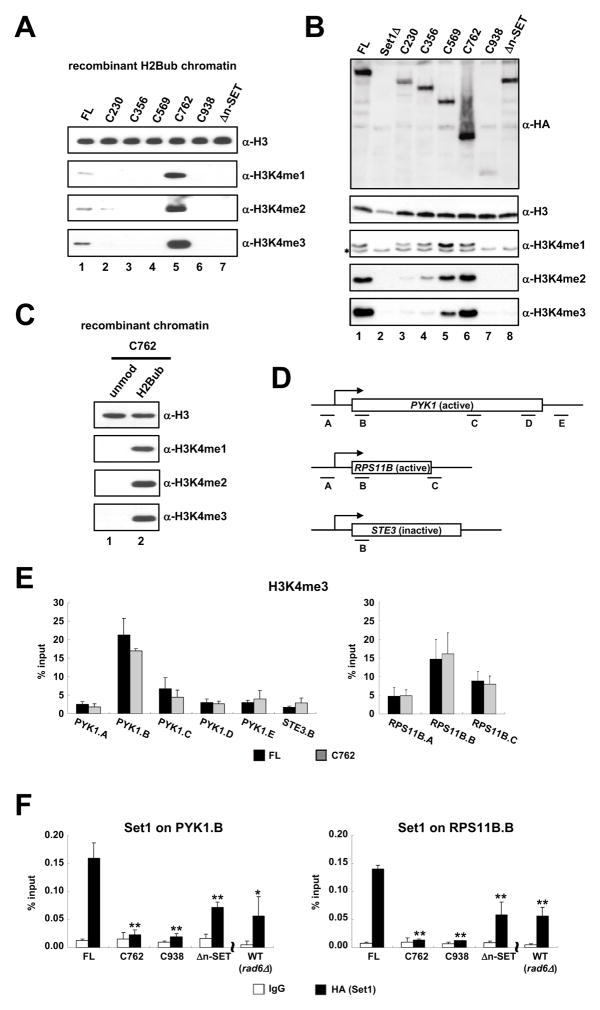
Figure 4. The n-SET Domain Is Required for the H2B Ubiquitylation-Dependent H3K4 Methylation Activity of the Yeast Set1 Complex
(A) In vitro HMT assays with purified ySet1Cs (indicated in Figure 3B) and H2Bub-chromatin templates. (B) Immunoblots with indicated antibodies of whole cell extracts from different set1 mutant strains carrying chromosomal genes expressing the indicated HA-tagged FL Set1 or Set1 fragments. Asterisks denote a faster-migrating, nonspecific band detected in all reactions with the specific batch of anti-H3K4me1 antibody used for this analysis. (C) In vitro HMT assay with the purified C762 complex on chromatin templates assembled with unmodified or H2Bub octamers. (D) Schematic representation of transcriptionally active (PYK1 and RPS11B) and inactive (STE3) loci and amplicons used for quantitative PCR. (E) H3K4me3 ChIP analyses on the indicated genes/amplicons in yeast strains carrying chromosomal HA-tagged FL or C762 Set1 genes. Error bars denote standard deviations from three independent biological replicates both here and in Figures 4F and 5E. (F) ChIP analyses with anti-HA antibody to determine chromatin association of HA-tagged FL, C762, C938 and Δn-SET Set1 proteins at 5′-transcribing regions (marked ‘B’ in Figure 4D) of PYK1 (left) and RPS11B (right) genes. A yeast strain that harbors an HA-tagged WT Set1 gene was also tested in a rad6Δ background. Anti-rabbit IgG was used as a control in this figure (and in Figure 5E). The significance of the differences in the ChIP signals was evaluated using the Student’s t-test (* denotes p-value 0.01–0.05 and ** denotes p-value < 0.01). See also Figure S4.
Figure 5
Figure 5. Identification of Amino Acid Residues within the n-SET Domain Responsible for H2B Ubiquitylation-Dependent H3K4 Methylation Activity of the Yeast Set1 Complex
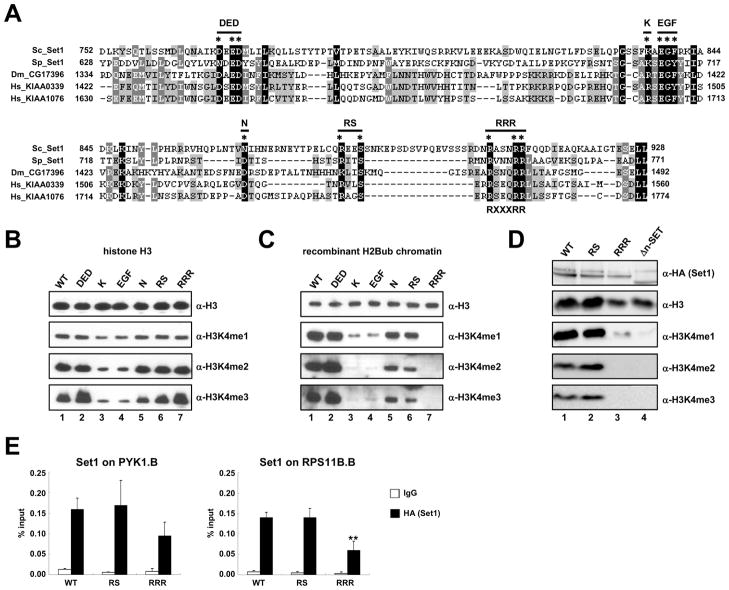
(A) ClustalW2 multiple sequence alignments of n-SET domains from Set1 family members: Saccharomyces cerevisiae (Sc_Set1, GeneBank Accession number: NP_011987), Schizosaccharomyces pombe (Sp_Set1, NP_587812), Drosophila melanogaster (Dm_CG17396, NP_001015221) and Homo sapiens (Hs_KIAA0339, BAA20797; Hs_KIAA1076, Q9UPS6). Encoded amino acid numbers are indicated. Conserved amino acids that were changed to alanine are marked by asterisks, and labels for derived Set1 mutants are indicated at the top. The consensus for the RXXXRR motif is indicated at the bottom. (B and C) In vitro HMT assays with purified ySet1Cs bearing the indicated Set1 mutations and free histone H3 (B) or H2Bub-chromatin templates (C). (D) Immunoblot analyses with indicated antibodies of whole cell extracts from yeast strains that carry chromosomal genes expressing the indicated HA-tagged WT or mutant Set1 proteins. (E) ChIP analyses with anti-HA antibody to determine chromatin association of HA-tagged WT, RS and RRR Set1 proteins at 5′-transcribed regions (marked ‘B’ in Figure 4D) of PYK1 (left) and RPS11B (right) genes. The significance of the differences in the ChIP signals was evaluated using the Student’s t-test (** denotes p-value < 0.01). See also Figure S5.
Figure 6
Figure 6. Direct Internal Domain Interaction and Conformational Change in the Active Site of the Set1 Complex
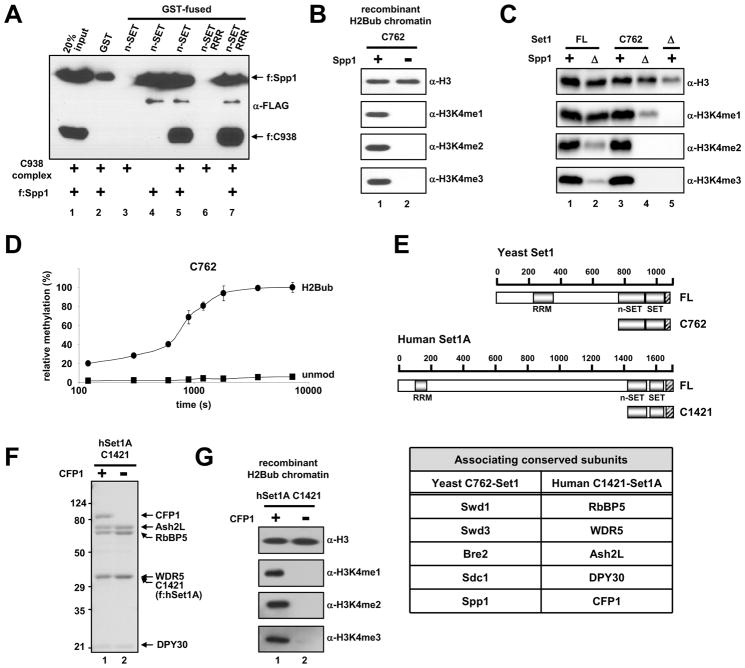
(A) The purified C938 complex (Figure 3B, lane 6) was tested for binding to GST versus GST-n-SET (Set1 residues 762–937, Figure S3F) in the presence and absence of purified FLAG-Spp1 (Figure S3G). Bound proteins were scored by immunoblotting with anti-FLAG antibody. n-SET RRR, the n-SET fragment that contains RRR mutation, is described in Figure 5. Note that the Spp1 that is nonspecifically bound to GST under these binding conditions (150 mM KCl, 0.05 % NP40 and 0.2 mg/ml BSA, lane 2) does not coimmunoprecipitate the C938 complex, indicating that Spp1 alone does not interact with the C938 complex. (B) H2Bub-chromatin templates were subjected to in vitro HMT assays with purified C762 complexes containing (Figure 3B, lane 5) and lacking (Figure S3B, lane 5) Spp1. (C) Whole cell extracts from yeast cells that carry the indicated chromosomal genes expressing HA-tagged FL and C762 Set1 and their isogenic spp1Δ derivatives were subjected to immunoblot analyses with indicated antibodies. (D) Kinetic analysis of methylation of H2Bub- and unmodified chromatin by the C762 complex. The highest methylation level observed at 2h is arbitrarily set as 100 %. X-axis is shown in a log10 scale to emphasize early time points. Error bars denote standard deviations from three independent assays. (E) A schematic diagram of full-length and C1421 (encompassing n-SET, SET and post-SET domains) human Set1A fragments along with a table of minimal components required for H3K4 methylation in the yeast and human Set1 complexes. (F) SDS-PAGE/Coomassie Blue staining of purified human Set1A complexes reconstituted with baculoviruses expressing FLAG-tagged C1421 fragment, RbBP5, WDR5, Ash2L, DPY30 and with or without CFP1. (G) H2Bub-chromatin templates were subjected to in vitro HMT assays with purified human C1421 complexes containing and lacking CFP1. See also Figure S6.
Figure 7
Figure 7. Mechanistic Model for H2B Ubiquitylation-Dependent H3K4 Methylation by the Yeast Set1 Complex
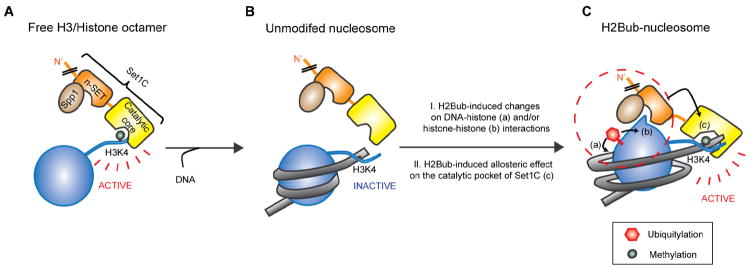
(A) Free histone H3 substrate. In this case, we envision that the ‘catalytic core’, consisting of the SET and post-SET domains of Set1 in association with Swd1, Swd3, Bre2, and Sdc1 subunits, is freely accessible to H3K4. (B) Unmodified nucleosome substrate. In this more physiological case of a nucleosome with non-ubiquitylated histone H2B, and in contrast to the situation in (A), the active site of ySet1C (or the catalytic core) is not readily (or stably) accessed by H3K4. This parallels the in vivo situation involving H2Bub-independent recruitment of Set1C to genes (by other factors) without H3K4 methylation. (C) H2B ubiquitylated nucleosome. Here we envision two possible models: (I) H2Bub-induced conformational changes (red-dashed circle) in the nucleosome by altering DNA-histone (a) and/or histone-histone (b) interactions and/or (II) H2Bub-induced allosteric changes in the active site of nucleosome-associated ySet1C that involve the Set1C catalytic core, the Spp1-associated n-SET domain, the RXXXRR motif within the n-SET domain and an internal interaction (black arrow) between the n-SET and SET domains (c). These conformational changes and interactions, which are not mutually exclusive, lead to the positioning (or stabilization) of H3K4 at a ‘favorable’ site for methylation by ySet1C.

Comment in

References

    1. Briggs SD, Bryk M, Strahl BD, Cheung WL, Davie JK, Dent SY, Winston F, Allis CD. Histone H3 lysine 4 methylation is mediated by Set1 and required for cell growth and rDNA silencing in Saccharomyces cerevisiae. Genes Dev. 2001;15:3286–3295. - PMC - PubMed
    1. Chandrasekharan MB, Huang F, Chen YC, Sun ZW. Histone H2B C-terminal helix mediates trans-histone H3K4 methylation independent of H2B ubiquitination. Mol Cell Biol. 2010;30:3216–3232. - PMC - PubMed
    1. Cheng H, He X, Moore C. The essential WD repeat protein Swd2 has dual functions in RNA polymerase II transcription termination and lysine 4 methylation of histone H3. Mol Cell Biol. 2004;24:2932–2943. - PMC - PubMed
    1. Chi P, Allis CD, Wang GG. Covalent histone modifications--miswritten, misinterpreted and mis-erased in human cancers. Nat Rev Cancer. 2010;10:457–469. - PMC - PubMed
    1. Cosgrove MS, Patel A. Mixed lineage leukemia: a structure-function perspective of the MLL1 protein. FEBS J. 2010;277:1832–1842. - PMC - PubMed

Publication types

MeSH terms