Review
. 2013 Jul:69:143-51.
doi: 10.1016/j.toxicon.2013.02.001. Epub 2013 Feb 20.

Targeting ricin to the ribosome

Affiliations
Review

Targeting ricin to the ribosome

Kerrie L May et al. Toxicon. 2013 Jul.

Abstract

The plant toxin ricin is highly toxic for mammalian cells and is of concern for bioterrorism. Ricin belongs to a family of functionally related toxins, collectively referred to as ribosome inactivating proteins (RIPs), which disable ribosomes and halt protein synthesis. Currently there are no specific antidotes against ricin or related RIPs. The catalytic subunit of ricin is an N-glycosidase that depurinates a universally conserved adenine residue within the sarcin/ricin loop (SRL) of the 28S rRNA. This depurination activity inhibits translation and its biochemistry has been intensively studied. Yet, recent developments paint a more complex picture of toxicity, with ribosomal proteins and cellular signaling pathways contributing to the potency of ricin. In particular, several studies have now established the importance of the ribosomal stalk structure in facilitating the depurination activity and ribosome specificity of ricin and other RIPs. This review highlights recent developments defining toxin-ribosome interactions and examines the significance of these interactions for toxicity and therapeutic intervention.


Conflict of interest statement

Conflict of interest

There are no conflicts of interest.

Figures
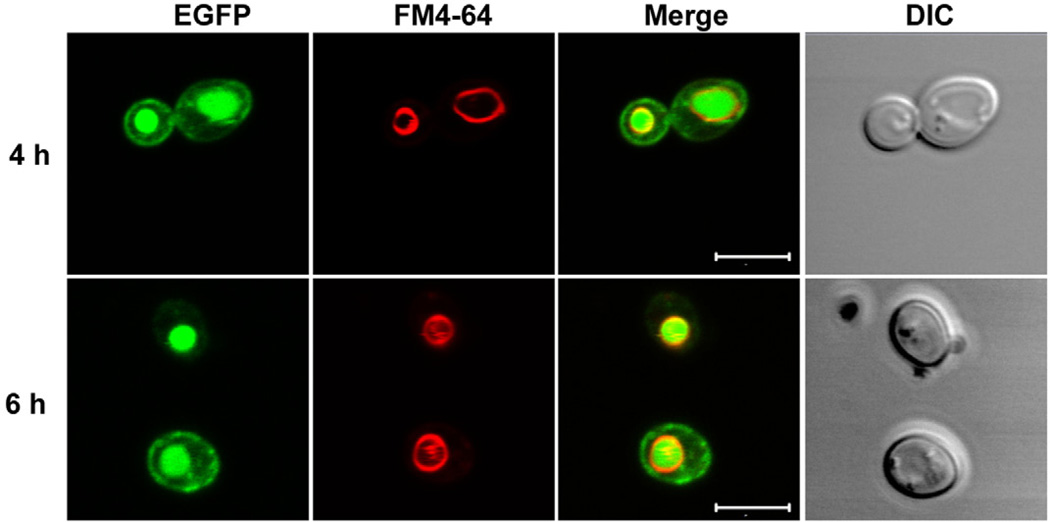
Fig. 1
Fig. 1
Transport of preRTA to the vacuole in Saccharomyces cerevisiae. Wild type yeast cells carrying preRTA-EGFP were grown in SD medium with glucose and induced with galactose for 4 and 6 hours. Yeast cells were treated with FM4-64 to stain the vacuole. Intracellular localization of preRTA-EGFP in yeast was analyzed with a Zeiss LSM 710 Confocal Microscope. Merged images show localization of preRTA-EGFP relative to the vacuole. Scale bars represent 5 µm.
Fig. 2
Fig. 2
The effect of P1/P2-depletion on RTA activity in vitro. Human embryonic kidney (HEK293T) cells stably transfected with doxycycline-inducible P2 RNAi were treated with doxycycline (0.1µg/ml for 96 h) to knock-down of P1 and P2 protein levels. Ribosomes were isolated for biochemical analyses. (A) The interaction of RTA with WT and P1/P2-depleted human ribosomes measured using surface plasmon resonance. N-terminal His-tagged RTA was coupled to an NTA chip on the Biacore 3000 and used as a ligand for WT (5 nM) or P1/P2-depleted (5 nM) ribosomes. (B) The relative in vitro activity of RTA (0.1nM) on WT and P1/P2-depleted ribosomes (2 pmol) compared over a time course of 0–10 minutes. rRNA was extracted post-treatment and depurination measured by qRT-PCR. Data indicate the fold increases in depurination relative to untreated (no toxin) WT ribosomes (n=3).
Fig. 3
Fig. 3
Two-step binding model for ribosome depurination by RTA. Step one: slow, stalk-independent, electrostatic AB1 interactions concentrate RTA molecules on the ribosomal surface, increasing their local concentration and facilitating diffusion of RTA toward the stalk. Step two: once RTA molecules are proximal to the stalk faster, stalk-specific AB2 interactions occur, with the stalk ultimately facilitating delivery of RTA to the sarcin/ricin loop (SRL) of the large rRNA. AB1 and AB2 interactions work together on ribosomes to deliver RTA to the SRL enabling RTA to depurinate the SRL at a very high rate.

References

    1. Agrawal RK, Penczek P, Grassucci RA, Frank J. Visualization of elongation factor G on the Escherichia coli 70S ribosome: the mechanism of translocation. Proc. Natl. Acad. Sci. U.S.A. 1998;95:6134–6138. - PMC - PubMed
    1. Argent RH, Parrott AM, Day PJ, Roberts LM, Stockley PG, Lord JM, Radford SE. Ribosome-mediated folding of partially unfolded ricin A-chain. J. Biol. Chem. 2000;275:9263–9269. - PubMed
    1. Bai Y, Monzingo AF, Robertus JD. The X-ray structure of ricin A chain with a novel inhibitor. Arch. Biochem. Biophys. 2009;483:23–28. - PubMed
    1. Bai Y, Watt B, Wahome PG, Mantis NJ, Robertus JD. Identification of new classes of ricin toxin inhibitors by virtual screening. Toxicon. 2010;56:526–534. - PMC - PubMed
    1. Ballesta JP, Remacha M. The large ribosomal subunit stalk as a regulatory element of the eukaryotic translational machinery. Prog. Nucleic Acid Res. Mol. Biol. 1996;55:157–193. - PubMed

Publication types
