


Inhibitory zinc sites in enzymes
- PMID: 23456096
- PMCID: PMC7087665
- DOI: 10.1007/s10534-013-9613-7
Inhibitory zinc sites in enzymes
Abstract
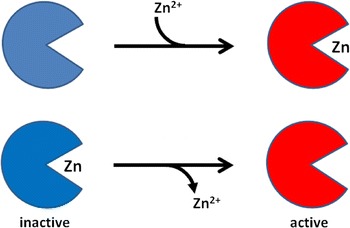
Several pathways increase the concentrations of cellular free zinc(II) ions. Such fluctuations suggest that zinc(II) ions are signalling ions used for the regulation of proteins. One function is the inhibition of enzymes. It is quite common that enzymes bind zinc(II) ions with micro- or nanomolar affinities in their active sites that contain catalytic dyads or triads with a combination of glutamate (aspartate), histidine and cysteine residues, which are all typical zinc-binding ligands. However, for such binding to be physiologically significant, the binding constants must be compatible with the cellular availability of zinc(II) ions. The affinity of inhibitory zinc(II) ions for receptor protein tyrosine phosphatase β is particularly high (K i = 21 pM, pH 7.4), indicating that some enzymes bind zinc almost as strongly as zinc metalloenzymes. The competitive pattern of zinc inhibition for this phosphatase implicates its active site cysteine and nearby residues in the coordination of zinc. Quantitative biophysical data on both affinities of proteins for zinc and cellular zinc(II) ion concentrations provide the basis for examining the physiological significance of inhibitory zinc-binding sites in proteins and the role of zinc(II) ions in cellular signalling. Regulatory functions of zinc(II) ions add a significant level of complexity to biological control of metabolism and signal transduction and embody a new paradigm for the role of transition metal ions in cell biology.
Figures
References
Publication types
MeSH terms
Substances
Grants and funding
LinkOut - more resources
Full Text Sources
Other Literature Sources
