


Laparoscopic versus open peritoneal dialysis catheter insertion: a meta-analysis
- PMID: 23457554
- PMCID: PMC3574153
- DOI: 10.1371/journal.pone.0056351
Laparoscopic versus open peritoneal dialysis catheter insertion: a meta-analysis
Abstract
Background: Peritoneal dialysis is an effective treatment for end-stage renal disease. Key to successful peritoneal dialysis is a well-functioning catheter. The different insertion techniques may be of great importance. Mostly, the standard operative approach is the open technique; however, laparoscopic insertion is increasingly popular. Catheter malfunction is reported up to 35% for the open technique and up to 13% for the laparoscopic technique. However, evidence is lacking to definitely conclude that the laparoscopic approach is to be preferred. This review and meta-analysis was carried out to investigate if one of the techniques is superior to the other.
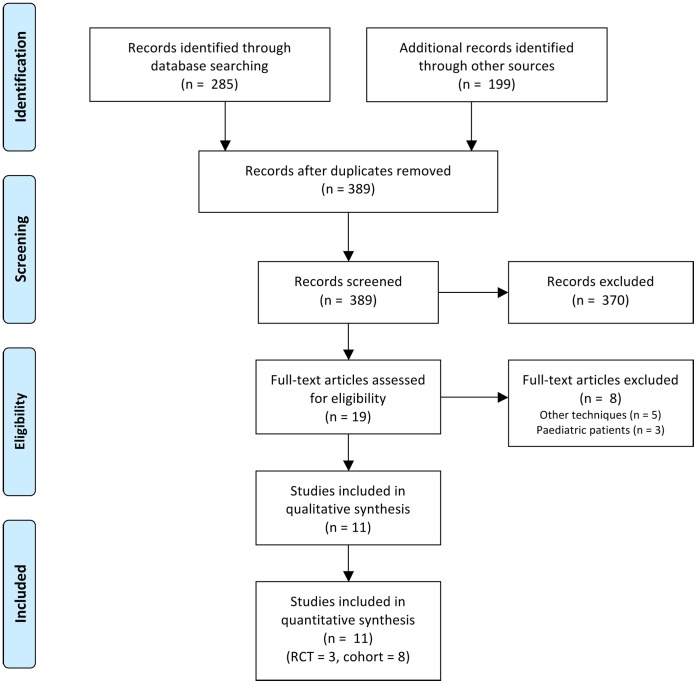
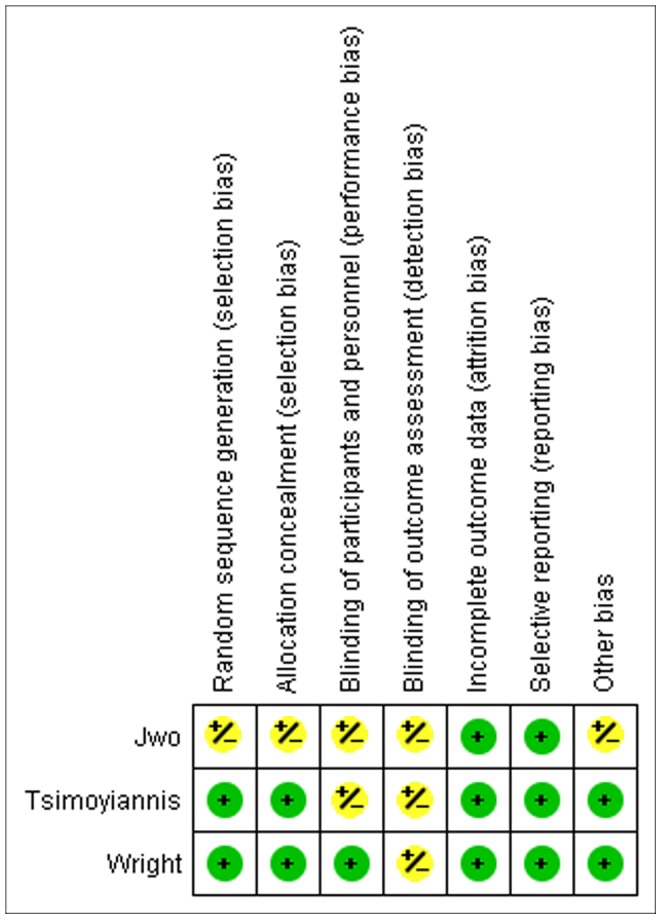
Methods: Comprehensive searches were conducted in MEDLINE, Embase and CENTRAL (the Cochrane Library 2012, issue 10). Reference lists were searched manually. The methodology was in accordance with the Cochrane Handbook for interventional systematic reviews, and written based on the PRISMA-statement.
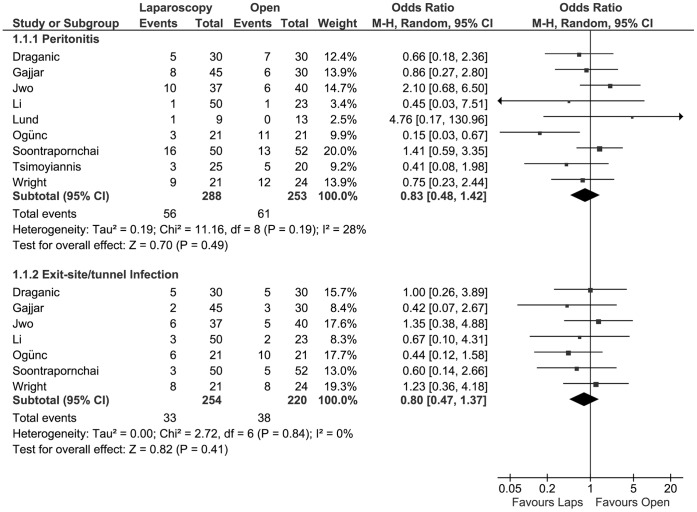
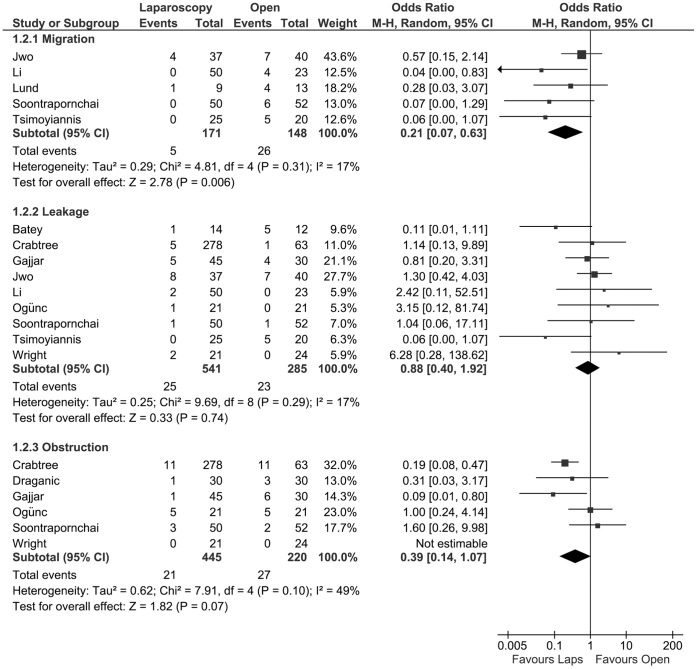
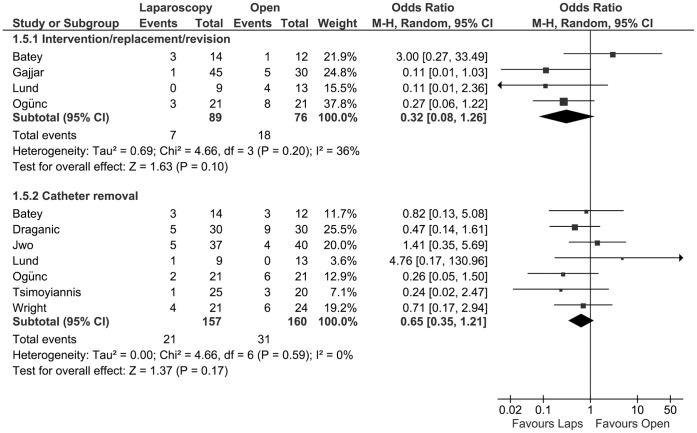
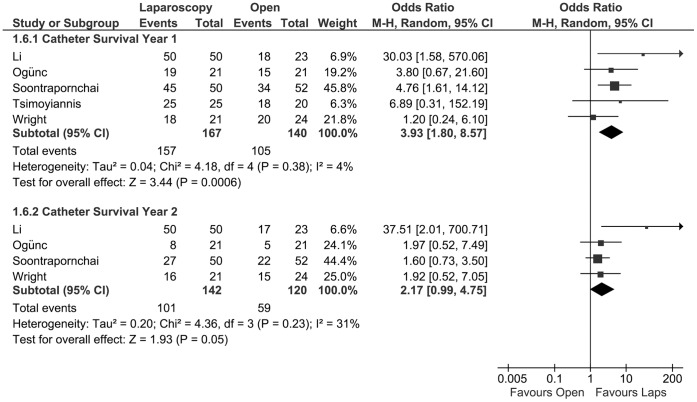
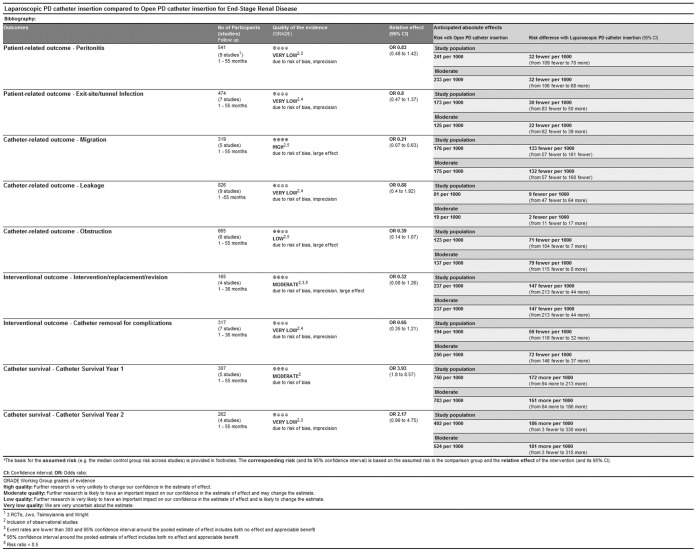
Results: Three randomized controlled trials and eight cohort studies were identified. Nine postoperative outcome measures were meta-analyzed; of these, seven were not different between operation techniques. Based on the meta-analysis, the proportion of migrating catheters was lower (odds ratio (OR) 0.21, confidence interval (CI) 0.07 to 0.63; P = 0.006), and the one-year catheter survival was higher in the laparoscopic group (OR 3.93, CI 1.80 to 8.57; P = 0.0006).
Conclusions: Based on these results there is some evidence in favour of the laparoscopic insertion technique for having a higher one-year catheter survival and less migration, which would be clinically relevant.
Conflict of interest statement
Figures
References
-
- Fenton SS, Schaubel DE, Desmeules M, Morrison HI, Mao Y, et al. (1997) Hemodialysis versus peritoneal dialysis: a comparison of adjusted mortality rates. Am J Kidney Dis. 30: 334–42. - PubMed
-
- Maiorca R, Vonesh EF, Cavalli P, De Vecchi A, Giangrande A, et al. (1991) A multicenter, selection-adjusted comparison of patient and technique survivals on CAPD and hemodialysis. Perit Dial Int. 11: 118–27. - PubMed
-
- Heaf JG, Lokkegaard H, Madsen M (2002) Initial survival advantage of peritoneal dialysis relative to haemodialysis. Nephrol Dial Transplant. 17: 112–7. - PubMed
-
- Termorshuizen F, Korevaar JC, Dekker FW, Van Manen JG, Boeschoten EW, et al. (2003) Hemodialysis and peritoneal dialysis: comparison of adjusted mortality rates according to the duration of dialysis: analysis of The Netherlands Cooperative Study on the Adequacy of Dialysis 2. J Am Soc Nephrol. 14: 2851–60. - PubMed
-
- Bargman JM, Thorpe KE, Churchill DN (2001) Relative contribution of residual renal function and peritoneal clearance to adequacy of dialysis: a reanalysis of the CANUSA study. J Am Soc Nephrol. 12: 2158–62. - PubMed
Publication types
MeSH terms
LinkOut - more resources
Full Text Sources
Other Literature Sources
